




Google Workspace Domain Switch Migration Strategy

Executing a domain switch within Google Workspace is a structural operation. Unlike standard migrations, the domain identity must be released from one tenant and captured by another in real-time. This requires a zero-latency execution path.
The Architectural Pivot: Because a domain cannot exist in two Workspace instances at once, identities must be temporarily re-homed to allow the domain to be released and re-verified at the destination.
The 6-Phase Execution Roadmap
- Bulk Ingestion: Migrate data from the source to a staging domain at the destination to minimize cutover volume.
- Identity Stripping: Use GAM to rename all source users off the primary domain onto a temporary secondary domain.
- The Domain Capture: Release the primary domain from the source and immediately verify it at the destination.
- Final Alignment: Rename destination users from staging addresses to their permanent primary domain identities.
- MX Cutover & Delta: Update mail routing and run a final delta sync to capture the last remaining messages.
- Safety Buffer: Maintain the source tenant for 30 days as a read-only safety net before final decommissioning.
Warning: “Domain in Use” errors are usually caused by a single forgotten alias or group. Automated auditing of the source environment is critical.

The Glasswing Paradigm: AI Security Strategy
2025-12-22 A log correlation engine automates the process of linking fragmented event data across diverse systems, transforming raw logs into real-time, actionable insights. By normalizing data and applying correlation rules, it reduces alert fatigue, accelerates incident detection (MTTD), and enables faster root cause analysis for improved security and operational efficiency.
Continue reading

Quantum Key Distribution (QKD) Technical Overview
2025-12-09 Real-time log encryption is now essential because logs contain sensitive data and serve as blueprints for sophisticated attackers like APTs and ransomware groups. Following incidents like the Salesforce third-party breach, organizations must treat logs as critical assets requiring protection from the moment they’re created. This proactive approach, exemplified by solutions like Penta Security’s D.AMO, neutralizes damage if storage is compromised and enhances threat detection by preventing attackers from analyzing unencrypted system architecture and account patterns.
Continue reading
ESET Research: New NGate hides in NFC payment app, possibly built with AI
- ESET researchers discovered a new NGate malware variant abusing the legitimate Android HandyPay application.
- To trojanize HandyPay, threat actors most likely used GenAI.
- The campaign has been ongoing since November 2025 and targets Android users in Brazil.
- ESET investigated two NGate samples being distributed in the attacks: one via a fake lottery website, the other through a fake Google Play website.
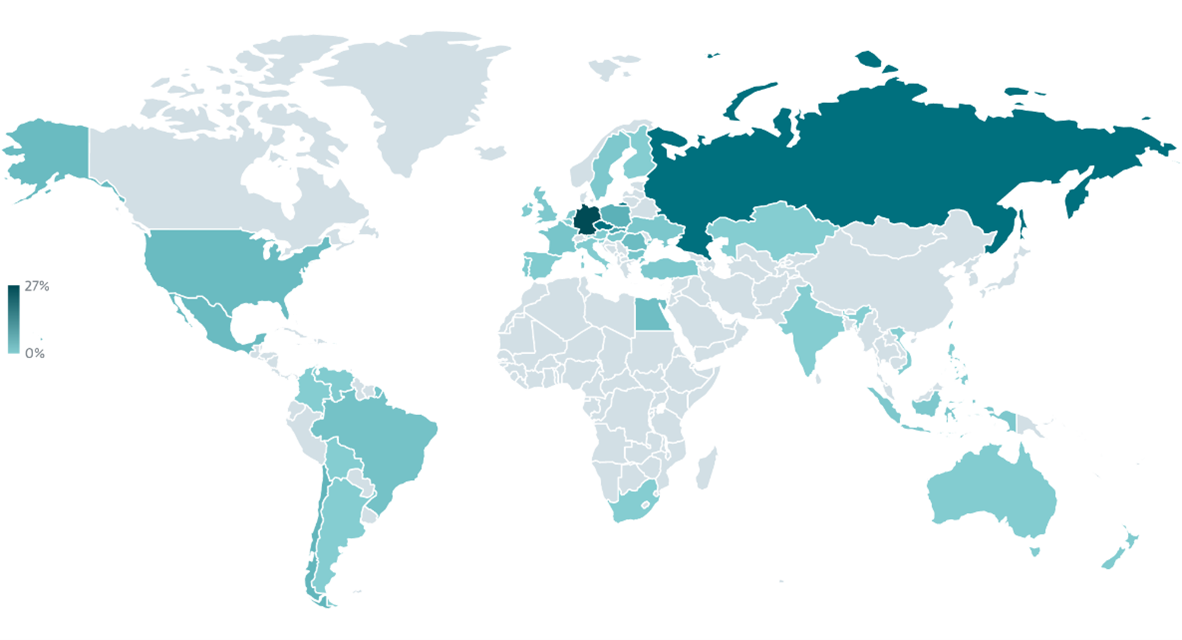
BRATISLAVA — April 21, 2026 — ESET Research has discovered a new variant of the NGate malware family that abuses a legitimate Android application called HandyPay, instead of the previously leveraged NFCGate tool. The threat actors took the app, which is used to relay NFC data, and patched it with malicious code that appears to have been AI generated. As with previous iterations of NGate, the malicious code allows the attackers to transfer NFC data from the victim’s payment card to their own device and use them for contactless ATM cash-outs and unauthorized payments. Additionally, the code can capture the victims’ payment card PINs and exfiltrate them to the operators’ C&C server. The primary targets of this are users in Brazil; however, NFC-based attacks are expanding into new regions.
The malicious code used to trojanize HandyPay shows signs of having been produced with the help of GenAI tools. Specifically, the malware logs contain an emoji typical of AI-generated text, suggesting that LLMs were involved in generating or modifying the code, although definitive proof remains elusive. This fits a broader trend in which GenAI lowers the barrier to entry for cybercriminals, enabling threat actors with limited technical skill to produce workable malware.
ESET Research believes that the campaign distributing the trojanized HandyPay began around November 2025 and remains active. It should also be noted that the maliciously patched version of HandyPay has never been available on the official Google Play store. As an App Defense Alliance partner, we shared our findings with Google. ESET also reached out to the HandyPay developers to alert them about the malicious use of their application.
As the number of NFC threats keeps rising, so too has the ecosystem supporting them become more robust. The first NGate attacks employed the open-source NFCGate tool to facilitate the transfer of NFC data. Since then, several malware-as-a-service (MaaS) offerings with similar functionality have become available for purchase. However, in this campaign the threat actors decided to go with their own solution and maliciously patched an existing app – HandyPay.
“Why did the operators of this campaign decide to trojanize the HandyPay app instead of going with an established solution for relaying NFC data? The answer is simple: money. The subscription fees for existing MaaS kits run in the hundreds of dollars: NFU Pay advertises its product for almost US$400 per month, while TX-NFC goes for around US$500 per month. On the other hand, the legitimate HandyPay app is significantly cheaper, only asking for a €9.99 per month donation, if even that. In addition to the price, HandyPay natively does not require any permissions, only to be made the default payment app, helping the threat actors avoid raising suspicion,” says ESET researcher Lukáš Štefanko, who discovered the new NGate variant in the trojanized NFC payment app.
The first new NGate sample is distributed through a website that impersonates Rio de Prêmios, a lottery run by the Rio de Janeiro state lottery organization (Loterj). The second NGate sample is distributed via a fake Google Play web page as an app named Proteção Cartão (machine translation: Card Protection). Both sites were hosted on the same domain, strongly implying a single threat actor. The malware abuses the HandyPay service to forward NFC card data to an attacker-controlled device. Apart from relaying NFC data, the malicious code also steals payment card PINs, enabling the threat actor to use the victim’s payment card data to withdraw cash from ATMs.
For a more detailed analysis of the new NGate variant, check out the latest ESET Research blog post, “New NGate variant hides in a trojanized NFC payment app,” on WeLiveSecurity.com. Make sure to follow ESET Research on Twitter (today known as X), BlueSky, and Mastodon for the latest news from ESET Research.
Geographical distribution of NGate attacks from January 2025 to February 2026

2026 Cybersecurity Strategy: Beyond Hope

As security leaders, we’ve spent years preparing for the hypothetical. 2025 ended that luxury. The era of “If” is over; we are now firmly in the era of “When.”
“Hope is not a strategy. It’s a delay tactic that makes the eventual recovery twice as expensive.”
1. The Democratization of the Threat
AI has leveled the playing field for attackers. High-level reconnaissance and execution that once required nation-state resources are now accessible via automation and script-kiddie budgets.
2. Shadow AI & Governance
Efficiency is driving employees to use AI tools outside the perimeter. Governance must shift from being a ‘No’ function to being an architectural guardrail that allows for speed without sacrificing data integrity.
Hybrid Resilience
Attacks now pivot seamlessly between Cloud, SaaS, and On-Prem infrastructure.
The People Factor
Recovery is a process, not a product. Practice decisions via simulations before they are forced by reality.
3. From Optimism to Readiness
Successful organizations in 2026 will be those that assume disruption. They prioritize:
- Independent, vaulted backups.
- Documented recovery priorities.
- Immutability as a standard, not an option.
ESET finds that SMBs currently leverage cyber insurance to arm against attacks, report incidents and improve resilience
SAN DIEGO & TORONTO — April 16, 2026 — ESET, a global leader in cybersecurity, today released its 2026 SMB Cyber Readiness Index – North America edition. This new report surveyed hundreds of small and medium-sized businesses (SMBs) from across the United States and Canada to uncover new insights into their cyber resilience, incidents and reporting, perceived threats, and investments – while analyzing the current appetite for managed services, cyber insurance and AI-powered applications.
In this new report, 87% of U.S. and 83% of Canadian SMBs said that they feel slightly to very confident that their business is cyber resilient. Across both countries, cyber resilience confidence rose to 91% and 88%, respectively, for businesses that had more than one cyber incident in the last year (over businesses that had zero or one incident during that timeframe). Across both regions, about half of respondents (47% in the U.S. and 52% in Canada) said that they don’t expect a change in cybersecurity budget this year.
“SMBs in the U.S. and Canada are entering a new phase of cybersecurity where attacks are becoming the new norm and an expected part of business operations,” said Tony Anscombe, Chief Security Evangelist at ESET. “We’ve seen significant shifts in how SMBs perceive today’s risks and how they prepare for them, relying more on cyber insurers to provide cybersecurity services and as a core part of their resilience strategy. While SMBs are worried about headline catching AI‑driven threats, most breaches are still a result of social engineering coupled with human error – including phishing, credential compromise and third party/supply chain risk.”
In order to manage cyber-attacks, SMBs are increasingly including cyber insurance in their resilience strategies to ensure compliance, financial stability and peace of mind when incidents occur. Today, 86% of U.S. SMBs carry cyber insurance, with over half deploying specific security controls (e.g., MFA, IAM, EDR/MDR) as part of their coverage conditions. Canadian SMBs only trail slightly with 78% carrying cyber insurance. In both countries, respondents who have had more than one incident are more likely to carry insurance.
On the AI front, Canadians are more cautious about the deployment of new AI applications than their U.S. counterparts. 69% of Canadian respondents said that they are integrating AI applications into their organization compared to 81% of U.S. respondents.
The 2026 Index surveyed 700 cybersecurity decision-makers across U.S. and Canadian organizations with 25 to 1,000 endpoints, uncovering new insights into SMB cyber readiness, incident response, cybersecurity tools and management, insurance and compliance, AI strategy, and more. Here are some additional highlights from the report released today:
“Perception vs. Reality”: Are SMBs worried about the right threats?
- SMBs across the U.S. (32%) and Canada (34%) say AI-powered malware is their top concern for the year ahead, a signal of how dominant AI has become in headlines and boardroom conversations.
- But the actual causes of breaches paint a very different picture. In the U.S., the leading drivers of cyber incidents remain phishing (27%), lack of security monitoring (27%) and unpatched security vulnerabilities (25%). In Canada, attacks most often stem from phishing (21%), weak passwords (20%), and insufficient security monitoring (20%).
- Meanwhile, one of the most consequential risks, supply chain compromise, barely registers among SMBs’ top concerns in the survey, ranking eighth (17%) among U.S. respondents and 10th (16%) for Canadians – despite the potential for widespread downstream impact.
- Finally, 82% of U.S. and Canadian SMBs agree that cyber warfare and global conflict pose a real threat to their business, underscoring how interconnected today’s risks are.
Cyber insurance is influencing security behavior
- Incident experience is a major driver of cyber risk insurance adoption: 95% of U.S. and 92% of Canadian SMBs that suffered multiple incidents carry insurance, compared to 77% of U.S. and 68% of Canadian businesses with no incidents.
- In both markets, insurers are playing a more direct role in shaping security posture: 55% of insured U.S. SMBs and 41% of insured Canadian SMBs are required to implement specific controls, often involving continuous monitoring or MDR‑style services, as a condition of coverage.
- Of SMBs surveyed, 16% U.S. and 19% of Canadian respondents say that they outsource some or all of their cybersecurity. Of the U.S. companies that outsource, 35% of SMBs now outsource security to a cyber insurer offering MDR, 21% use an MDR vendor, 17% rely on an MSP/MSSP with MDR, and 27% still use a traditional MSP.
- Of the Canadian companies who outsource, 27% of SMBs now outsource security to a cyber insurer offering MDR, 8% use an MDR vendor, 27% rely on an MSP/MSSP with MDR, and 38% still use a traditional MSP.
Anscombe noted, “In cybersecurity, diversity is necessary to achieve a resilient ecosystem. While it’s heartening to see SMBs adopt cyber risk insurance, there needs to be greater awareness of potential monoculture issues as North American cyber insurers that provide managed services typically offer a limited choice of services and products. In fact, 72% and 66% of US and Canadian businesses respectively are concerned with the implications of single vendor ecosystems (i.e., security monocultures).”
Confidence rising meets increasing attacks
- Even as confidence rises, cyberattacks remain widespread across the U.S. and Canada, reinforcing the sense that cybersecurity incidents are now an inevitable part of doing business.
- In the U.S., 54% of SMBs experienced an incident in the past 12 months, including 22% who faced multiple breaches. Canada shows a similar trend, with 46% reporting at least one incident and 12% experiencing more than one. These numbers highlight how frequently SMBs are being targeted and successfully compromised, despite increased awareness and stronger budgets.
- This growing prevalence is shaping how SMBs think about risk, pushing many to build processes that assume disruption rather than hope to avoid it altogether. In fact, organizations with multiple incidents show the highest confidence levels. In the U.S., 52% of those with repeat incidents (and 42% of Canadians) identify as “very confident,” compared to firms with only one or no incidents.
- These repeatedly targeted organizations also report the strongest budgets, with 45% of U.S. SMBs in this category describing their cybersecurity funding as “more than sufficient” and expecting additional investment increases. Canadian firms were less enthusiastic with their budget – with 25% identifying their budgets as “more than sufficient.”
- Finally, cybersecurity confidence does not always correlate with company size in the United States. Larger U.S. SMBs (500–1,000 endpoints) are less likely to deploy advanced, proactive measures such as threat detection and response (24%) than smaller SMBs (34%), indicating that operational complexity may be outpacing modernization efforts even as confidence rises.
SMBs are still investing in awareness & training
- Across both the U.S. and Canada, cyber awareness training emerges as the top investment priority for the year ahead, reinforcing the reality that human error remains the most exploited weakness in today’s attacks.
- Over 90% of SMBs in both countries say training is “critical” or “very important,” with 42% of U.S. SMBs and 43% of Canadian SMBs planning to increase these investments in the next 12 months—making it the leading budget category in both markets.
- Nearly half of SMBs now go beyond basic training: 44% of U.S. organizations and 47% in Canada use structured programs that include phishing simulations, a shift likely driven by rising concern over AI‑driven phishing techniques and deepfake‑enabled impersonation threats.
- This emphasis on strengthening the human layer aligns closely with incident data, as phishing remains a top cause of breaches (27% in the U.S., 21% in Canada), underscoring why SMBs continue to invest heavily in awareness, behavior change, and simulation‑based resilience.
“Confidence is growing, but the reality is that most breaches still come from preventable issues like phishing, weak passwords, and monitoring gaps,” said Anscombe. “If cyberattacks are the new normal, then getting the fundamentals right matters more than ever.”
ESET’s 2026 SMB Cyber Readiness Index surveyed 700 cybersecurity decision‑makers across the United States and Canada in industries such as manufacturing, construction, healthcare, retail, telecommunications, transportation, and more. This included 500 respondents from the United States and 200 from Canada with 25 to 1,000 endpoints. Notably, 67% of U.S. respondents and 51% of Canadian respondents were their company’s primary decision makers for cybersecurity.
For media who would like to see the SMB data or to set up an interview, please reach out to pr@eset.com.


Technical Breakdown: The On-Forge Scam Syndicate

In April 2026, our threat research team identified a sprawling tech support scam network. What started as a single suspicious DNS resolution on a Domain Controller unraveled a masterclass in low-cost, high-velocity infrastructure abuse.
1. The “Home Row” Fingerprint
Subdomains were generated using human keyboard mashing rather than algorithms. We categorized three distinct operator styles based on character frequency analysis:
| Operator Style | Metric | Example |
|---|---|---|
| Home Row Dominant | >65% keys: A S D F J K L | gbukukkaksdjfkasj… |
| Top Row Dominant | >40% keys: Q W E R T Y | gityuiuyt66… |
| Bottom Row Dominant | >40% keys: Z X C V B N | nbvcxcghjmmn… |
2. Infrastructure Economics
The attackers utilized Laravel Forge to manage their scam sites. For just $12/month, they secured:
- Trusted HTTPS certificates via Cloudflare.
- Instant subdomain availability with zero reputation checks.
- Automated Git deployments to push templates to 96+ sites in seconds.
3. The Browser Lock “Trap Matrix”
“The victim is locked in a fullscreen fake Microsoft alert with alarms blaring, no keyboard shortcuts working, and a hidden mouse cursor.”
The scam pages leverage multiple evasion parameters (ph0ne=, Anph=, bcda=) and browser-level APIs to prevent the victim from closing the tab, inducing panic through adult-content backgrounds and audio loops.
4. The RMM Hand-off
Crucially, the scam pages contain zero malware. The compromise occurs during a phone call or Tawk.to chat session, where the operator tricks the victim into installing remote access tools like ScreenConnect.
5. Key Findings & IOCs
Domains: *.on-forge.com (Randomized strings)
Default Phone: 0800-088-4932
Parameters: ?ph0ne=, ?Anph=, ?bcda=, ?Kuph=
Infrastructure: Laravel Forge, Cloudflare CDN, Tawk.to
Default Phone: 0800-088-4932
Parameters: ?ph0ne=, ?Anph=, ?bcda=, ?Kuph=
Infrastructure: Laravel Forge, Cloudflare CDN, Tawk.to
Conclusion
The strongest defense is behavioral. Monitor for internal servers resolving random hosting subdomains followed by the deployment of RMM tools from unauthorized relays. The tech is legitimate; the intent is fraud.
IT Disaster Recovery Strategy 2026
2025-12-22 A log correlation engine automates the process of linking fragmented event data across diverse systems, transforming raw logs into real-time, actionable insights. By normalizing data and applying correlation rules, it reduces alert fatigue, accelerates incident detection (MTTD), and enables faster root cause analysis for improved security and operational efficiency.
Continue reading