Skip to content

What is the EU Digital Operational Resilience Act (DORA)?

The Digital Operational Resilience Act (DORA) is a regulatory framework enacted by the European Union aimed at increasing the cyber resilience of financial services institutions. Effective from January 17, 2025, DORA (EU regulation 2022/2554) mandates that financial organizations within the EU enhance their operational resilience against disruptions such as cyberattacks, emphasizing recovery and continuity over traditional detect-and-protect methods.

By mandating stringent standards for information and communication technology (ICT) risk management, incident reporting, resilience testing, and third-party service provider oversight, DORA will ensure that the financial sector in Europe can maintain business continuity during and after serious operational disruptions. 

Who must comply with DORA standards? 

Under DORA, a wide range of financial entities — including banks, insurance firms, investment companies, cryptocurrency exchanges, trading platforms, and other critical service providers — must comply with rigorous standards to ensure operational stability. This comprehensive regulation spans organizational, technical, operational, and people-related aspects.

This regulation necessitates comprehensive changes in how financial institutions approach ICT risk management, incident reporting, resilience testing, third-party risk management, and information sharing. By integrating these elements into their operational strategies, organizations can better prepare for and mitigate the impacts of potential cyber threats, thereby maintaining the stability and integrity of the financial system across the EU.

DORA represents a significant shift towards a more resilient and secure financial sector, encouraging proactive measures and collaborative efforts to combat cyber threats effectively.

5 key DORA regulation requirements, with relevant chapters and articles 

  • ICT risk management: Chapter II, Articles 5 to 16 
  • Incident reporting: Chapter III, Articles 17 to 23 
  • Resilience testing: Chapter IV, Articles 24 to 27 
  • Third-party risk management: Chapter V, Articles 28 to 44 
  • Information sharing: Chapter VI, Article 45 


The DORA framework is structured around five primary pillars spanning articles and chapters of the regulation in the Official Journal of the EU. Reference this resource to read more about the specific articles.

The regulation’s objectives for strengthening EU financial entities are achieved through:

1. ICT risk management: This pillar emphasizes the development of a comprehensive ICT risk management framework. This framework should encompass strategies, policies, procedures, protocols, and tools necessary, including backup and restore procedures, for safeguarding ICT systems. The management body, typically the board of directors, holds the responsibility for this framework. Although the bulk of DORA requirements falls under IT teams, the risk management function must integrate these requirements into the overall risk management strategies of the company. 

2. ICT-related incident management and reporting: This component requires firms to classify and report all significant ICT-related incidents to the appropriate supervisory authorities. A “major” incident is defined as one that significantly impacts the network and information systems supporting critical or important functions of the entity. Firms must provide an initial notification, an interim progress report, and a final report analyzing the incident’s root causes. This standardization aims to improve incident response and management processes.

3. Operational resilience testing: Annual testing of ICT systems is mandated to evaluate the effectiveness of a firm’s digital operational resilience. These tests should include gap analyses and vulnerability assessments. Larger organizations must conduct threat-led penetration testing (TLPT) every three years. While many companies already perform some level of resilience testing, DORA sets specific requirements that may necessitate changes to existing practices.

4. Third-party risk management: Integrating third-party risk management into the company’s ICT risk framework is essential. Financial entities must thoroughly assess potential ICT service providers before entering into contractual agreements. This involves ensuring that contracts address the use of ICT systems or processes critical to important functions, comply with supervisory requirements, and identify and mitigate associated risks. Additionally, firms must maintain a detailed register of all contractual agreements related to ICT services.

5. Information sharing: DORA encourages, but does not mandate, the sharing of cyberthreat information and intelligence among financial entities. This sharing should occur within trusted communities and be formalized through structured arrangements. Any shared information must be reported to the relevant supervisory authorities, promoting a collaborative approach to enhancing digital operational resilience.

How DORA impacts the financial sector of the European Union 


DORA significantly reshapes cybersecurity for the European financial sector, introducing strict measures to enhance operational resilience and ensure robust protection against cyberthreats:

  • Enhanced cybersecurity and resilience: DORA mandates that financial entities implement robust cybersecurity measures to ensure their systems can withstand and recover from cyber threats and incidents. This includes regular testing, incident reporting, and continuous monitoring to identify vulnerabilities and mitigate risks promptly.
  • Standardization across member states: By establishing uniform requirements for digital operational resilience, DORA eliminates discrepancies between national regulations. This harmonization ensures a level playing field for financial institutions operating across different EU countries, facilitating smoother cross-border operations and compliance.
  • Third-party risk management: DORA emphasizes the need for financial entities to manage risks associated with third-party ICT service providers. This includes rigorous due diligence, contractual arrangements, and continuous oversight of third-party services to ensure they meet the required resilience standards.
  • Regulatory oversight and reporting: The regulation introduces stringent reporting requirements for significant ICT-related incidents. Financial entities must report such incidents to the relevant authorities within a specific timeframe. This improves transparency and allows regulators to monitor and respond to systemic risks more effectively.
  • Operational resilience testing: Financial institutions are required to conduct regular operational resilience testing, including advanced threat-led penetration testing (TLPT). This helps in identifying and addressing weaknesses in their ICT infrastructure before they can be exploited by malicious actors.
  • Governance and control: DORA places a strong emphasis on governance, requiring financial entities to establish comprehensive ICT risk management frameworks. This involves the appointment of senior-level responsibility for overseeing digital operational resilience and ensuring that ICT risk management is integrated into the overall risk management framework of the institution.
  • Increased accountability: The regulation increases the accountability of financial institutions and their management. By stipulating clear roles and responsibilities for managing digital operational resilience, DORA ensures that senior management and boards of directors are directly accountable for their organization’s cybersecurity posture.
  • Consumer protection: By enhancing the resilience of financial institutions, DORA indirectly protects consumers from the fallout of cyber incidents, such as data breaches and service disruptions. This fosters greater trust in the financial system and ensures the stability and integrity of financial services.
  • Innovation and competition: While DORA imposes stringent requirements, it also encourages innovation by fostering a secure environment where financial technology (fintech) firms and traditional financial institutions can thrive. By providing clear guidelines, DORA helps fintech firms navigate the regulatory landscape, thus promoting healthy competition and innovation in the financial sector.
  • Compliance and penalties: Non-compliance with DORA can lead to significant penalties, potentially reaching up to 2% of an entity’s total annual global turnover. The severity of the fine will correlate with the seriousness of the breach and the institution’s level of cooperation with regulatory authorities. Financial entities must therefore invest in compliance programs, which may involve substantial initial costs but ultimately lead to a more secure and resilient operational environment.

DORA represents a comprehensive approach to enhancing the digital operational resilience of the financial sector in the EU. It ensures that financial institutions are better prepared to tackle cyberthreats and operational disruptions, thereby maintaining the stability and integrity of the financial system. By harmonizing regulations across member states and emphasizing robust risk management practices, DORA not only safeguards financial entities but also bolsters consumer confidence and fosters innovation in the financial sector.

Additional DORA regulation resources, such as the status of DORA implementation, can be found via the European Banking Authority. 
About Version 2 Limited
Version 2 Digital is one of the most dynamic IT companies in Asia. The company distributes a wide range of IT products across various areas including cyber security, cloud, data protection, end points, infrastructures, system monitoring, storage, networking, business productivity and communication products.

Through an extensive network of channels, point of sales, resellers, and partnership companies, Version 2 offers quality products and services which are highly acclaimed in the market. Its customers cover a wide spectrum which include Global 1000 enterprises, regional listed companies, different vertical industries, public utilities, Government, a vast number of successful SMEs, and consumers in various Asian cities.

About Keepit
At Keepit, we believe in a digital future where all software is delivered as a service. Keepit’s mission is to protect data in the cloud Keepit is a software company specializing in Cloud-to-Cloud data backup and recovery. Deriving from +20 year experience in building best-in-class data protection and hosting services, Keepit is pioneering the way to secure and protect cloud data at scale.

12 Must-Read Books Every MSP Should Own

We’ve compiled a list of 12 essential books to help you master the art of selling, how to negotiate deals better, a deep dive into various IT technologies, winning at customer success, and what it takes to thrive as an MSP in 2024 and beyond. Grab a good cappuccino, espresso, or Earl Grey tea, and get your bookmarks ready! 

Here’s the TL;DR

  1. Simplified Cybersecurity Sales For MSPs 
  2. The Pumpkin Plan
  3. Package, Price, Profit: The Essential Guide to Packaging and Pricing Your MSP Plans
  4. Phoenix Project
  5. The IT Business Owner’s Survival Guide
  6. Managed Services in a Month
  7. The MSP Growth Funnel
  8. The MSP Owner’s Handbook: QBR Edition 
  9. MSP Secrets Revealed
  10. The E-Myth Revisited
  11. Never Split the Difference
  12. The MSP’s Survival Guide To Co-Managed IT Services

Coffee Table MSP Book Collection: 12 Essential Reads for MSPs and IT Professionals

  1. Simplified Cybersecurity Sales For MSPs: The Secret Formula For Closing Cybersecurity Deals Without Feeling Slimy – Jennifer Bleam

Simplified Cybersecurity Sales for MSPs will show you how to sell cybersecurity successfully and get into the mind of a successful salesperson. Win more clients over with this must-have book for MSPs. 

  1. The Pumpkin Plan: A Simple Strategy to Grow a Remarkable Business in Any Field – Mike Michalowicz

Mike Michalowicz tells it like it is. Plenty of relatable analogies and witty humor to keep your interest going from cover to cover. The Pumpkin Plan gives you the tools to harvest and plant your business seeds. Discover who the winning customers are and unlock opportunities for long-term sustained growth. 

  1. Package, Price, Profit: The Essential Guide to Packaging and Pricing Your MSP Plans – Nigel Moore

Ever wondered how to package your MSP business? Nigel Moore can lend a hand. You’ll learn about what to include and exclude in your plans, various pricing strategies, and how to deal with complex clients. Nigel offers practical tips that you can implement immediately to futureproof your business. 

  1. Phoenix Project: A Novel About IT, DevOps, And Helping Your Business Win – Gene Kim & Kevin Behr

Kevin Behr and Gene Kim dive into the story of Bill, an IT manager at Parts Unlimited, who has been tasked with the project of his career, The Phoenix Project. Bill has 90 days to fix the mess that is behind schedule and way over budget. Will he succeed or will his entire department get outsourced? Find out. 

  1. The IT Business Owner’s Survival Guide: How to save time, avoid stress and build a successful IT business – Richard Tubb

Richard Tubb is one of the most recognizable names in the MSP industry – bar none. The IT Business Owner’s Survival Guide provides you with all the tools to handle the stressful daily grind. Learn how to put your social media on autopilot and when you should part ways with clients.

  1. Managed Services in a Month: Build a Successful, Modern Computer Consulting Business in 30 Days, 3rd Edition – Karl W. Palachuk

30 days. That’s all the time you’ll need to grow a successful MSP business. Karl W. Palachuk will teach you how to create service agreements and service offerings that scale. Whether you’re a newbie or seasoned professional, you’ll gain a ton of insights from this book. 

  1. The MSP Growth Funnel: A Complete Guide To Marketing & Selling Managed Services – Kevin Clune

Want to get to know your audience better? Kevin Clune will take you on a buyer’s journey through the four stages of the customer acquisition funnel. From choosing the right content topics to crafting your pitch and ultimately closing the deal, it’s all here.

  1. The MSP Owner’s Handbook: QBR Edition – Marnie Stockman Ed.D. & Juan Fernandez

Increasing client revenue. Delivering QBRs. Scaling your MSP business to the next level. Sound good? The MSP Owner’s Handbook will show you how to achieve it all. Marnie “literally” authored the book on Customer Success for MSPs, while Juan scaled an MSP to $20M in six years. Learn from two of the best in the game. 

  1. MSP Secrets Revealed: 101 gems of inspiration, stories & practical advice for managed service provider owners – Mark Copeman

Shh, don’t tell anyone you have the marketing and lead generation secrets. Mark Copeman will show you how to treat customers as if you’re going on dates (seriously). You’ll also get the scoop on how to recruit and build the right onboarding program, spread revenue dependency, and become a numbers wizard.

  1.  The E-Myth Revisited: Why Most Small Businesses Don’t Work and What to Do About It – Michael E. Gerber

This is one book every MSP and small business owner entrepreneur should own. Michael E. Gerber will guide you through a variety of strategies that encompass people, marketing, management, organizational, and systems. Discover what the Turn-Key Revolution is all about and how it can take your business to the next level.

  1. Never Split the Difference: Negotiating As If Your Life Depended On It – Chris Voss & Tahl Raz

Valuable lessons from a former FBI international hostage negotiator that you can apply the same principles to your MSP business. Gain the upper hand when it comes to negotiating client contracts and service agreements. Leverage tactical empathy to understand your clients’ needs and master the art of mirroring and labeling to build trust.  

  1. The MSP’S Survival Guide To Co-Managed IT Services: A Crotchety Old Geek’s Road Map on Marketing, Selling and Providing Managed Services to Organizations with Existing IT Staff (CoMITs) – Bob Coppedge

What exactly is CoMITs and why does it matter for you? Bob Coppedge will show you how to market to organizations that have IT departments by bridging the gap between IT employees and MSPs. Learn how to adapt your existing business and tools with CoMITs to simplify your internal IT and foster stronger relationships.

Make these 12 insightful books part of your collection. 

But that’s not all. 

We’ve also curated 11 Valuable MSP YouTube Channels to subscribe to and 14 Essential Podcasts for MSP Success. 

Follow Guardz to stay up-to-date on the latest cybersecurity findings and research to transform your MSP business at any level.

About Version 2 Limited
Version 2 Digital is one of the most dynamic IT companies in Asia. The company distributes a wide range of IT products across various areas including cyber security, cloud, data protection, end points, infrastructures, system monitoring, storage, networking, business productivity and communication products.

Through an extensive network of channels, point of sales, resellers, and partnership companies, Version 2 offers quality products and services which are highly acclaimed in the market. Its customers cover a wide spectrum which include Global 1000 enterprises, regional listed companies, different vertical industries, public utilities, Government, a vast number of successful SMEs, and consumers in various Asian cities.

About Guardz
Guardz is on a mission to create a safer digital world by empowering Managed Service Providers (MSPs). Their goal is to proactively secure and insure Small and Medium Enterprises (SMEs) against ever-evolving threats while simultaneously creating new revenue streams, all on one unified platform.

Secure and manage all your devices running on any operating system from a unified dashboard with Scalefusion.

Storware’s New Licensing Revolution

We are thrilled to unveil a significant update to our licensing model – a move driven by the dynamic needs of our esteemed Partners and Customers. Our commitment to delivering adaptable and efficient solutions has led us to introduce changes that will revolutionize the way you approach data management.

Without further ado, let’s dive into the key highlights of this announcement: 

Capacity-Based Licensing for NAS, Ceph and other remote storages

Addressing the demands of modern data management, we are introducing significantly cost-effective, additional licensing model tailored for remote storage, like NAS, Ceph, Ceph RBD and so on.

Extension of the Front-end Terabyte license to all supported sources

Updated frontend terabyte license brings unmatched versatility by allowing its usage across all supported backup sources. Whether you are dealing with Virtual Machines, Containers, Cloud Instances, Microsoft 365, or any other source, our licensing model provides a unified approach across different platforms, ensuring simplicity and efficiency in your operations.

Most Affordable Microsoft 365 Backup

As part of this exciting update, we are proud to offer the most cost-effective backup solution for Microsoft 365.

Extension of the OS Agent license

The scope of endpoint support falls under the OS Agent. This enhancement offers unparalleled flexibility, allowing customers to choose between desktop or server licenses based on their specific needs.

These updates represent a pivotal moment in our commitment to innovation and customer satisfaction. We believe that by introducing these enhancements to our licensing model, we are not just keeping pace with industry trends but setting new standards for flexibility, affordability, and efficiency. Thank you for your continued trust in our solutions.

About Version 2 Limited
Version 2 Digital is one of the most dynamic IT companies in Asia. The company distributes a wide range of IT products across various areas including cyber security, cloud, data protection, end points, infrastructures, system monitoring, storage, networking, business productivity and communication products.

Through an extensive network of channels, point of sales, resellers, and partnership companies, Version 2 offers quality products and services which are highly acclaimed in the market. Its customers cover a wide spectrum which include Global 1000 enterprises, regional listed companies, different vertical industries, public utilities, Government, a vast number of successful SMEs, and consumers in various Asian cities.

About Storware
Storware is a backup software producer with over 10 years of experience in the backup world. Storware Backup and Recovery is an enterprise-grade, agent-less solution that caters to various data environments. It supports virtual machines, containers, storage providers, Microsoft 365, and applications running on-premises or in the cloud. Thanks to its small footprint, seamless integration into your existing IT infrastructure, storage, or enterprise backup providers is effortless.

ESET continues to deliver to highest quality standards

In today’s complex IT environment, upgrades and maintenance processes are critical for safe and uninterrupted business operations.Especially, the dynamics in the threat landscape require that cybersecurity software needs to be frequently updated.

Providing insight into the current global IT outage is crucial to demonstrating that our current and future customers can rely on ESET.

For more than 35 years, our experts have executed thousands of updates, and we will continue to maintain our highest standards.

  • We have distributed agents – our management agent and protection agent are distributed separately for increased redundancy (a single agent is a single point of failure).
  • We have auto-update enabled for our agents, however we provide various configuration options, and apply the changes “after reboot” (large-scale issues can be prevented).
  • We encourage users to maintain proper update procedures, and to both instill and promote good behavior – first, install updates in a test environment, then proceed with deployment. We maintain a number of archived versions in our software repository to insure the ability to rollback to previous builds if needed.
  • We distribute modules via “pre-release,” “release,” and “delayed” update servers – so critical infrastructure operators in particular can choose an appropriate “risk-averse,” approach and serious issues can be prevented. In cases where there is a roll out of larger changes, we release them in “batches” and carefully monitor the impact to prevent issues from happening.
  • After decades of operations, our quality assurance processes and behaviors are fine-tuned to such a degree that our technical teams even avoid delivering large or critical updates at the end of the work week when staffing levels may be low and critical business nodes like airports and infrastructure like 911 services are in high demand.

With many businesses in a situation where major costs are incurred for their IT budgets, we are continuing with our extremely attractive Buy-Out promotion. ESET is currently offering 50% savings on any of our cloud solutions.

Click here for more information:
https://version-2.com.sg/landing-page-eset-competitors-buyout-50-enquiry/

Thank you for being our valued partner. We are looking forward to providing you with the best quality of our solutions and services.

About Version 2 Limited
Version 2 Digital is one of the most dynamic IT companies in Asia. The company distributes a wide range of IT products across various areas including cyber security, cloud, data protection, end points, infrastructures, system monitoring, storage, networking, business productivity and communication products.

Through an extensive network of channels, point of sales, resellers, and partnership companies, Version 2 offers quality products and services which are highly acclaimed in the market. Its customers cover a wide spectrum which include Global 1000 enterprises, regional listed companies, different vertical industries, public utilities, Government, a vast number of successful SMEs, and consumers in various Asian cities.

About ESET
For 30 years, ESET® has been developing industry-leading IT security software and services for businesses and consumers worldwide. With solutions ranging from endpoint security to encryption and two-factor authentication, ESET’s high-performing, easy-to-use products give individuals and businesses the peace of mind to enjoy the full potential of their technology. ESET unobtrusively protects and monitors 24/7, updating defenses in real time to keep users safe and businesses running without interruption. Evolving threats require an evolving IT security company. Backed by R&D facilities worldwide, ESET became the first IT security company to earn 100 Virus Bulletin VB100 awards, identifying every single “in-the-wild” malware without interruption since 2003.

Scale Computing Named to Prestigious 2024 MES Midmarket 100 List

Edge Computing Solution Provider Recognized for the Third Consecutive Year for its Forward-Thinking Technology and Positive Impact on Midsize Business Partners

INDIANAPOLIS — July 15, 2024 — Scale Computing, a market leader in edge computing, virtualization, and hyperconverged solutions, today announced that MES Computing, a brand of The Channel Company, has recognized Scale Computing on its 2024 MES Midmarket 100 list. The list recognizes top vendors that have proven themselves to be forward-thinking technology providers offering products and services that support midmarket organizations and drive growth and innovation for those customers.

Scale Computing was named to the list for its award-winning solutions that power the growth of its midmarket business partners. Scale Computing Platform (SC//Platform) brings together simplicity and scalability, replacing existing infrastructure and providing high availability for running workloads in a single, easy-to-manage solution. Eliminating complexity, reducing costs, and decreasing management time, SC//Platform delivers faster time to value than competing solutions and enables midsize organizations to run applications in a unified environment that scales from 1 to 50,000 servers.

“We are thrilled to be named to the exclusive MES Midmarket 100 list, as it reinforces our commitment to our midsize business partners,” said Jeff Ready, CEO and co-founder of Scale Computing. “Scale Computing provides organizations of any size the ability to scale quickly and affordably, without sacrificing cloud-like ease of use, scalability, and availability. We continue to be dedicated to driving growth and supporting innovation among our partners, allowing them to do more profitable and productive work. Our inclusion on the MES Midmarket 100 list clearly demonstrates our dedication to that mission.”

Winners were selected based on their go-to-market strategy, how they serve the midmarket, and the strength of their midmarket product portfolios. MES Computing defines the midmarket as those organizations with an annual revenue of $50 million to $2 billion and/or 100 to 2500 total supported users/seats.

“The MES Computing Midmarket 100 list recognizes the industry’s key vendors that are invested in meeting the technology needs of midmarket organizations. The products and services offered by these manufacturers are helping midmarket businesses innovate, grow and thrive,” said Samara Lynn, senior editor, MES Computing, The Channel Company. “Midmarket businesses are a critical driver of the U.S. economy, and we look forward to seeing how our Midmarket 100 honorees continue to serve this vital market segment.”

The MES Computing Midmarket 100 list is featured online at mescomputing.com/midmarket100.

About Version 2 Limited
Version 2 Digital is one of the most dynamic IT companies in Asia. The company distributes a wide range of IT products across various areas including cyber security, cloud, data protection, end points, infrastructures, system monitoring, storage, networking, business productivity and communication products.

Through an extensive network of channels, point of sales, resellers, and partnership companies, Version 2 offers quality products and services which are highly acclaimed in the market. Its customers cover a wide spectrum which include Global 1000 enterprises, regional listed companies, different vertical industries, public utilities, Government, a vast number of successful SMEs, and consumers in various Asian cities.

About Scale Computing
Scale Computing is a leader in edge computing, virtualization, and hyperconverged solutions. Scale Computing HC3 software eliminates the need for traditional virtualization software, disaster recovery software, servers, and shared storage, replacing these with a fully integrated, highly available system for running applications. Using patented HyperCore™ technology, the HC3 self-healing platform automatically identifies, mitigates, and corrects infrastructure problems in real-time, enabling applications to achieve maximum uptime. When ease-of-use, high availability, and TCO matter, Scale Computing HC3 is the ideal infrastructure platform. Read what our customers have to say on Gartner Peer Insights, Spiceworks, TechValidate and TrustRadius.

How SOC 2 Compliance Can Make or Break Your Business

With data breaches becoming more frequent and damaging, businesses must prioritize data security to maintain customer trust. SOC 2 (Service Organization Control) offers a comprehensive framework to ensure organizations manage and protect customer data effectively.

‍

Developed by the American Institute of Certified Public Accountants (AICPA), SOC 2 is an auditing framework designed to evaluate and ensure that organizations manage customer data securely and responsibly. 

Achieving SOC 2 compliance is not just about ticking boxes; it is about building trust with your customers. When a company meets SOC 2 standards, it assures customers that their data is being protected with the highest security measures. This assurance is crucial in gaining and maintaining customer trust, which is a significant competitive advantage in today’s market. Furthermore, SOC 2 compliance helps companies meet various regulatory standards, showcasing a commitment to data protection that is increasingly demanded by both customers and regulators.

In essence, SOC 2 is more than just a certification; it is a testament to an organization’s dedication to maintaining high standards of data security and integrity. 

For companies looking to distinguish themselves in a crowded marketplace, SOC 2 compliance is a powerful tool that demonstrates a commitment to protecting customer data and meeting stringent regulatory requirements.

‍

What are the Requirements and Criteria of SOC 2?

The Trust Service Criteria are a set of principles used in the SOC 2 framework to ensure the secure management and handling of customer data. 

There are five main criteria, defined by the AICPA:

‍

  1. Security

The SOC 2 security principle ensures that sensitive information, including intellectual property, financial data, and personally identifiable information (PII), is securely controlled and protected. 

This involves validating access controls, utilizing Multi-Factor Authentication (MFA), implementing intrusion detection systems, and employing robust threat protection measures. By focusing on these areas, SOC 2 ensures that data security is maintained at the highest standard.

‍

  1. Availability

The availability principle examines whether service providers can keep their systems fully operational, ensuring continuous service delivery. 

This involves assessing performance monitoring tools and processes to respond to security incidents promptly and effectively. By doing so, organizations can maintain high availability and reliability of their services, meeting customer expectations.

‍

  1. Privacy

The privacy principle evaluates how an application or service processes personal information in line with the AICPA Generally Accepted Privacy Principles (GAPP). 

This includes ensuring that adequate access controls are in place to prevent unauthorized access and privileges. Verifying user identities, validating devices, and limiting privileged access are crucial steps in maintaining privacy and protecting personal data.

‍

  1. Confidentiality

Organizations must ensure that their confidential or sensitive data is effectively protected against unauthorized access. 

The SOC 2 confidentiality principle validates these protections through the implementation of access controls, data encryption, and firewalls. These measures are essential in safeguarding sensitive information and maintaining trust with customers.

‍

  1. Processing integrity

The processing integrity principle focuses on the accuracy and reliability of data processing. 

Through quality assurance and monitoring controls, service providers can ensure that their processes for storing, delivering, modifying, and retaining data are secure and effective. Organizations must be prepared to implement and manage these controls to protect customer data and maintain the integrity of their services.

‍

How Does a SOC 2 Audit Work?

A SOC 2 audit is a comprehensive evaluation process that assesses an organization’s controls and processes related to security, availability, processing integrity, confidentiality, and privacy. 

There are 2 types of SOC 2 audits:

‍

  1. Type I Audit

A Type I SOC 2 audit evaluates the suitability of the design of an organization’s controls at a specific point in time. It provides an independent assessment that the controls are appropriately designed to meet the selected trust service criteria (security, availability, processing integrity, confidentiality, and privacy). The Type I report details the organization’s systems and the effectiveness of the controls based on their design.

Type I is useful for organizations looking to provide initial assurance of their control design and readiness for future operations.

‍

  1. Type II Audit

A Type II SOC 2 audit goes beyond the design evaluation and also assesses the operational effectiveness of these controls over a period of time, typically over a minimum period of six months. The Type II report provides a more comprehensive view by verifying whether the controls are not only designed effectively but are also operating as intended during the audit period. This includes testing the controls and reviewing evidence of their implementation and effectiveness.

Type II is preferred for organizations seeking comprehensive assurance and demonstrating an ongoing commitment to maintaining effective controls.

‍

Both Type I and Type II audits are valuable for organizations aiming to achieve SOC 2 compliance, depending on their specific needs and the level of assurance required by clients and stakeholders regarding the security and integrity of their systems and data handling practices.

‍

How Important is SOC 2 for Businesses?

SOC 2 (Service Organization Control 2) is critically important for businesses, especially those involved in technology, cloud services, and data management. 

Achieving SOC 2 compliance signifies that an organization adheres to rigorous standards in managing and protecting customer data. This certification not only enhances credibility but also builds trust with clients and partners by demonstrating a commitment to data security and privacy. 

The SOC 2 report holds significant importance for companies that use services from providers. Because these services are crucial, it’s essential to audit and validate them for internal controls, particularly concerning information security, processing integrity, and data reliability.

In today’s regulatory environment, SOC 2 compliance is often a requirement for doing business, as it helps companies meet industry-specific regulations and contractual obligations. Moreover, SOC 2 provides a competitive edge by assuring potential clients that their data will be handled securely, thereby reducing the risk of data breaches and associated liabilities. 

‍

How to Get SOC 2 Compliance

Obtaining a SOC 2 report involves several essential steps that require collaboration between the organization and an independent auditor. These ensure that organizations meet the stringent standards set forth by the AICPA for managing and protecting customer data. 

Here’s a detailed guide on how to obtain SOC 2 compliance:

‍

  1. Define the Scope and Objectives

First, define the scope of your SOC 2 compliance effort. This involves identifying the systems and services that will be included in the audit. Determine which of the five trust service criteria (security, availability, processing integrity, confidentiality, and privacy) are relevant to your organization’s operations and client expectations.

  1. Perform a Gap Analysis

Conduct a thorough gap analysis to identify any existing controls and processes that do not meet SOC 2 requirements. This assessment helps pinpoint areas that need improvement or additional controls to ensure compliance. Document all findings from the gap analysis as they will guide your compliance efforts.

‍

  1. Implement Necessary Controls

Based on the gap analysis, implement or enhance controls and processes to meet SOC 2 requirements. This may include:

  • Security Controls: Implementing access controls, encryption measures, and intrusion detection systems.
  • Availability Controls: Ensuring redundancy and failover mechanisms to maintain service availability.
  • Processing Integrity Controls: Implementing data validation and error handling processes.
  • Confidentiality Controls: Implementing measures to protect sensitive data from unauthorized access.
  • Privacy Controls: Implementing procedures for handling personal data in accordance with privacy policies and regulations.

‍

  1. Document Policies and Procedures

Create and document policies and procedures that outline how each control is implemented, monitored, and maintained. This documentation is crucial as it provides evidence to auditors that your organization has established and follows effective controls.

‍

  1. Conduct Internal Testing and Audits

Before undergoing a formal SOC 2 audit, conduct internal testing and audits to verify that the implemented controls are operating effectively. This step helps identify and address any deficiencies or gaps in controls before the official audit.

‍

  1. Select an Independent Auditor

Choose an independent CPA firm with SOC 2 expertise to conduct the audit. Ensure that the auditor understands your organization’s operations, the scope of the audit, and the relevant trust service criteria.

‍

  1. Undergo the SOC 2 Audit

During the audit, the auditor will review your documentation, interview personnel, and test the effectiveness of controls. For a Type I audit, the focus is on the design of controls at a specific point in time. For a Type II audit, the auditor will assess both the design and operational effectiveness of controls over a specified period.

‍

  1. Receive the SOC 2 Report

After completing the audit, the auditor will issue a SOC 2 report. This report includes:

  • A description of your organization’s systems and services.
  • The auditor’s opinion on whether the controls are suitably designed and, for Type II audits, whether they are operating effectively.
  • Details of any control deficiencies or areas for improvement.

‍

  1. Address any Findings

If the audit identifies deficiencies or areas for improvement, address these findings promptly. Implement corrective actions and remediate any issues to enhance your controls and ensure ongoing compliance.

‍

  1. Maintain Ongoing Compliance

SOC 2 compliance is not a one-time achievement but an ongoing commitment. Continuously monitor and update your controls to adapt to changes in technology, regulations, and business operations. Conduct regular internal audits and assessments to ensure that your organization maintains SOC 2 compliance over time.

‍

By following these steps and committing to robust data security and management practices, organizations can achieve and maintain SOC 2 compliance, demonstrating to clients and partners a commitment to protecting their data and meeting industry standards.

‍

How does senhasegura help companies obtain SOC 2?

Our comprehensive suite of features ensures that companies efficiently and effectively meet the stringent regulations necessary to obtain SOC 2 certification. 

By leveraging senhasegura, organizations can securely protect and manage their data, thereby consolidating regulatory compliance and fostering trust among stakeholders.

Here are the key features senhasegura uses to help companies meet SOC 2 regulations:

  • Access control: senhasegura allows only authorized individuals to access critical systems and information, aligning seamlessly with SOC 2’s security principles.
  • Monitoring and auditing: Our platform monitors and records all activities of privileged users, facilitating thorough review and auditing of access and modifications—a critical requirement for SOC 2 compliance.
  • Credential management: senhasegura securely creates, renews, and stores passwords, minimizing the risk of credential exposure and preventing unauthorized use.
  • Multifactor authentication: We enforce MFA to add an extra layer of security, requiring multiple forms of verification before granting access.
  • Secure remote session: Administrators can securely access remote systems without knowing passwords, enhancing security and traceability.

‍

Commitment to Compliance and Security

At senhasegura, we conduct rigorous independent audits to ensure the integrity and reliability of our security, privacy, and compliance controls. These audits are instrumental in helping our clients achieve their information security objectives and comply with the most stringent regulatory standards.

‍

Industry-Leading Certifications

In addition to SOC 2 and SOC 3 reports, senhasegura holds prestigious certifications that underscore our commitment to excellence in digital security:

  • ISO 27001: This international standard validates our implementation of a robust Information Security Management System (ISMS), ensuring comprehensive protection against threats.

  • GPDR Compliance: We adhere strictly to the General Data Protection Regulation, safeguarding the security, privacy, and integrity of users’ personal data through stringent processing and protection protocols.

‍

Transparency and Trust

All our certifications and reports are accessible in our Trust Center, underscoring our dedication to transparency and security in every operation. These credentials affirm senhasegura’s position as a leader in digital security, prioritizing the protection and success of our valued customers.

‍

Conclusion

As data breaches continue to pose significant risks, businesses must prioritize robust data security measures to reassure customers and adhere to regulatory standards. SOC 2 offers a structured framework for evaluating how organizations manage and protect sensitive data. 

Achieving SOC 2 compliance isn’t just about meeting regulatory checkboxes; it’s about demonstrating a steadfast commitment to data security and privacy. By adhering to the stringent criteria of security, availability, processing integrity, confidentiality, and privacy, companies not only mitigate risks but also enhance their credibility in the marketplace. 

SOC 2 compliance not only safeguards data but also empowers organizations to thrive in an environment where trust and transparency are more important than ever. Top-rated PAM solutions like senhasegura can make compliance easy.

‍

About Segura®
Segura® strive to ensure the sovereignty of companies over actions and privileged information. To this end, we work against data theft through traceability of administrator actions on networks, servers, databases and a multitude of devices. In addition, we pursue compliance with auditing requirements and the most demanding standards, including PCI DSS, Sarbanes-Oxley, ISO 27001 and HIPAA.

About Version 2 Limited
Version 2 Digital is one of the most dynamic IT companies in Asia. The company distributes a wide range of IT products across various areas including cyber security, cloud, data protection, end points, infrastructures, system monitoring, storage, networking, business productivity and communication products.

Through an extensive network of channels, point of sales, resellers, and partnership companies, Version 2 offers quality products and services which are highly acclaimed in the market. Its customers cover a wide spectrum which include Global 1000 enterprises, regional listed companies, different vertical industries, public utilities, Government, a vast number of successful SMEs, and consumers in various Asian cities.

What to do if a scammer has your email address

Can you tell who has your email address?

Initially just a method for sending letter-like messages across the internet, email has now become an integral part of everyone’s digital lives. We use it when signing up for services, creating app accounts, sharing files with our friends and colleagues, shopping online, and more – essentially making email a virtual equivalent of an ID card.

Given its various applications, it’s easy to lose track of who has our email address. Most users wouldn’t be able to name everyone who knows their email if asked. Consequently, many people may not realize that their email address has fallen into the hands of someone who might exploit it for personal gain.

If you’re concerned, let us help you find out if your email address has been compromised and understand why it might have been.

How to tell if a scammer has your email

If you trust your observational skills, there are key signs you should watch for that could indicate a scammer has gained access to your email address. These signs often include:

  1. You get many scam emails

    Have you noticed an increase in emails asking for your personal information or claiming urgent action is needed? This could indicate that a scammer has your email address and is using phishing tactics to coerce you into exposing sensitive data.

  2. You receive unexpected 2FA requests

    If you get unexpected two-factor authentication requests for services you haven’t accessed, it could mean someone is trying to gain unauthorized access to your account using your email.

  3. You have problems logging into your online accounts

    Are you experiencing difficulties accessing your online accounts, even with the correct credentials? If so, then it is very likely that someone has used your email to gain access and changed your login information, effectively locking you out of your accounts.

  4. Your contacts received messages from your email address that you haven’t sent

    If your friends or colleagues mention receiving suspicious emails that appear to be from you, it could be that your email account has been compromised. The attacker might be using your account to deceive your contacts into sharing sensitive information that could be used against them.

Bear in mind, however, that today’s hackers know how to cover their tracks and operate discreetly to minimize any signs of wrongdoing. This is to say that finding out whether a scammer has exploited your email address can often be ambiguous and may require more than just keeping your eyes peeled.

Fortunately, there are digital tools available today that can help you find out if a breach has occurred. Take NordPass’ Data Breach Scanner, for example – a tool that scans the dark web for any mentions of your email address. With this solution, you can quickly check if your email address has been compromised and take the necessary action without having to monitor for signs of unusual behavior on your device.


What scammers can do with your email address

Although we’ve touched on this topic in the previous section, it’s crucial to take a closer look at the potential dangers posed by scammers who want to exploit your email address. First of all, malicious actors may use phishing tactics to trick you into revealing sensitive personal information, or they might distribute malware via deceptive emails in an attempt to compromise your device’s security.

Moreover, if hackers gain unauthorized access to your email account, they can commit identity theft and financial fraud, as well as take over your online accounts, and access other linked services and sensitive information stored in your email. All these risks highlight the urgent need for you to protect your email address and respond immediately to any signs of data compromise.

What you can do if a scammer has your email

Depending on the timing in the “a scammer got my email” scenario—whether it’s before or after they’ve used the email address for nefarious purposes—there are different actions you can (and should) take. Let’s explore both scenarios and discuss steps to protect your data.

If a scammer only has your email address

At this point, nothing critical has happened yet, but you should stay vigilant, as phishing attempts could arrive at any moment. This means you need to be extra aware that someone might try to use your email to gain access to your digital belongings.

To secure your account, first ensure your email password is complex (consisting of letters, numbers, and symbols arranged randomly) and at least 12 characters long to resist brute-force attacks. Consider using a robust password manager like NordPass to generate and store strong passwords for all your accounts—including email—so you can avoid creating weak passwords and stop relying on your memory for storage.

Second, enable multi-factor authentication (MFA) on your email account to make it extra difficult for cybercriminals to gain access. Additionally, regularly review your email account activity and set up alerts for unusual login behavior to catch any unauthorized access attempts early.

If a scammer has already gained access to your email account

Things get really serious when someone gains access to your email account and starts using it to wreak havoc. However, this doesn’t mean you have to stand by and watch a cyberattacker carry out their malicious activities. If your email account has been compromised, you can and should act quickly.

Firstly, if you still have access to your account, go to your email settings and change your password immediately. Then, request the platform to log you out of all sessions after the password change to block the hacker’s access and regain control. Also, if you haven’t already, enable multi-factor authentication (MFA) to prevent similar security incidents in the future.

If you cannot access your account because the hacker has changed your login credentials, contact your email provider as soon as possible to report the security breach. Inform them about your situation so that their customer support team can help you restore access, reset your password, and lock out any unauthorized parties.

Once you’re certain that access to your email account is secure again, run antivirus or antimalware tools to thoroughly scan your device for any lingering malicious software that may still pose a threat. Additionally, review your account activity to identify any unauthorized changes made by the attacker while they had access.

How to protect your email account

Whether you must react to an unauthorized account takeover or aim to prevent such incidents altogether, you have several options to safeguard your email account. We’ve already discussed some: using a data breach scanner to monitor if your email address has been compromised, strengthening passwords against brute force attacks, and enabling multi-factor authentication so that a password alone isn’t sufficient for access.

Another option we touched on earlier, but will expand on now, is using a password manager like NordPass to protect your email account. With NordPass, you can generate highly secure passwords for your email and all your other accounts, and store them all in an encrypted vault accessible only to you. You can also use NordPass as an authenticator app to provide two-factor authentication codes for enhanced security.

Additionally, NordPass comes with two major features that can help you significantly enhance your email account’s security. The first is the Data Breach Scanner feature, which, as you already know, scans the dark web to check if your email has been compromised. The other feature is Email Masking, which lets you create an artificial email address when you sign up for newsletters or online services, ensuring that you can avoid exposing your real email address if you choose not to.

NordPass offers all these features to help you elevate the security of your email account and more. Given its value, it would be a missed opportunity not to try it out in its 14-day trial, wouldn’t it? The choice is yours.

About Version 2 Limited
Version 2 Digital is one of the most dynamic IT companies in Asia. The company distributes a wide range of IT products across various areas including cyber security, cloud, data protection, end points, infrastructures, system monitoring, storage, networking, business productivity and communication products.

Through an extensive network of channels, point of sales, resellers, and partnership companies, Version 2 offers quality products and services which are highly acclaimed in the market. Its customers cover a wide spectrum which include Global 1000 enterprises, regional listed companies, different vertical industries, public utilities, Government, a vast number of successful SMEs, and consumers in various Asian cities.

About NordPass
NordPass is developed by Nord Security, a company leading the global market of cybersecurity products.

The web has become a chaotic space where safety and trust have been compromised by cybercrime and data protection issues. Therefore, our team has a global mission to shape a more trusted and peaceful online future for people everywhere.

Securing Internet: Protecting ISPs from Malicious Attacks

Internet security now tops the priority list of users worldwide. At the heart of this effort are Internet Service Providers (ISPs), whose job it is to provide secure and reliable access to the Web. This positions ISPs as the first line of defense, protecting their customers from a range of online threats while ensuring a smooth surfing experience. By understanding and managing malicious traffic, ISPs can safeguard their networks more effectively.

What Are Internet Service Providers (ISPs)?
Internet Service Providers (ISPs) are companies that provide individuals and businesses with access to the internet. They connect users to the internet through various technologies such as DSL, fiber-optic cables, and wireless connections. Beyond basic connectivity, ISPs often offer additional services like email, web hosting, and online storage. Since ISPs enable Internet access, they have a big responsibility to make sure their networks are secure and that users can browse safely. By analyzing traffic patterns, ISPs can detect and mitigate potential threats more efficiently.

Threats Faced by ISPs
ISPs are frequently targeted by various cyber threats because of their key role in the digital ecosystem. Some of the most common threats include:

  • Malware Attacks: Malware, which stands for malicious software, includes harmful programs like viruses, worms, and Trojans. These can sneak into networks and devices, causing serious damage. ISPs are often targeted to spread malware to users connected to their networks, leading to significant security breaches in the digital world.
  • Phishing Attacks: Phishing is when scammers try to trick people into giving away sensitive info by pretending to be a trusted source in emails or messages. This, therefore, means that ISPs should block phishing attempts to prevent customers from falling prey to these malicious attempts.
  • Distributed Denial of Service (DDoS) Attacks: DDoS attacks flood a network with too much internet traffic, which overwhelms the system and makes services stop working. ISPs, being big providers, are often targeted by these attacks, which can seriously mess up their operations and affect lots of users. Implementing effective DDoS protection measures is crucial to mitigate these attacks and ensure continuous service.
  • Content Exploitation: ISPs should take appropriate measures against offensive and unlawful content relating to pornography, child sex abuse material, or any other extremist propaganda. Failure to block such content might invite a sequence of litigation and loss of reputation.
  • Botnet Infiltration: Botnets are networks of compromised computers controlled by a central operator. They can be used to spam huge volumes of emails, steal data, and launch DDoS attacks. ISPs need to monitor network connections closely to prevent botnet infiltration and the subsequent malicious activities.


Why ISPs Benefit from SafeDNS Web Filtering Solutions

  • Protecting Users: SafeDNS defends users against malicious websites, phishing attacks, and other internet threats, ensuring a safer browsing experience across the web. This also helps in controlling malicious traffic and maintaining a secure network.
  • Attracting New Subscribers: Customers who want safe and secure internet access are attracted to advanced web filtering and security features.
  • Increasing Customer Loyalty: When subscribers trust that their internet service provider offers reliable security measures and controls content effectively, it strengthens their loyalty and reduces the likelihood of them switching to another provider.
  • Ensuring Compliance: SafeDNS helps ISPs follow strict rules about accessing content and securing data, making sure they meet local and international laws.
  • Enhancing Service Offerings: Integrating SafeDNS allows ISPs to enhance their service capabilities by offering premium features, thereby improving their value proposition and opening up new revenue opportunities.


Key Advantages of SafeDNS for ISPs

Internet Access Management and Content Filtering
SafeDNS provides ISPs with full control over internet access and content filtering. This feature is important in public Wi-Fi networks due to the high possibility of managing and blocking access to inappropriate or heavy sites. By monitoring traffic patterns, ISPs can optimize their network performance and security.

Enhanced Protection Against Pornographic and Child Sexual Abuse Content
This is indeed one of the priorities of any ISP: to be sure that their network does not let in any harmful or inappropriate content. In particular, that is pornographic and child sexual abuse material. SafeDNS ensures strong filtering options against this content.

Insights on User Behavior
Knowing the behavior of users can be very instrumental to ISPs customizing services towards improving customer happiness. In other words, SafeDNS provides relevant data for the analysis of the browsing trends and preferences of online users, which becomes critical to ISPs. Such data will help in developing focused marketing campaigns oriented at improving the user experience and building stronger subscriber loyalty.

Cases of cyber threats are increasing; hence, it’s no surprise that various ISPs are partnering with advanced web filtering solutions like SafeDNS to bolster their networks. SafeDNS provides ISPs with powerful tools for internet access management, content filtering, and cybersecurity, ensuring users enjoy a safe, controlled, and reliable internet experience. By leveraging these tools, ISPs can better protect against protocol attacks and maintain the integrity of their services.

About Version 2 Limited
Version 2 Digital is one of the most dynamic IT companies in Asia. The company distributes a wide range of IT products across various areas including cyber security, cloud, data protection, end points, infrastructures, system monitoring, storage, networking, business productivity and communication products.

Through an extensive network of channels, point of sales, resellers, and partnership companies, Version 2 offers quality products and services which are highly acclaimed in the market. Its customers cover a wide spectrum which include Global 1000 enterprises, regional listed companies, different vertical industries, public utilities, Government, a vast number of successful SMEs, and consumers in various Asian cities.

About SafeDNS
SafeDNS breathes to make the internet safer for people all over the world with solutions ranging from AI & ML-powered web filtering, cybersecurity to threat intelligence. Moreover, we strive to create the next generation of safer and more affordable web filtering products. Endlessly working to improve our users’ online protection, SafeDNS has also launched an innovative system powered by continuous machine learning and user behavior analytics to detect botnets and malicious websites.

Cisco Meraki Monitoring with Pandora FMS

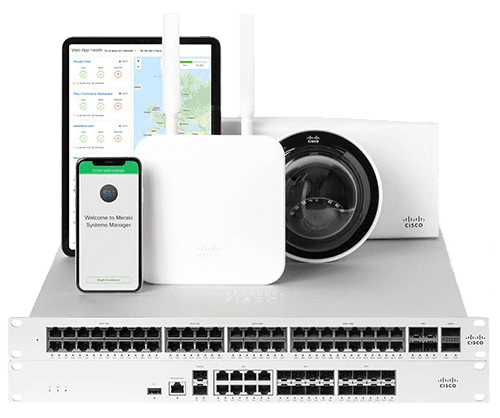
In a business world increasingly oriented towards efficiency and mobility, network management becomes a critical factor for success. Cisco Meraki stands as an undisputed leader thanks to its ability to offer a fully cloud-based technology, allowing companies of any size to manage their network devices remotely and centrally. This platform not only ensures the security and scalability required in enterprise environments, but also optimizes network performance by adapting the available bandwidth to the demands of the devices. However, to take full advantage of Cisco Meraki and ensure optimal infrastructure performance, proper monitoring becomes essential. In this context, Pandora FMS emerges as an end-to-end solution that allows adding a customized monitoring layer to the Cisco Meraki platform, facilitating early problem detection, performance analysis and scalability planning. Next, we will explore in detail why the combination of Cisco Meraki and Pandora FMS is the ideal choice for companies looking for efficient and proactive management of their network.

LThe great advantage of Cisco Meraki, which has made it stand out as a leader in its sector, is that it allows companies, regardless of the size of their network infrastructure, to offer 100% cloud-based technology.
Of course, this allows you to manage devices from multiple locations remotely through a centralized tool, which has an API through which you may query through Pandora FMS, to add the whole monitoring of the environment in an easily and quickly, through plugins already designed for this function.

Why to Choose Cisco Meraki?

It is worth mentioning that the great advantage of Cisco Meraki is the technology of its cloud-based platform, which is widespread among companies of all sizes, and which includes the following advantages:

  • Security: It offers malware protection, state-of-the-art firewalls, and data encryption. The standards comply with PCI level 1 regulations.
  • Scalability: Cisco Meraki integration can be done both for one site and for thousands of devices distributed at different points. In addition, once deployed from the beginning, tools are offered to make the growth of the environment as efficient as possible.
  • Performance: It provides network administrators with optimal performance by adapting the available bandwidth to the devices available.

Why monitor Cisco Meraki?

  • Network Troubleshooting: It includes equipment malfunction or network overflow through traffic analysis tools.
  • Environment Performance Analysis: Equipment that appears to be working properly but is actually flapping at its ports or a network interface whose speed is not enough to meet bandwidth needs can be as disruptive to your infrastructure as a device that is downright down.
  • Infrastructure Scalability Scheduling: Are you sure that your devices are enough to meet the needs of your network? Monitoring the environment is key both to find out if it is necessary to add more devices, and to know whether there are lots of them for your real traffic.

Why choose Pandora FMS to monitor Cisco Meraki?

Let’s face it, Meraki’s own Cloud already includes infrastructure monitoring tools such as dashboards. So why should you worry about monitoring your Cloud devices with external software like Pandora FMS?
Here are just a few of the advantages you would enjoy by adding Cloud devices to Pandora FMS:

  • Fully Custom Alerting Settings: Defining an alert when a problem is detected in a sensor (module) in Pandora FMS goes beyond notifying you by email or other notification tools, such as SMS or Telegram, the number of times and in the period of time you need. This section also includes the possibility of performing custom actions, such as trying to reboot a device automatically, writing on log files, opening an incident ticket on a ticketing platform…
  • Custom Infrastructure Definition: Differentiating between groups of agents, agents and modules is fully definable depending on how you want to define computer division in your infrastructure.
  • Stored Event History: Any status change and alert triggering from your sensors generates an event that is stored in a history that can be checked to perform a problem analysis in your network.
  • Creating custom services, reports and visual consoles: Pandora FMS services allow you to assign importance to the different computers through a weighting system, visual consoles allow you to build your whole network infrastructure through icons that may change color according to device status in real time. Reports can be configured to prepare a summary of availability of a equipment or a network interface in an estimated time… these are just some examples of the analysis that you may get by storing your device data in Pandora FMS.
  • Ease of integration between platforms: We have a plugin with which to add the devices within the Meraki Cloud with a simple execution. It is also possible to customize the modules you wish to add if you have direct access to the equipment using the SNMP protocol.

Pandora FMS Modules for Cisco Meraki

A Pandora FMS module is an information entity that stores data from a numeric or alphanumeric individual check (CPU. RAM, traffic, etc.). That is, if in a switch you wish to monitor its general CPU, and the operating state and input and output traffic of two of its interfaces, you will need to create 7 modules: one for the general CPU, two for the operating state of the two interfaces, two for the input traffic of the two interfaces and two for the output traffic of the two interfaces.
Modules are stored in dummy entities called agents. Generally, each agent represents a different device.
Finally, an agent always belongs to a group. Groups are sets that contain agents and are used to filter and control visibility and permissions.
By knowing these terms, we can get to know the structure of devices and checks that are automatically created in Pandora FMS with the execution of the “pandora_meraki” plugin that we have to add to our monitoring the information that can be retrieved from the cloud.

Meraki device agents and modules created using plugins

We have an official PandoraFMS plugin that will hugely improve the task of adding devices from the Meraki Cloud to your monitoring.
The plugin documentation can be found at the following link.
It is a server plugin (it must be located on the machine where PandoraFMS server is located), which must be indicated through parameters the URL of your Cloud, the organization ID of the company and the name of the group to add the agents that will be created through the plugin. With a simple execution, agents will be created for each appliance, switch and wireless device within a Network that matches the name of the group indicated by the parameter.
The modules created will be the following:

  • For each appliance device:
    • Device status
    • Operational status of its interfaces
    • Performance percentage
  • For each switch device:
    • Device status
    • Operational status of its enabled interfaces
    • Inbound traffic from its enabled interfaces
    • Outbound traffic from its enabled interfaces
  • For each wireless device:
    • Device status


Meraki device agents and modules created through SNMP checks

If it is necessary to add an extra module to those created by the plugin and there is connectivity between Pandora FMS server and the Meraki network devices, it is also possible to add monitoring through SNMP check polling network modules.
SNMP version 1, 2 or 3 protocol must be activated in the configuration of the Meraki devices and a network server module must be created for each check that is needed, as in any other network device.
This video explains how to create these types of modules.

Conclusions

Delving into more extensive monitoring than that offered by Meraki’s own Cloud-native systems is necessary to detect medium/long-term problems such as network saturation and perform a performance and scalability analysis. And it is downright essential for the configuration of a custom and immediate alert and the automation of tasks such as ticket creation.
To delve into it, it is necessary to have a system specifically oriented to monitoring and that offers the integration of this system with the devices added to the Cloud.
Pandora FMS allows, not only all this ease of integration and analysis tools for the Meraki Cloud, but also in the same environment it is possible to add the whole monitoring of the rest of the company’s areas and devices, such as servers, or the addition of metrics from other manufacturers.

About Version 2 Limited
Version 2 Digital is one of the most dynamic IT companies in Asia. The company distributes a wide range of IT products across various areas including cyber security, cloud, data protection, end points, infrastructures, system monitoring, storage, networking, business productivity and communication products.

Through an extensive network of channels, point of sales, resellers, and partnership companies, Version 2 offers quality products and services which are highly acclaimed in the market. Its customers cover a wide spectrum which include Global 1000 enterprises, regional listed companies, different vertical industries, public utilities, Government, a vast number of successful SMEs, and consumers in various Asian cities.

About PandoraFMS
Pandora FMS is a flexible monitoring system, capable of monitoring devices, infrastructures, applications, services and business processes.
Of course, one of the things that Pandora FMS can control is the hard disks of your computers.

How to change autofill settings on iPhone

How to manage autofill for your contact information

Here’s how you can quickly edit your contact information, such as your address or phone number:

  1. Open Settings on your iPhone.

  2. Scroll down and tap on Safari.

  3. Select Autofill.

  4. Tap on My Info and choose your contact card.

  5. Update your information in the Contacts app, and it will automatically reflect in your autofill settings.

How to manage autofill for your credit card information

Storing your credit card information on your iPhone can make online shopping a breeze. Here’s how to add or update your credit card details:

  1. Open Settings.

  2. Go to Safari.

  3. Tap on Autofill.

  4. Select Saved Credit Cards.

  5. Authenticate via Face ID, Touch ID, or passcode.

  6. You can also add a new card by tapping Add Credit Card or update existing ones by selecting the card you want to edit.

How to autofill passwords on iPhone

Automatically filling out passwords saves time and reduces frustration related to manually typing long, complex passwords. Using autofill also allows you to forget your passwords, which is a nice bonus.

Here’s how to start using the autofill feature for passwords on your iPhone:

  1. Open Settings.

  2. Tap the Apple ID banner.

  3. Select iCloud.

  4. Tap Passwords and Keychain.

  5. Turn on the Sync this iPhone toggle switch and enter your Apple ID credentials if prompted.

Here’s how you can add new passwords or manage them on your iOS device:

  1. Open Settings.

  2. Scroll down to Passwords.

  3. Use Face ID, Touch ID, or passcode to access your saved passwords.

  4. Here, you can add new passwords or update existing ones.

Here’s an in-depth guide about managing your passwords on an iPhone.

Why could NordPass be a better option for managing your passwords and personal information?

While built-in options like the native iOS Passwords app provide basic functionalities, NordPass takes password and personal information management to a markedly higher level.

One of NordPass’s standout features is its seamless synchronization, allowing users to access their passwords and personal information across multiple devices and platforms—be it Windows, macOS, Linux, Android, or iOS. This cross-compatibility is a significant advantage for users who operate within diverse technological ecosystems​.

NordPass also goes beyond simple password management and offers a comprehensive suite of advanced tools designed to help individuals and businesses alike improve their digital security.

The Data Breach Scanner provides a way to check whether your sensitive data such as emails, passwords, or personal information, has been compromised in a breach. You can also set Breach Monitoring and receive real-time alerts in case your data appears in the breach.

Complementing the Data Breach Scanner, the Password Health feature can help you identify weak, old, and reused passwords, improving your passwords and overall security posture.

In addition, NordPass includes an Email Masking feature—a tool that generates fake, disposable email addresses that can be leveraged for online signups, making sure your real email remains a secret. This limits spam, and minimizes the risks of phishing.

In terms of support, NordPass offers 24/7 customer service, ensuring that help is available whenever it is needed. If you are already using NordPass, here’s a quick guide on enabling the NordPass autofill on iOS.

FAQ

How do I change the autofill address on my iPhone?

Open Settings. Select Safari, click Autofill, and choose My Info. Select your contact card. Update your address in the Contacts app, and it will automatically update your autofill settings.

How do I turn off autofill on my iPhone?

If you prefer not to use autofill, you can turn it off by going to Settings, selecting Safari, and taping Autofill. Toggle off the options for Use Contact Info and Credit Cards.

About Version 2 Limited
Version 2 Digital is one of the most dynamic IT companies in Asia. The company distributes a wide range of IT products across various areas including cyber security, cloud, data protection, end points, infrastructures, system monitoring, storage, networking, business productivity and communication products.

Through an extensive network of channels, point of sales, resellers, and partnership companies, Version 2 offers quality products and services which are highly acclaimed in the market. Its customers cover a wide spectrum which include Global 1000 enterprises, regional listed companies, different vertical industries, public utilities, Government, a vast number of successful SMEs, and consumers in various Asian cities.

About NordPass
NordPass is developed by Nord Security, a company leading the global market of cybersecurity products.

The web has become a chaotic space where safety and trust have been compromised by cybercrime and data protection issues. Therefore, our team has a global mission to shape a more trusted and peaceful online future for people everywhere.