Skip to content

SafeDNS Releases Desktop Agent Version 4.0.0 for Windows, MacOS, and Linux

SafeDNS is excited to announce the release of version 4.0.0 of its Desktop Agents for Windows, MacOS and Linux. This latest update brings a range of improvements aimed at providing even greater privacy, security, and compatibility for users.

What’s New in Version 4.0.0?

1) Support for DoH and DoT Protocols

The ability to choose between DNS-over-HTTPS (DoH) and DNS-over-TLS (DoT) protocols in the agents. These advanced DNS resolution methods encrypt DNS queries, shielding users from potential eavesdropping or manipulation by third parties. By offering both protocols, we give our users the flexibility to select the option that best suits their network environment and preferences.

  • Enhanced Privacy: The encrypted nature of DoH and DoT ensures that DNS queries cannot be intercepted or altered, significantly reducing the risk of cyberattacks such as man-in-the-middle attacks.
  • Improved Security: With DNS traffic hidden from unauthorized parties, users enjoy greater protection against DNS spoofing and other malicious activities.
  • User Customization: Whether users prioritize speed, network compatibility, or specific security needs, the ability to toggle between DoH and DoT ensures maximum adaptability.

SafeDNS remains committed to leveraging cutting-edge technologies to safeguard user data and online activities, and this enhancement is a key milestone in that mission.

2) Full IPv6 Compatibility

With this release, SafeDNS Agents now fully support IPv6 on Windows, MacOS, and Linux platforms. As IPv6 adoption continues to grow, this update ensures our users stay ahead of the curve with seamless integration into modern networks.

  • Future-Proof Connectivity: IPv6 is the next-generation internet protocol, designed to replace IPv4 as the global standard. With IPv6 compatibility, users can connect to a significantly larger pool of IP addresses, enabling uninterrupted access to online services as IPv4 becomes increasingly limited.
  • Enhanced Performance in IPv6 Networks: By optimizing agent functionality for IPv6, users in next-generation networks will experience improved speed, reliability, and scalability.
  • Broad Platform Support: Whether users operate on Windows, MacOS, or Linux, the full IPv6 compatibility ensures consistent performance across all major operating systems, making it easier to transition to IPv6-enabled environments.

Moreover, we’ve taken into account a lot of user feedback and brought back two previous features in this version of the agent. Now, you can select specific Ethernet ports for filtering, allowing you to control only certain connections on the device instead of all traffic.

We’ve also reintroduced PIN protection to prevent removal, ensuring that even if a user has an admin account on the device, they can’t bypass filtering and disable the agent.

Version 4.0.0: A Significant Step Forward

Version 4.0.0 represents a major milestone in improving security, flexibility, and user experience. With these updates, we at SafeDNS are confident its agents will provide even greater value to customers while addressing the demands of an increasingly dynamic digital landscape.

Get the Latest Version Today

Version 4.0.0 of SafeDNS Agents is now available for download. We encourage all our users to upgrade and experience the benefits of these new features firsthand.

About SafeDNS
SafeDNS breathes to make the internet safer for people all over the world with solutions ranging from AI & ML-powered web filtering, cybersecurity to threat intelligence. Moreover, we strive to create the next generation of safer and more affordable web filtering products. Endlessly working to improve our users’ online protection, SafeDNS has also launched an innovative system powered by continuous machine learning and user behavior analytics to detect botnets and malicious websites.

About Version 2 Limited
Version 2 Digital is one of the most dynamic IT companies in Asia. The company distributes a wide range of IT products across various areas including cyber security, cloud, data protection, end points, infrastructures, system monitoring, storage, networking, business productivity and communication products.

Through an extensive network of channels, point of sales, resellers, and partnership companies, Version 2 offers quality products and services which are highly acclaimed in the market. Its customers cover a wide spectrum which include Global 1000 enterprises, regional listed companies, different vertical industries, public utilities, Government, a vast number of successful SMEs, and consumers in various Asian cities.

Understanding Censorship: Exploring Banned Social Media, Content Filtering, and Internet Access Restrictions Worldwide

Social media and communication apps form the core of how people connect, engage, and keep up-to-date in a more connected world. However, it’s not a secret that some governments were more than willing to clamp down on these platforms with reasons such as national security, public order, or cultural preservation. These can bring a great deal of inconvenience to the lives of the residents, as well as travelers, who may be cut off from familiar channels of communication and sharing information. Some of the notable banned social media platforms and apps across different countries around the world are reviewed in the following section.

1. Reddit

  • China: Reddit is blocked in China, along with many other social media platforms.
  • Iran: Reddit has faced restrictions in Iran, although users may find ways to access it via VPNs.

2. X.com (formerly Twitter)

  • Countries China, North Korea, Russia, Myanmar, Pakistan, Iran, Turkmenistan.
  • Reason: X.com is a real-time communication platform. Because of this, it has been instrumental in organizing protests and getting news items out quickly. For this reason, its use has been blocked by governments that strictly regulate information and freedom of speech.

3. Facebook

  • Countries: China, Russia, Myanmar, Ethiopia, Guinea, Burkina Faso, Iran, Turkmenistan, Uzbekistan, Pakistan
  • Reason: Facebook is one of the biggest social networks in the world, and authoritarian governments see it as a threat because it can help people organize, spread criticism, and share information that the government doesn’t like or approve of.

4. Instagram

  • Countries: China, Russia, Myanmar, Guinea, Iran, Turkmenistan, Uzbekistan, Pakistan
  • Reason: Instagram is more than just a place to share photos and videos; it’s where people connect, express themselves, and stay updated. But in some countries, governments block it because they’re worried about the influence of Western culture or the spread of political ideas they don’t agree with.

5. YouTube

  • Countries: China, Ethiopia, Guinea, Eritrea, Yemen, Iran, Turkmenistan, Uzbekistan, Pakistan
  • Reason: YouTube has tons of videos, some of which can be seen as politically sensitive or not fitting with the culture in certain countries, leading these governments to ban it.

6. Telegram

  • Countries: Guinea, Ethiopia, Somalia, Oman, UAE, Iraq, Iran, Turkmenistan, Uzbekistan, Thailand
  • Reason: Telegram is popular for its encrypted messaging and channels, which can be used to organize protests or share information anonymously, making it a target for bans in countries with strict control over communications.

7. WhatsApp

  • Countries: Myanmar, Guinea, Oman, UAE, Qatar, Iran, Turkmenistan
  • Reason: WhatsApp’s end-to-end encryption and widespread use for both personal and group communication make it a common target for censorship in regions with strict communication regulations.

8. TikTok

TikTok has faced increased scrutiny and outright bans over privacy and security concerns around the world. The US Congress passed legislation, sending to the president a defense bill that could force ByteDance, the Chinese parent company of TikTok, to divest from the application or face a national ban due to concerns about the app’s handling of data and its alleged links with the Chinese government, which could be utilized for espionage or other forms of surveillance. Other countries have also taken steps to ban or restrict the use of TikTok, especially on government devices. Australia, Canada, and New Zealand have barred TikTok from official phones for security reasons. The European Union and the UK have joined in putting restrictions on its use on government devices. An international debate is still heating up with concerns over data privacy and security, including the influence of foreign technology on domestic affairs.

In addition, there is a country like North Korea, where both apps and content are heavily restricted. This includes a broad range of content, from foreign news and social media platforms to entertainment and educational resources, all tightly controlled to maintain a highly regulated digital environment.

9. Roblox:

  • China: Banned because it might spread anti-communist propaganda and unregulated content.
  • Jordan: Restricted due to worries about bad language and violence.
  • Guatemala: Banned because it’s considered unsafe for kids

10. Twitch:

  • Iran: Blocked on July 4, 2022, restricting access for Iranian Internet users.
  • China: Blocked due to strict internet censorship and control over online content.
  • Russia: Limited access or blocked in response to regulatory and political pressures.


Banned Content Beyond Apps

In addition to the outright ban of certain apps, some countries impose restrictions on specific types of content across all media, including the internet. This can include:

  • Political Content: Many countries restrict content that is critical of the government or that might inspire political dissent. For example, in China, content related to the Tiananmen Square protests or the Hong Kong independence movement is heavily censored.
  • Cultural Content: Content that is perceived as offensive to local customs, religions, or values is often restricted. This can include anything from depictions of alcohol consumption to certain sexual content.
  • Historical Content: In some countries, certain interpretations of historical events are banned. For instance, Holocaust denial is illegal in Germany and other parts of Europe.
  • Foreign News: In an effort to control the narrative, some governments restrict access to foreign news sources, especially during times of political unrest.

The Impact on Travelers

For travelers, these restrictions can be a frustrating surprise, especially when trying to use their favorite social media or messaging apps. It’s important for travelers to know what to expect in terms of internet access in the countries they’re visiting. Sometimes, using a VPN (Virtual Private Network) can help get around these blocks, but even VPNs can be restricted or illegal in some places.

The Role of Content Filtering

Besides blocking specific apps, there are other ways to limit what you can see online, such as content filtering. Content filtering works by blocking certain types of content based on predefined categories, like adult material, gambling sites, or other topics considered inappropriate. This means that even if a website is accessible, specific pages or types of content can be restricted to prevent access. Content filtering is often used by schools, workplaces, and parents to control what users can view online, making it a useful tool for managing internet use and ensuring it aligns with certain guidelines or policies. Some organizations use solutions like SafeDNS for web filtering and app blocking to manage and control internet access according to their specific needs and policies.

Internet Service Providers (ISPs) play a big role when it comes to content filtering. Since they can implement web filtering at the network level, they’re in a position to influence what all their users can and can’t access online. But it’s not just about blocking bad stuff—it’s about offering added value to their services.

SafeDNS steps in with flexible, secure solutions for ISPs that want to up their game on network protection. These tools let ISPs offer cool features like parental controls, so families can keep an eye on what’s being accessed on their home network. It’s a service that builds trust and boosts customer loyalty, making it a win-win for ISPs.

SafeDNS also helps ISPs stay on the right side of the law. If the government says to block certain sites or apps—like TikTok, 1xBet, or crypto exchanges—SafeDNS has them covered. With AI and machine learning in the mix, SafeDNS gives ISPs top-notch content classification and filtering, keeping them compliant with regulations and meeting customer demands.

The digital divide caused by social media bans and content restrictions brings up bigger global issues around control and freedom. Countries with strict internet rules use these measures to control the flow of information and shape cultural norms. For travelers and locals, this means dealing with a digital world where familiar apps and websites might be off-limits.

These challenges can actually lead to some practical solutions for travelers. Before heading out, it’s a good idea to check out the local internet rules and maybe download any important apps or content you’ll need. Using a VPN can help you safely access blocked sites and services. You can also switch to local social media or messaging apps that are still available. By staying up-to-date with the local digital scene, you can adapt and stay connected. This approach not only helps you navigate current barriers but also gives you a better understanding of how technology interacts with governance and culture, enriching your view of digital freedom and connectivity worldwide.

About SafeDNS
SafeDNS breathes to make the internet safer for people all over the world with solutions ranging from AI & ML-powered web filtering, cybersecurity to threat intelligence. Moreover, we strive to create the next generation of safer and more affordable web filtering products. Endlessly working to improve our users’ online protection, SafeDNS has also launched an innovative system powered by continuous machine learning and user behavior analytics to detect botnets and malicious websites.

About Version 2 Limited
Version 2 Digital is one of the most dynamic IT companies in Asia. The company distributes a wide range of IT products across various areas including cyber security, cloud, data protection, end points, infrastructures, system monitoring, storage, networking, business productivity and communication products.

Through an extensive network of channels, point of sales, resellers, and partnership companies, Version 2 offers quality products and services which are highly acclaimed in the market. Its customers cover a wide spectrum which include Global 1000 enterprises, regional listed companies, different vertical industries, public utilities, Government, a vast number of successful SMEs, and consumers in various Asian cities.

Ensuring Node Resilience: SafeDNS’s Commitment to 100% Uptime

Reliability and uptime are the most critical aspects of DNS resolution. At SafeDNS, we are proud to be the most sustainable DNS resolver worldwide—providing unmatched reliability and making sure that all of our nodes are operational with 100% uptime. Overviews of how this level of resilience and security is achieved are shown below. Understanding Node Reliability and Uptime Node reliability simply means that any DNS resolver should be up and available all the time. This becomes a highly relevant metric since most businesses and organizations require continuous, uninterrupted services. Uptime means the fraction of the time a node has spent being up versus its total time in operation. Our guarantee of 100% uptime means our nodes are always on and never off. Managing Node Attacks: Ensuring Service Continuity and Stability If a node comes under attack, several mechanisms are put into place to protect and maintain service continuity. The system detects abnormal traffic patterns and automatically initiates defense protocols, such as blocking spammers entirely. Common types of attacks include Distributed Denial of Service (DDoS) attacks, which flood the node with excessive traffic, and Denial of Service (DoS) attacks, which target vulnerabilities to overwhelm resources. Our Commitment to 100% Uptime At SafeDNS, we ensure that our nodes are up and running 100% of the time. This commitment involves rigorous measures and continuous monitoring to maintain the highest levels of operational efficiency. Our approach to achieving 100% uptime includes: Rigorous Security Protocols: To maintain high uptime, we implement multi-layered security measures to protect our nodes and ensure uninterrupted service. This includes:
  • Closed Ports: By securely closing all unnecessary ports, we minimize vulnerabilities and prevent unauthorized access, directly contributing to system stability and uptime.
  • IP Address Monitoring: We constantly monitor for any unfamiliar IP addresses attempting to access our systems. Early detection and response help maintain operational continuity.
  • Secure Passwords and Authentication: Our use of strong, secret keys and advanced authentication methods prevents unauthorized access, ensuring that our systems remain secure and reliable, contributing to consistent uptime.
Ensuring Continuous Operation: Our dedication to 100% uptime means that we maintain continuous operation, even in the face of unforeseen circumstances. We utilize advanced technologies and best practices to ensure uninterrupted service, including:
  • Regular System Checks: We conduct frequent system checks and updates to keep our infrastructure secure and fully operational.
  • Robust Failover Systems: In the event of a failure, our failover systems seamlessly take over, ensuring there is no interruption to our services.
  • Proactive Monitoring: Our team of experts continuously monitors our nodes for potential issues, addressing them before they impact our uptime.
Tier IV Security Standards: Our infrastructure is implemented according to factory model classification of Tier IV, providing the highest possible availability and security. Uninterrupted Service with Anycast: With the implementation of Anycast technology, we ensure flawless service continuity and 100% uptime. Our nodes operate around the clock, providing uninterrupted service and maintaining seamless performance at all times.
In addition, To elevate the quality and resilience of our service, we’ve recently transitioned to NetActuate, renowned for their exceptional network and infrastructure solutions. NetActuate offers a dynamic, ultra-low-latency, and highly available network that covers every major global market. Their cutting-edge services maximize performance and reliability, allowing us to uphold our unwavering commitment to delivering top-notch service with unparalleled excellence. In the field of DNS, it’s essential to keep things reliable and ensure that services are always up and running. At SafeDNS, we’re all about being the most dependable DNS resolver out there, with a promise of 100% uptime and unbeatable resilience. Through meticulous implementation of security protocols, adherence to Tier IV standards, and seamless integration of Anycast technology, we ensure that our nodes remain operational and responsive at all times.

About SafeDNS
SafeDNS breathes to make the internet safer for people all over the world with solutions ranging from AI & ML-powered web filtering, cybersecurity to threat intelligence. Moreover, we strive to create the next generation of safer and more affordable web filtering products. Endlessly working to improve our users’ online protection, SafeDNS has also launched an innovative system powered by continuous machine learning and user behavior analytics to detect botnets and malicious websites.

About Version 2 Limited
Version 2 Digital is one of the most dynamic IT companies in Asia. The company distributes a wide range of IT products across various areas including cyber security, cloud, data protection, end points, infrastructures, system monitoring, storage, networking, business productivity and communication products.

Through an extensive network of channels, point of sales, resellers, and partnership companies, Version 2 offers quality products and services which are highly acclaimed in the market. Its customers cover a wide spectrum which include Global 1000 enterprises, regional listed companies, different vertical industries, public utilities, Government, a vast number of successful SMEs, and consumers in various Asian cities.

Back to School: How SafeDNS Helps Schools Meet Key Regulations

As summer draws to a close, students, parents, and educators across the world are preparing for the annual ritual of going back to school. It is that exceptionally busy season of the year when school supplies are being bought, schedules are being organized, and syncing with new routines is being established. However, in recent years, the back-to-school season has also sparked growing concerns in the cybersecurity landscape. With the increasing integration of technology into classrooms, the vulnerabilities and challenges in protecting sensitive data have become alarmingly pronounced.  

The American education system is undergoing a rapid digital transformation, with technology becoming the cornerstone of how students learn and teachers instruct. From online learning platforms and digital grading systems to a vast array of educational technology (ed-tech) products, this integration has proven to be a double-edged sword. While it enhances the learning experience, it also exposes schools to significant cybersecurity risks. The COVID-19 pandemic accelerated this shift, forcing schools to adopt remote learning almost overnight. This swift transition highlighted both the potential and the pitfalls of digital education, particularly concerning the cybersecurity infrastructure of educational institutions.

Here are some key data points you should know:

One of the primary concerns is the protection of student data. Schools collect and store a vast amount of sensitive information, including names, addresses, Social Security numbers, and academic records. This data is often inadequately protected, making it a prime target for cybercriminals. In 2023 alone, several high-profile data breaches occurred within school districts across the country, exposing the personal information of thousands of students and staff.

Another critical issue is the security of online learning platforms. With the rise of remote and hybrid learning, schools have increasingly relied on various digital tools to facilitate education. However, not all these platforms are designed with cybersecurity in mind. Some have been found to have weak encryption, poor access controls, and vulnerabilities that can be exploited by hackers. The consequences of such breaches can be devastating, leading to unauthorized access to sensitive information and disruptions to the learning process.

Phishing attacks have also become increasingly rampant in the education sector. Cybercriminals often target schools with emails that appear to be from trusted sources, such as administrators or educational service providers. These phishing emails can deceive staff into revealing login credentials or downloading malware, which can then compromise the entire school network. The situation is exacerbated by the fact that many educators and administrators lack adequate training in cybersecurity best practices, leaving schools vulnerable to these types of attacks.

Given the rising threats, the importance of cybersecurity in schools cannot be overstated. Securing digital spaces where students and teachers work, connect, and learn is essential to protect personal data and ensure that the educational process remains smooth and uninterrupted. Without proper cybersecurity measures, schools risk losing the trust of students, parents, and staff, which can have far-reaching consequences for the entire education system.

A comprehensive understanding of the regulations and compliance requirements in place is crucial for enhancing cybersecurity in schools across the United States. Key laws such as the Family Educational Rights and Privacy Act (FERPA), the Children’s Online Privacy Protection Act (COPPA), and the Children’s Internet Protection Act (CIPA) are designed to safeguard student data and ensure that schools adhere to best cybersecurity practices. However, the challenge lies in the consistent application of these rules and ensuring that schools have the resources needed to maintain compliance.

Essential Laws for Protecting Student Data Online:

Family Educational Rights and Privacy Act (FERPA): FERPA is a federal law that protects the privacy of student education records. It gives parents and eligible students the right to access and control these records. Schools must handle student information securely and ensure it is not disclosed without proper authorization. Non-compliance with FERPA can result in the loss of federal funding and other penalties.

Children’s Online Privacy Protection Act (COPPA): COPPA focuses on protecting the online privacy of children under the age of 13. It requires websites and online services directed at children to obtain parental consent before collecting personal information. This law is crucial in safeguarding children’s data, particularly as more young students engage with online learning platforms.

Children’s Internet Protection Act (CIPA): CIPA mandates that schools and libraries receiving federal funding for internet access implement measures to protect students from harmful online content. Compliance with CIPA involves the use of internet filters, monitoring the online activities of minors, and educating students about appropriate online behavior.

By using SafeDNS, schools can protect student data, promote safe internet browsing, and stay aligned with crucial cybersecurity regulations. Plus, SafeDNS goes above and beyond by meeting top international standards. We’re talking about the Internet Watch Foundation (IWF), the Federal Office for Information Security (BpjM), and the Canadian Centre for Child Protection’s Project Arachnid. SafeDNS isn’t just about compliance—it’s about setting the gold standard for online safety in education.

Others are the support that SafeDNS gives for compliance with the UK data protection standards and the general data protection law of Canada. Even though the UK has already exited from the European Union, the practices of the law GDPR continue to guard the expectations as stipulated in it, mandating learning institutions to be transparent in the handling of student data, accessing it only after allowance when needed.SafeDNS also answers keeping in line with Keeping Children Safe in Education (KCSIE) in the United Kingdom, which ensures that schools maintain proper standards in safeguarding students on the internet. This, thus, makes SafeDNS a one-stop solution for schools to maintain a safe online environment while still being compliant with all data protection regulations, both local and international.

As technology continues to reshape the educational landscape, protecting sensitive student data has never been more critical. Adhering to key regulations like FERPA, COPPA, and CIPA is essential, but ensuring consistent compliance can be challenging without the right tools. SafeDNS provides a robust solution, helping schools meet these regulatory requirements and beyond, ensuring a secure and smooth learning experience for everyone involved. By adopting SafeDNS, schools can safeguard students’ privacy, maintain trust, and keep the educational process safe and uninterrupted.

About SafeDNS
SafeDNS breathes to make the internet safer for people all over the world with solutions ranging from AI & ML-powered web filtering, cybersecurity to threat intelligence. Moreover, we strive to create the next generation of safer and more affordable web filtering products. Endlessly working to improve our users’ online protection, SafeDNS has also launched an innovative system powered by continuous machine learning and user behavior analytics to detect botnets and malicious websites.

About Version 2 Limited
Version 2 Digital is one of the most dynamic IT companies in Asia. The company distributes a wide range of IT products across various areas including cyber security, cloud, data protection, end points, infrastructures, system monitoring, storage, networking, business productivity and communication products.

Through an extensive network of channels, point of sales, resellers, and partnership companies, Version 2 offers quality products and services which are highly acclaimed in the market. Its customers cover a wide spectrum which include Global 1000 enterprises, regional listed companies, different vertical industries, public utilities, Government, a vast number of successful SMEs, and consumers in various Asian cities.

Adapting to the Remote Work Era: Improving Efficiency and Strengthening Cybersecurity

Over the past few years, there’s been a major shift in how work gets done. Working from home is becoming the new normal, not just a rare exception. This shift has reshaped our views on efficiency and work-life balance, driven by advancements in technology and world-changing events like the COVID-19 pandemic.

Remote work offers numerous benefits:

  • Cost Savings: Firms reduce overhead with no need for large offices, saving on rent and utilities.
  • Greater Autonomy: Employees enjoy more control over their schedules, enhancing satisfaction.
  • Improved Work-Life Balance: Flexibility enables better management of personal and professional life.
  • Increased Productivity: Studies show remote workers are more productive in quiet, private settings.
  • Environmental Impact: Reduced commuting lowers carbon emissions, promoting sustainability.
  • Global Talent Access: Businesses can recruit top talent worldwide, expanding their reach.

However, the return to the office has been met with considerable friction from employees who have gotten used to remote work flexibility. Case in point: what Amazon is having to wrangle with right now is something dubbed ‘coffee badging.

More than a year ago, Amazon announced its new policy on #RTO (#returntooffice), requiring employee presence in the office for at least three days per week, after a period of remote work precipitated by COVID-19. The response of employees has been very fast and negative; at this moment, more than 30,000 people have signed a petition against this mandate.

The employees began to engage in a very creative form of resistance by ‘coffee badging’: they would scan their badges, check into the system, enter the office, drink a cup of coffee, and then leave. Since duration of office presence was not specified in the first policy, it made the company later update it to state that an employee has to spend at least two hours in the office during each visit

Of course, there are many individuals who are enthusiastic about returning to the office. However, the opinions of the 30,000 Amazon employees who signed the petition reflect a significant segment of the workforce that prioritizes the benefits of remote work.

In addition, the shift to remote work has introduced fresh challenges for businesses aiming to safeguard sensitive information. With employees operating beyond traditional office settings, companies face the task of securing data access effectively. The rise in cyber threats due to remote work settings has heightened cybersecurity risks associated with remote access to unprotected networks and personal devices. This necessitates implementing robust security measures to mitigate these cybersecurity risks. Risks emerge from employee devices, home Wi-Fi networks, and unfamiliar third-party applications, necessitating innovative approaches to monitoring and management. Maintaining robust security protocols is crucial amidst this evolving work landscape.


5 Cybersecurity Challenges of Remote Work and How to Overcome These Cybersecurity Challenges

1. Phishing Scams: Remote workers can easily fall for phishing scams, where scammers send fake emails to steal company data. These emails might trick employees into giving away login details or downloading malware. To keep your team safe, host regular training sessions that make learning how to spot these scams fun and engaging. Teach them to recognize sketchy emails and avoid risky actions.

2. Unprotected Connections: One big headache in any remote job is the risk of insecure networks. Public Wi-Fi is like a playground for hackers; that makes the important company data prone when an employee logs in to one of those. Solution: Always use a VPN to get company information; it’s like giving your data a secret passageway. Additionally, implementing multi-factor authentication (MFA) provides an extra layer of security, ensuring secure remote access and protecting accounts from unauthorized access.

3. Device Control: When remote workers use their personal devices to access company data, it can spell trouble for the organization’s security. Installing endpoint security software on these personal devices is crucial to identify and prevent malware infiltration. A proper device management strategy will go a long way to assist in the monitoring of which specific devices are plugging into company information, thus increasing the risks related to data breaches. Establishing robust security measures to monitor and manage these devices will be the foundation in making sure that the data will be safe and remain unexposed.

4. Lack of Monitoring: Remote employees are not physically present in the office, which makes it difficult to monitor their cyber activities. Without the necessary monitoring checks, it becomes challenging to detect any potential threats or attacks. Establish proper monitoring measures to ensure that all systems and networks are secure and are continuously monitored. Implementing a content filtering solution can also help by restricting access to potentially harmful websites and ensuring that employees adhere to company policies on internet usage. The unique risks associated with a remote work environment and remote work environments necessitate tailored security solutions to effectively protect sensitive information.

5. Cloud Safeguarding: Cloud security is another significant concern for remote workers. Cloud providers typically offer several security features and protocols, but it’s essential to ensure that these features are adequate to meet your data security standards. Evaluate cloud providers before making a choice to ensure that they have the necessary security protocols in place. Protecting sensitive data in the cloud is paramount, and organizations must ensure that robust security measures are in place to safeguard this information.

To enhance productivity and protect organizational data, we recommend using content filtering solutions. These tools help in safeguarding against malicious websites and online threats while managing internet usage within the company. By filtering out non-work-related content, content filtering solutions ensure that employees stay focused on their tasks, reducing distractions and increasing overall productivity.

Here’s how SafeDNS can help:

  • Strengthen Security: Help protect your company’s network and employees from all internet threats with our cloud-based content filtering solution. SafeDNS adds an important layer of web filtering to help manage human error and make your cybersecurity stronger.
  • Boost Productivity & Monitor Traffic: SafeDNS puts you in charge of internet access at your company. You can block unnecessary sites and limit access to just what your team needs to get their work done. This cuts down on distractions and keeps everyone following company rules.
  • Next-Generation Protection Using ML & AI: SafeDNS uses the latest in AI and Machine Learning to provide exceptional security. Since 2015, our solution has been updating its database continuously with new online threats and inappropriate content to block them as they appear. In this way, it keeps your data and network safe against ever-changing risks, always one step ahead.

Want to experience it yourself? Try SafeDNS with a free trial here.

To wrap up, remote work isn’t just a trend—it’s a massive shift in how business goes on. More people are working from home now, so the need to strike a balance between efficiency and cybersecurity has become very important. This very article was crafted by someone working remotely, which goes to show just how pervasive this change really is. The digital age of remote work requires modern tools and strategies for any business to remain safe and productive.

About Version 2 Limited
Version 2 Digital is one of the most dynamic IT companies in Asia. The company distributes a wide range of IT products across various areas including cyber security, cloud, data protection, end points, infrastructures, system monitoring, storage, networking, business productivity and communication products.

Through an extensive network of channels, point of sales, resellers, and partnership companies, Version 2 offers quality products and services which are highly acclaimed in the market. Its customers cover a wide spectrum which include Global 1000 enterprises, regional listed companies, different vertical industries, public utilities, Government, a vast number of successful SMEs, and consumers in various Asian cities.

About SafeDNS
SafeDNS breathes to make the internet safer for people all over the world with solutions ranging from AI & ML-powered web filtering, cybersecurity to threat intelligence. Moreover, we strive to create the next generation of safer and more affordable web filtering products. Endlessly working to improve our users’ online protection, SafeDNS has also launched an innovative system powered by continuous machine learning and user behavior analytics to detect botnets and malicious websites.

Securing Internet: Protecting ISPs from Malicious Attacks

Internet security now tops the priority list of users worldwide. At the heart of this effort are Internet Service Providers (ISPs), whose job it is to provide secure and reliable access to the Web. This positions ISPs as the first line of defense, protecting their customers from a range of online threats while ensuring a smooth surfing experience. By understanding and managing malicious traffic, ISPs can safeguard their networks more effectively.

What Are Internet Service Providers (ISPs)?
Internet Service Providers (ISPs) are companies that provide individuals and businesses with access to the internet. They connect users to the internet through various technologies such as DSL, fiber-optic cables, and wireless connections. Beyond basic connectivity, ISPs often offer additional services like email, web hosting, and online storage. Since ISPs enable Internet access, they have a big responsibility to make sure their networks are secure and that users can browse safely. By analyzing traffic patterns, ISPs can detect and mitigate potential threats more efficiently.

Threats Faced by ISPs
ISPs are frequently targeted by various cyber threats because of their key role in the digital ecosystem. Some of the most common threats include:

  • Malware Attacks: Malware, which stands for malicious software, includes harmful programs like viruses, worms, and Trojans. These can sneak into networks and devices, causing serious damage. ISPs are often targeted to spread malware to users connected to their networks, leading to significant security breaches in the digital world.
  • Phishing Attacks: Phishing is when scammers try to trick people into giving away sensitive info by pretending to be a trusted source in emails or messages. This, therefore, means that ISPs should block phishing attempts to prevent customers from falling prey to these malicious attempts.
  • Distributed Denial of Service (DDoS) Attacks: DDoS attacks flood a network with too much internet traffic, which overwhelms the system and makes services stop working. ISPs, being big providers, are often targeted by these attacks, which can seriously mess up their operations and affect lots of users. Implementing effective DDoS protection measures is crucial to mitigate these attacks and ensure continuous service.
  • Content Exploitation: ISPs should take appropriate measures against offensive and unlawful content relating to pornography, child sex abuse material, or any other extremist propaganda. Failure to block such content might invite a sequence of litigation and loss of reputation.
  • Botnet Infiltration: Botnets are networks of compromised computers controlled by a central operator. They can be used to spam huge volumes of emails, steal data, and launch DDoS attacks. ISPs need to monitor network connections closely to prevent botnet infiltration and the subsequent malicious activities.


Why ISPs Benefit from SafeDNS Web Filtering Solutions

  • Protecting Users: SafeDNS defends users against malicious websites, phishing attacks, and other internet threats, ensuring a safer browsing experience across the web. This also helps in controlling malicious traffic and maintaining a secure network.
  • Attracting New Subscribers: Customers who want safe and secure internet access are attracted to advanced web filtering and security features.
  • Increasing Customer Loyalty: When subscribers trust that their internet service provider offers reliable security measures and controls content effectively, it strengthens their loyalty and reduces the likelihood of them switching to another provider.
  • Ensuring Compliance: SafeDNS helps ISPs follow strict rules about accessing content and securing data, making sure they meet local and international laws.
  • Enhancing Service Offerings: Integrating SafeDNS allows ISPs to enhance their service capabilities by offering premium features, thereby improving their value proposition and opening up new revenue opportunities.


Key Advantages of SafeDNS for ISPs

Internet Access Management and Content Filtering
SafeDNS provides ISPs with full control over internet access and content filtering. This feature is important in public Wi-Fi networks due to the high possibility of managing and blocking access to inappropriate or heavy sites. By monitoring traffic patterns, ISPs can optimize their network performance and security.

Enhanced Protection Against Pornographic and Child Sexual Abuse Content
This is indeed one of the priorities of any ISP: to be sure that their network does not let in any harmful or inappropriate content. In particular, that is pornographic and child sexual abuse material. SafeDNS ensures strong filtering options against this content.

Insights on User Behavior
Knowing the behavior of users can be very instrumental to ISPs customizing services towards improving customer happiness. In other words, SafeDNS provides relevant data for the analysis of the browsing trends and preferences of online users, which becomes critical to ISPs. Such data will help in developing focused marketing campaigns oriented at improving the user experience and building stronger subscriber loyalty.

Cases of cyber threats are increasing; hence, it’s no surprise that various ISPs are partnering with advanced web filtering solutions like SafeDNS to bolster their networks. SafeDNS provides ISPs with powerful tools for internet access management, content filtering, and cybersecurity, ensuring users enjoy a safe, controlled, and reliable internet experience. By leveraging these tools, ISPs can better protect against protocol attacks and maintain the integrity of their services.

About Version 2 Limited
Version 2 Digital is one of the most dynamic IT companies in Asia. The company distributes a wide range of IT products across various areas including cyber security, cloud, data protection, end points, infrastructures, system monitoring, storage, networking, business productivity and communication products.

Through an extensive network of channels, point of sales, resellers, and partnership companies, Version 2 offers quality products and services which are highly acclaimed in the market. Its customers cover a wide spectrum which include Global 1000 enterprises, regional listed companies, different vertical industries, public utilities, Government, a vast number of successful SMEs, and consumers in various Asian cities.

About SafeDNS
SafeDNS breathes to make the internet safer for people all over the world with solutions ranging from AI & ML-powered web filtering, cybersecurity to threat intelligence. Moreover, we strive to create the next generation of safer and more affordable web filtering products. Endlessly working to improve our users’ online protection, SafeDNS has also launched an innovative system powered by continuous machine learning and user behavior analytics to detect botnets and malicious websites.

Best Practices for Effective Content Filtering

Setting up a safe and secure online environment is critical for all organizations, whether they are public institutions, businesses, or educational establishments. Effective web filtering helps keep users safe from unwanted or harmful content, and boosts their productivity. This approach reduces the risks of digital exposure, making the online environment safer and more efficient for everyone involved.

Here at SafeDNS, there have been plenty of cases when users experienced issues with regards to filtering. Based on our experience and careful analysis, we’ve compiled several top filtering best practices to help organizations strengthen their online security through effective content filtering. Here’s what we recommend:

Update Filtering Rules and Signatures Frequently
These unique identifiers are what your system uses to identify known malicious software and neutralize them. Frequently updating these signatures keeps you sure that the latest malware threats can be fast-tracked for identification and actioning by your content filtering solution. This becomes very important because cybercriminals keep coming up with new strains of malware to bypass the detection algorithms.

As for URL blacklists, they are an incredibly important part of preventing internet access to known malicious websites. These lists must be updated regularly since new harmful sites are not only being created daily but also being discovered daily. Additionally, incorporating URL filtering can help block access to websites known for distributing malicious content.

Custom Policy Configurations
If personalizing your sneakers is your style, why not apply the same approach to your content filtering policies? At SafeDNS, we provide a number of administrable filters like Time Wasters, General Sites, and Adult Related, among many others. This helps an organization in refining its content filtering policy with precision, addressing all specific details of that particular security requirement. Whether managing multiple user groups, locations, or device types, our content filtering solutions are agile enough to help businesses ensure a secure and productive digital environment, customized to their needs.

Remote Deployment of Content Filters
Remote deployment of content filters is more opportune now than ever, with the increasing digital nature of the work environment. With flexible and hybrid models of work gaining ground, organizations must establish comprehensive content filtering across devices and locations to ensure security and productivity.

One effective approach is to guide client-side installation, where employees are guided on how to install content filters on their devices. This allows active participation by users in securing their systems, provided clear and easy step-by-step instructions are provided. This operates more based on user engagement and reduces the requirement of direct intervention from the IT side, hence making it highly scalable across large and dispersed teams.

On the other hand, some organizations make use of remote IT control, whereby IT staff remotely access the systems of employees to install and configure content filters. Installation, in this case, will follow a standard and uniformity for all devices, hence offering greater control and standardization in the security measures to be implemented.

Clear Communication on Online Safety
Every organization should communicate online safety and content filtering effectively. The various groups that exist within the organizations, employees, customers, partners, and investors, have different requirements. These concerns pertain to the protection of privacy, access to resources for employees, and protection against insecure data and safe browsing of inappropriate content for customers. For the partners and investors, it is the robustness of cybersecurity and its impact on the operations.

Some key points of communication would be content filtering policies, guidelines on the usage of devices, description of security measures against cyber threats, IT support, training, and education. Sharing information freely will enable organizations to reduce fears, clarify any misconceptions, and increase stakeholder support and participation. The touting of positive impact from digital safety measures cements trust and indicates organizational achievement.

It is equally important to educate the parents/guardians on how their children are using their connected devices from the institutions. Most parents usually question the need for these gadgets, if it is safe to use them, and just how the information of their children is collected and secured, especially when the devices come home. This means being very transparent to the parents with respect to the type of information and sensitive data that is collected, its purpose, and security measures in place.

All-Round Threat Defense
Make sure your content filtering solution provides protection from all forms of credential theft, mobile malware, or virus outbreaks. Enhance your security by using tools like DLP and dynamic adult image analysis. Employing strategies to block access to malicious content and restrict access to unapproved sites is essential for all-round threat defense.

Real-Time Reporting and Analytics
Among the major factors that can provide the best content filtering practices is continuous tracking of stats and analytics. Continuous reporting systems and real-time analytics might put organizations at the center of information regarding activities and digital operations. Such practices improve transparency and instill trust in the commitment towards data security, regulatory compliance and operational efficiency.

Moreover, SafeDNS supports customers by issuing advanced reporting and real-time analytics, enabling customers to track data down to the most trifling details. Our latest feature offers updates down to the second, providing invaluable insights that will empower organizations to make better decisions about their digital safety strategies in the best possible time.

Every organization encounters the ongoing challenge of establishing a secure and efficient online environment. Effective web content filtering is essential, whether it’s protecting against malware and credential theft or ensuring that users can safely access the resources they need.

At SafeDNS, we are dedicated to helping you put into practice the best configurations that meet your organization’s unique requirements. Whether you’re looking to deploy advanced security measures, communicate effectively about online safety, or gain deeper insights through real-time reporting, SafeDNS is here to support you every step of the way.

About Version 2 Limited
Version 2 Digital is one of the most dynamic IT companies in Asia. The company distributes a wide range of IT products across various areas including cyber security, cloud, data protection, end points, infrastructures, system monitoring, storage, networking, business productivity and communication products.

Through an extensive network of channels, point of sales, resellers, and partnership companies, Version 2 offers quality products and services which are highly acclaimed in the market. Its customers cover a wide spectrum which include Global 1000 enterprises, regional listed companies, different vertical industries, public utilities, Government, a vast number of successful SMEs, and consumers in various Asian cities.

About SafeDNS
SafeDNS breathes to make the internet safer for people all over the world with solutions ranging from AI & ML-powered web filtering, cybersecurity to threat intelligence. Moreover, we strive to create the next generation of safer and more affordable web filtering products. Endlessly working to improve our users’ online protection, SafeDNS has also launched an innovative system powered by continuous machine learning and user behavior analytics to detect botnets and malicious websites.

SafeDNS introduces advanced DoH and DoH policy features to ensure traffic security

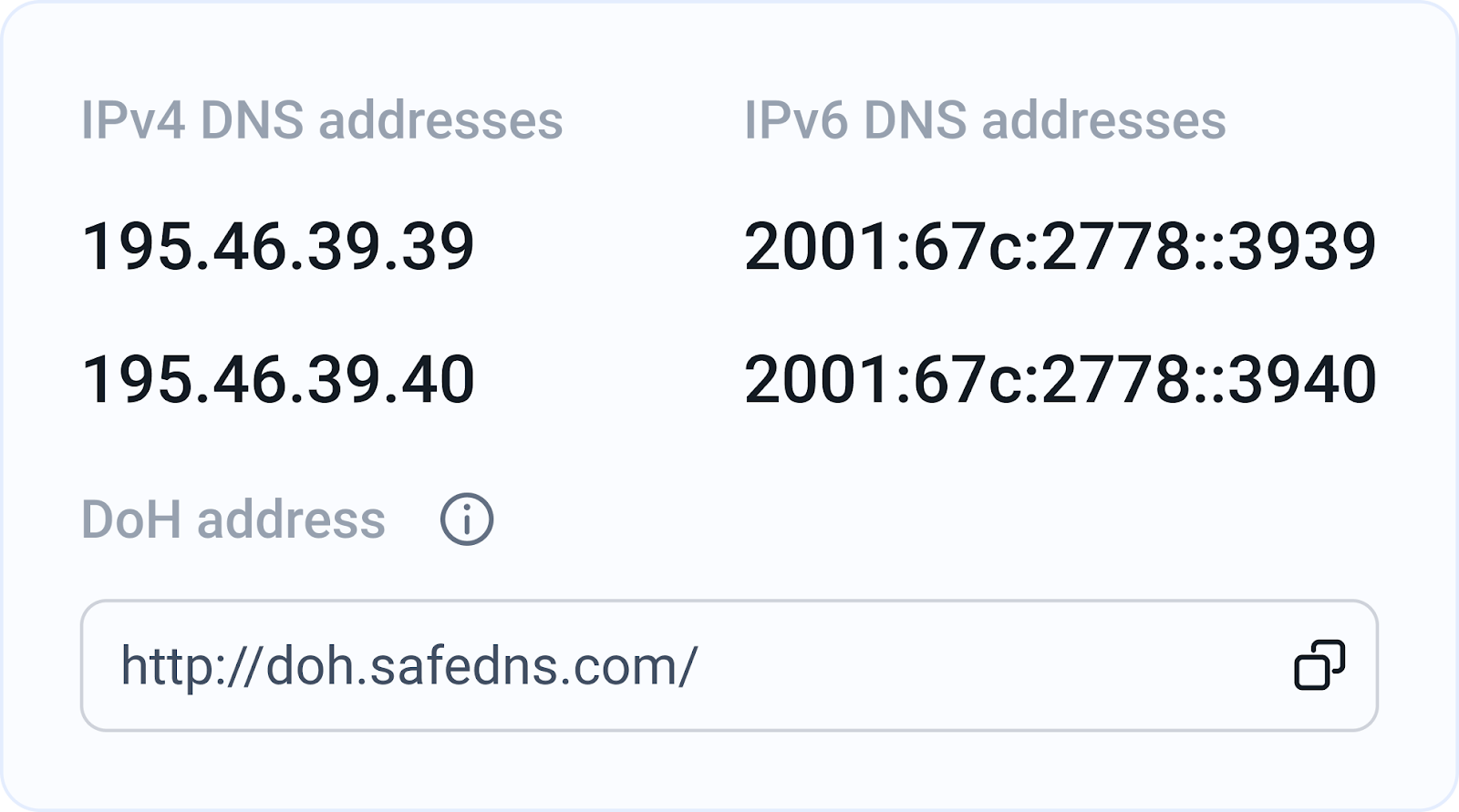
We are extremely glad to announce the release of our brand-new DNS-over-HTTPS feature, which reaffirms our commitment to secure and private Internet experiences for all users. DNS-over-HTTPS (DoH) is a higher-level protocol designed for performing remote DNS resolution using the HTTPS protocol. This development marks a spectacular leap ahead in making user privacy and security better. 

DNS-over-HTTPS (DoH) is a protocol for performing remote DNS resolution via the HTTPS protocol. DoH significantly enhances user privacy and security by encrypting DNS queries, preventing third parties from eavesdropping on user activities, and intercepting data. By encapsulating DNS requests within HTTPS traffic, DoH prevents unauthorized entities from snooping on users’ browsing activities and intercepting sensitive data. This encryption ensures that only the intended recipient, the DNS resolver, can decode and respond to the queries, maintaining the confidentiality and integrity of internet requests.

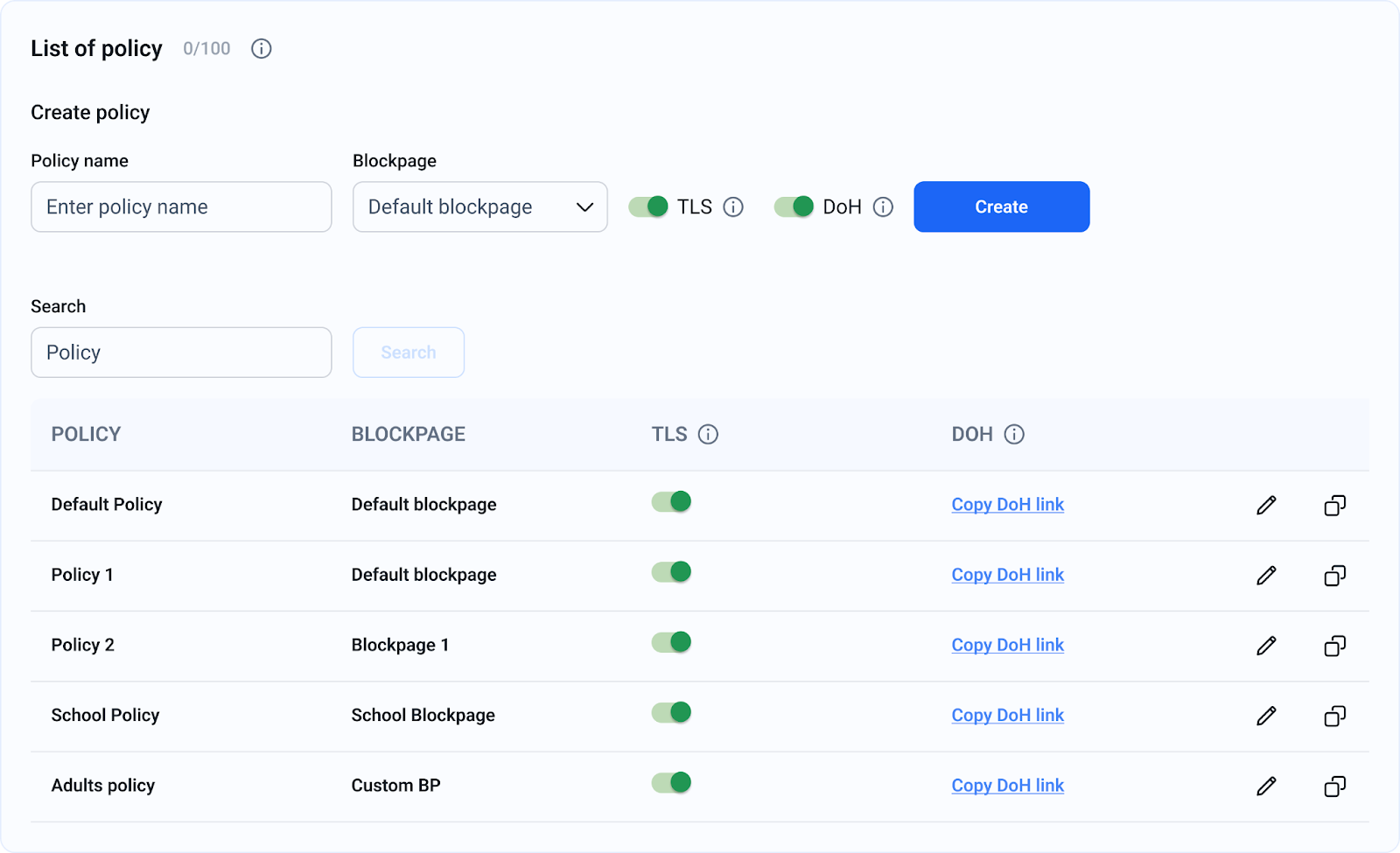
In addition to the core DoH functionality, SafeDNS is introducing the DoH policy feature. This advanced tool helps users generate their unique DoH link embedded with a policy token for applying certain filtering policies without having to manually add an IP address to the SafeDNS dashboard. The integration of this feature simplifies the management process for users, allowing them to enforce specific filtering rules effortlessly and efficiently.

This feature is particularly beneficial for managing and protecting roaming clients without our agents. In other words, such clients will always be protected by the high level of filtering and protection provided by SafeDNS, regardless of their geolocation. It’s important to note that filtering operates within the browser where this setting is applied. We still recommend installing agents for comprehensive protection because when using only DNS over HTTPS, traffic from certain apps and services may remain unencrypted, leaving some vulnerabilities.

The DoH feature is available in all new SafeDNS plans, thus providing a guarantee of enhanced safety and privacy for all its users. However, the DoH Policy feature is exclusively available on our Pro, Pro+, and Education plans, offering advanced policy management and filtering capabilities for enhanced and comprehensive protection. With the DoH Policy feature incorporated in these upper-tier plans, we can deliver a more robust solution for customers that need the very finest level of protection and advanced policy management, ensuring that our users enjoy unparalleled internet security and privacy.

At SafeDNS, our mission is clear: to provide powerful, reliable Protective DNS solutions for safe internet use while attentively preserving users’ privacy and control. On this note, the introduction of DoH and the DoH policy feature underline that SafeDNS continues supplying its clients with all tools necessary to browse the web safely and securely, staying up-to-date with the latest DNS security technologies.

About Version 2 Limited
Version 2 Digital is one of the most dynamic IT companies in Asia. The company distributes a wide range of IT products across various areas including cyber security, cloud, data protection, end points, infrastructures, system monitoring, storage, networking, business productivity and communication products.

Through an extensive network of channels, point of sales, resellers, and partnership companies, Version 2 offers quality products and services which are highly acclaimed in the market. Its customers cover a wide spectrum which include Global 1000 enterprises, regional listed companies, different vertical industries, public utilities, Government, a vast number of successful SMEs, and consumers in various Asian cities.

About SafeDNS
SafeDNS breathes to make the internet safer for people all over the world with solutions ranging from AI & ML-powered web filtering, cybersecurity to threat intelligence. Moreover, we strive to create the next generation of safer and more affordable web filtering products. Endlessly working to improve our users’ online protection, SafeDNS has also launched an innovative system powered by continuous machine learning and user behavior analytics to detect botnets and malicious websites.

Game On: SafeDNS Launches Its Next-Gen Dashboard

SafeDNS is thrilled to announce the launch of our newly redesigned dashboard! This release marks just the beginning of a series of enhancements designed to make your experience with us easier, more efficient, and more productive. Our commitment to innovation is at the heart of this redesign, and we are excited to share the improvements we’ve made.

A New Level of Convenience and Style

Get ready for a whole new level of convenience and style with our revamped dashboard! We have gone above and beyond to design a user-friendly interface that not only looks great but also operates flawlessly. Experience the difference with an intuitive menu structure and a vibrant new color scheme that reflects our innovative spirit. This redesign isn’t merely about aesthetics; it’s about enhancing functionality and improving user experience.

Revamped User Interface

Step into a new era of digital interaction with our modern and refined design. The reworked interface isn’t just a facelift—it’s about making every click and move effortlessly smooth and intuitive. We’ve focused on ensuring that the major upgrade provides a delightful and seamless experience as you navigate through your dashboard. The new interface is designed to reduce the learning curve, allowing you to get things done more efficiently. The emphasis on usability means that whether you’re a long-time user or new to SafeDNS, you’ll find the interface easy to understand and operate.

New Color Scheme

We’ve infused our dashboard with a fresh, lively look that underscores our dedication to staying ahead and thinking forward. The new color palette isn’t just about aesthetics—it’s a reflection of our strategic vision. These bold, eye-catching colors will energize your daily interactions and capture the dynamic, ever-evolving essence of SafeDNS. The new scheme is designed to reduce eye strain and enhance readability, making it easier to work for extended periods. Our goal is to provide an environment that is not only functional but also visually pleasing.

Redesigned Menu

Discover a whole new level of efficiency with our completely reorganized menu structure. We’ve thoughtfully placed everything to ensure that all crucial functions are at your fingertips. Whether you’re setting security parameters, checking your analytics, or exploring new functionalities, it’s all just one click away. Reimagine convenience and enjoy a smoother, more efficient workflow than ever before. The redesigned menu is structured to minimize the number of clicks required to access key features, saving you time and effort. This streamlined navigation is part of our broader effort to make SafeDNS as user-friendly as possible.

Enhanced Performance

Our redesign is not just about looks—it’s about performance. The new dashboard is optimized for speed and efficiency, ensuring that you can perform tasks quickly and without interruption. This performance boost is especially important for users managing large amounts of data or running complex queries. The new system architecture supports faster load times and more responsive interactions, enhancing your overall experience.

Improved Security Features

In addition to usability and aesthetics, we have also enhanced the security features of our dashboard. With cyber threats becoming increasingly sophisticated, it’s crucial to stay ahead of the curve. The new dashboard includes advanced security measures that provide robust protection for your data. We’ve implemented multi-factor authentication, improved encryption protocols, and more granular access controls to ensure that your information remains secure. These features are designed to give you peace of mind, knowing that your data is protected by the latest security technologies.

At SafeDNS, we’re always pushing the boundaries of what’s possible, and our journey doesn’t stop here.


What’s Coming Next?

We’re gearing up for a significant upgrade to our user experience (UX) and backend frameworks. Soon, we’ll be transitioning to a cutting-edge React + Ajax-based architecture.

Why Does It Matter?

These developments will bring you lightning-fast, ultra-responsive interactions, making our dashboard more powerful and user-friendly than ever before. This upgrade is a huge leap forward in our promise to offer exceptional, high-quality service. The new architecture will enable real-time updates and more dynamic interactions, allowing us to deliver features and improvements more rapidly. This is part of our commitment to continuous improvement and innovation.

“We are dedicated to continuous improvement,” said Arko Labrie, the Product Owner at SafeDNS. “The future updates will solidify our position at the forefront of DNS security, providing our users with an exceptional service experience”.

Enhanced Customer Support

As part of our ongoing improvements, we are also upgrading our customer support capabilities. The new dashboard includes integrated support features, making it easier to get help when you need it. You can now access a comprehensive knowledge base, live chat support, and troubleshooting guides directly from the dashboard. These resources are designed to help you resolve issues quickly and get the most out of SafeDNS. Our support team is committed to providing timely and effective assistance, ensuring that you have the help you need to succeed.

The new dashboard is now live and ready for you! We’re thrilled to offer this upgraded experience to all our current users. Explore the new features and enhancements to make your SafeDNS journey even more enjoyable. We eagerly await your feedback, so dive in, explore, and enjoy the new SafeDNS dashboard!

We are committed to continually improving our services and providing you with the best tools to manage your DNS needs. Your feedback is invaluable in helping us achieve this goal. So, set forth, explore, and let us know how we can continue to improve your experience. Thank you for being a part of the SafeDNS community!

About Version 2 Limited
Version 2 Digital is one of the most dynamic IT companies in Asia. The company distributes a wide range of IT products across various areas including cyber security, cloud, data protection, end points, infrastructures, system monitoring, storage, networking, business productivity and communication products.

Through an extensive network of channels, point of sales, resellers, and partnership companies, Version 2 offers quality products and services which are highly acclaimed in the market. Its customers cover a wide spectrum which include Global 1000 enterprises, regional listed companies, different vertical industries, public utilities, Government, a vast number of successful SMEs, and consumers in various Asian cities.

About SafeDNS
SafeDNS breathes to make the internet safer for people all over the world with solutions ranging from AI & ML-powered web filtering, cybersecurity to threat intelligence. Moreover, we strive to create the next generation of safer and more affordable web filtering products. Endlessly working to improve our users’ online protection, SafeDNS has also launched an innovative system powered by continuous machine learning and user behavior analytics to detect botnets and malicious websites.

Wi-Fi Logins with a Twist: Captive Portals and DNS Filtering

Ever connected to a public Wi-Fi network at a coffee shop or airport, only to be greeted by a login page instead of the internet? That’s a captive portal in action. It’s like a gatekeeper, ensuring you meet certain requirements before granting access.

Benefits for Businesses:

  • Security First: Captive portals keep unauthorized users out, protecting business networks from malware and hacking attempts. They can also enforce security terms to limit liability.
  • Marketing on Autopilot: The captive portal is a captive audience! Businesses can use it to display targeted ads,special offers, or showcase their brand.
  • Customer Engagement: Interactive portals with surveys, polls, or social media logins can gather valuable customer feedback and boost engagement.
  • Data-Driven Decisions: Businesses can collect email addresses or social media logins to build email lists and gain customer insights for better marketing.
  • Premium Wi-Fi: Businesses offering high-speed or premium connections can leverage captive portals for paid Wi-Fi access.

While captive portals are great at managing network access and leveraging that access for business benefits, they do not protect users from accessing harmful websites or inappropriate content after they have connected to the network. This is where DNS filtering steps in as a critical ally. 
It works as a second line of defense, blocking access to non-compliant and harmful websites right from the get-go. DNS filtering can block malicious sites even before you log in, keeping your device protected. Additionally, some portals can integrate with DNS filtering, allowing access to specific DNS servers only after successful login. This helps enforce company policies and security guidelines.

Combined, these technologies make it possible for businesses to provide a safe, controlled, and productive online experience. This is why DNS filtering becomes an invaluable partner for captive portals to make the environment not only accessible but also secure.


Potential Bumps in the Road:

Here’s the catch: strong DNS filtering on users device might block the captive portal’s redirection, preventing the login page from showing up. This can be frustrating!

  • Roaming Client Blues: This often happens with software installed on devices (roaming clients) for DNS filtering. If users run into this, they should contact their company’s IT team to add the captive portal to an “allow list”.
  • Local vs. Network DNS: By default, roaming clients might prioritize their own DNS servers over the network’s.This can cause issues with captive portals that require the network’s specific DNS server for redirection.


Finding the Right Balance:

While combining DNS filtering and captive portals offers great benefits, it’s important to consider user experience, technical challenges, and privacy concerns. Striking a balance between security and usability is key. Additionally,organizations need to stay updated on evolving threats and regularly adjust their filtering policies.

The Final Word:

Captive portals and DNS filtering, when used together, create a powerful shield against online threats and unwanted content. This combo allows organizations to create secure and controlled network environments while empowering users to access resources safely. As security threats become more prevalent, this integration is a cornerstone of modern network security strategies.


About Version 2 Limited
Version 2 Digital is one of the most dynamic IT companies in Asia. The company distributes a wide range of IT products across various areas including cyber security, cloud, data protection, end points, infrastructures, system monitoring, storage, networking, business productivity and communication products.

Through an extensive network of channels, point of sales, resellers, and partnership companies, Version 2 offers quality products and services which are highly acclaimed in the market. Its customers cover a wide spectrum which include Global 1000 enterprises, regional listed companies, different vertical industries, public utilities, Government, a vast number of successful SMEs, and consumers in various Asian cities.

About SafeDNS
SafeDNS breathes to make the internet safer for people all over the world with solutions ranging from AI & ML-powered web filtering, cybersecurity to threat intelligence. Moreover, we strive to create the next generation of safer and more affordable web filtering products. Endlessly working to improve our users’ online protection, SafeDNS has also launched an innovative system powered by continuous machine learning and user behavior analytics to detect botnets and malicious websites.