Skip to content

4 Keys to Consider When Evaluating Cloud Data Protection Tools

External Article by Keepit Staff

Keepit’s Chief Customer Officer (and frequent contributing author to the Keepit blog) Niels van Ingen has been featured in Solutions Review as part of their “Premium Content Series” written by industry experts. 

As a true veteran in the data protection and management space — not only from a product point of view but also from a customer and business development one — Niels covers what he finds are the most important elements to consider when evaluating cloud data protection offerings.

Those who work in IT disaster recovery understand that data is perhaps a business’ most valuable asset that needs protection all day, every day. Implementing a SaaS backup and recovery plan is essential for nearly every aspect of business operations, and those who have not made it a top priority are literally flirting with disaster.

To read the full article entitled ‘4 Keys to Consider When Evaluating Cloud Data Protection Tools’ on Solutions Review, click here.

About Version 2 Limited
Version 2 Digital is one of the most dynamic IT companies in Asia. The company distributes a wide range of IT products across various areas including cyber security, cloud, data protection, end points, infrastructures, system monitoring, storage, networking, business productivity and communication products.

Through an extensive network of channels, point of sales, resellers, and partnership companies, Version 2 offers quality products and services which are highly acclaimed in the market. Its customers cover a wide spectrum which include Global 1000 enterprises, regional listed companies, different vertical industries, public utilities, Government, a vast number of successful SMEs, and consumers in various Asian cities.

About Keepit
At Keepit, we believe in a digital future where all software is delivered as a service. Keepit’s mission is to protect data in the cloud Keepit is a software company specializing in Cloud-to-Cloud data backup and recovery. Deriving from +20 year experience in building best-in-class data protection and hosting services, Keepit is pioneering the way to secure and protect cloud data at scale.

ESET Research discovers StrongPity APT group’s espionage campaign targeting Android users with trojanized Telegram app

  • ESET researchers identified an active StrongPity campaign distributing a fully functional but trojanized version of the legitimate Telegram app.
  • This is the first time that the described modules and their functionality have been documented publicly.
  • StrongPity’s backdoor is modular and has various spying features, such as recording phone calls, collecting SMS messages, collecting lists of call logs and contact lists, and much more.
  • If the victim grants the malicious StrongPity app notification access and accessibility services, the malware is able to exfiltrate communication from messaging apps such as Viber, Skype, Gmail, Messenger, and Tinder.
  • A copycat website mimicking Shagle, an adult video-chat service, is used to distribute StrongPity’s mobile backdoor app.
  • The app is a modified version of the open-source Telegram app, repackaged with StrongPity backdoor code.
  • Based on similarities with previous StrongPity backdoor code and the app being signed with a certificate from an earlier StrongPity campaign, we attribute this threat to the StrongPity APT group.

BRATISLAVA, KOŠICE— January 10, 2023 — ESET researchers identified an active StrongPity APT group campaign leveraging a fully functional but trojanized version of the legitimate Telegram app, which despite being non-existent, has been repackaged as „the“ Shagle app. This StrongPity backdoor has various spying features: its 11 dynamically triggered modules are responsible for recording phone calls, collecting SMS messages, collecting lists of call logs, and contact lists, and much more. These modules are being documented publicly for the very first time. If the victim grants the malicious StrongPity app notification access and accessibility services, the app will also have access to incoming notifications from 17 apps such as Viber, Skype, Gmail, Messenger, and Tinder, and will be able to exfiltrate chat communication from other apps. The campaign is likely very narrowly targeted, since ESET telemetry still hasn’t identify any victims.

Unlike the entirely web-based, genuine Shagle site, which doesn’t offer an official mobile app to access its services, the copycat site only provides an Android app to download, with no web-based streaming possible. This trojanized Telegram app has never been made available from the Google Play store.

The malicious code, its functionality, class names, and the certificate used to sign the APK file, are the identical to the previous campaign; thus ESET believes with high confidence that this operation belongs to the StrongPity group. Code analysis revealed that the backdoor is modular and additional binary modules are downloaded from the C&C server. This means that the number and type of modules used can be changed at any time to fit the campaign requests when operated by the StrongPity group.

“During our research, the analyzed version of malware available from the copycat website was not active anymore and it was no longer possible to successfully install and trigger its backdoor functionality. This is because StrongPity hasn’t obtained its own API ID for its trojanized Telegram app. But that might change at any time should the threat actor decide to update the malicious app,” says Lukáš Štefanko, the ESET researcher who analyzed the trojanized Telegram app.

The repackaged version of Telegram uses the same package name as the legitimate Telegram app. Package names are supposed to be unique IDs for each Android app and must be unique on any given device. This means that if the official Telegram app is already installed on the device of a potential victim, then this backdoored version can’t be installed. “This might mean one of two things – either the threat actor first communicates with potential victims and pushes them to uninstall Telegram from their devices if it is installed, or the campaign focuses on countries where Telegram usage is rare for communication,” adds Štefanko.

StrongPity’s app should have worked just as the official version does for communication, using standard APIs that are well documented on the Telegram website, but it no longer does. Compared to the first StrongPity malware discovered for mobile, this StrongPity backdoor has extended spying features, being able to spy on incoming notifications and exfiltrate chat communication, if the victim grants the app notification access and activates accessibility services.

For more technical information about the latest StrongPity app, check out the blogpost “StrongPity espionage campaign targeting Android users” on WeLiveSecurity. Make sure to follow ESET Research on Twitter for the latest news from ESET Research.


Comparing the legitimate website on the left and the copycat on the right

About Version 2 Limited
Version 2 Digital is one of the most dynamic IT companies in Asia. The company distributes a wide range of IT products across various areas including cyber security, cloud, data protection, end points, infrastructures, system monitoring, storage, networking, business productivity and communication products.

Through an extensive network of channels, point of sales, resellers, and partnership companies, Version 2 offers quality products and services which are highly acclaimed in the market. Its customers cover a wide spectrum which include Global 1000 enterprises, regional listed companies, different vertical industries, public utilities, Government, a vast number of successful SMEs, and consumers in various Asian cities.

About ESET
For 30 years, ESET® has been developing industry-leading IT security software and services for businesses and consumers worldwide. With solutions ranging from endpoint security to encryption and two-factor authentication, ESET’s high-performing, easy-to-use products give individuals and businesses the peace of mind to enjoy the full potential of their technology. ESET unobtrusively protects and monitors 24/7, updating defenses in real time to keep users safe and businesses running without interruption. Evolving threats require an evolving IT security company. Backed by R&D facilities worldwide, ESET became the first IT security company to earn 100 Virus Bulletin VB100 awards, identifying every single “in-the-wild” malware without interruption since 2003.

Multi-factor authentication best practices & strategy

Multi-factor authentication (MFA) requests more than one identification factor when users log into network services. These factors could be one-time codes delivered by secure third-party providers. Or they could be biometric identifiers.

The aim of MFA is to verify user identities and strengthen network protection beyond the level provided by traditional passwords. But how should you achieve this goal?

This blog will explain some core MFA best practices. It will also lead you through a step-by-step guide to implementing multi-factor authentication. The result should be an MFA system that ensures rock-solid network protection where it matters most.

MFA best practices

Multi-factor authentication is an essential addition to cybersecurity setups. Properly configured, MFA allows workers to relocate to their homes, connect remotely as they travel, and use cloud resources anywhere.

These MFA best practices will help you create an authentication system that meets your needs.

1. Plan the right MFA solution for your business

Multi-factor authentication is not a one-size-fits-all technology. Choose the right authentication system for your business needs. For instance, types of MFA to think about include:

  • Biometric scanning, such as retinal scans and fingerprints.

  • One-time passwords (OTP) delivered by tokens, email, or SMS.

  • Hardware devices such as security badges, cards and tokens.

  • Contextual factors such as keyboard behavior, location data, and the network are used to make a connection.

Workers could benefit from biometric scanning if your business relies on mobile devices. Quick, user-friendly biometrics can provide secure access away from the office. Smartphones are well-suited to techniques like fingerprint scans.

Workforces where remote working is routine, might prefer hardware tokens or tags. These small devices are easy to carry between work and home. The tokens will still be required to access network resources if devices are lost or stolen. So they are a good extra defense measure.

Whatever solution you choose, it must comply with network infrastructure. Find an MFA system that is compatible with critical apps and employee devices.

2. Create an enterprise-wide MFA solution

Multi-factor authentication solutions must cover all access points to network resources.

Carry out a device audit before sourcing any technologies. This will help you understand which types of MFA tech to choose and how to train employees to use authentication systems.

Cloud assets and on-premises resources should all be included. Protect all cloud endpoints with more than one authentication factor, with additional protections for high-value assets.

3. Manage change to bring users on board

The biggest problem with multi-factor authentication is ensuring employees use authentication tools consistently and safely. Workers may lapse into unsafe behavior if MFA is too time-consuming or complex. That’s why change management is all-important.

Plan a staged introduction that makes every user feel part of the process. Extra authentication methods will disrupt working practices, at least for a while. But if you approach employees as participants in the process, they will respond positively.

Inform users about upcoming changes at the start of the project. Explain how MFA will benefit workers and how user identification works. Answer any questions as the project unfolds. Workers need to know exactly what is required and how to comply with security policies.

Change managers can isolate areas of potential resistance. Focus on chokepoints like using third-party devices, managing biometrics, and password management. Provide training and refresh user knowledge after MFA comes online.

4. Create user-friendly MFA systems

When mainstreaming MFA, companies need to craft user-friendly solutions. Systems should minimize friction and maximize speed while remaining secure.

Explore ways to reduce the work of users. Adaptive authentication can remove the need for passwords and use device or location information alongside biometrics. Single sign-on portals can bring services together and make logging on easier.

Where possible, provide multiple options for users. Some workers will embrace retina or fingerprint scanning. For others, it could be impractical or intrusive. They might prefer hardware tokens.

When people choose their own solutions, they are more likely to feel in control. When they “own” their authentication choices, workers will be less likely to back-slide and abandon MFA.

5. Combine MFA with single sign-on (SSO)

As hinted above, one common solution for MFA is single sign-on (SSO). SSO creates a single identity security portal. This gateway allows users to access core resources according to their individual privileges.

SSO fits neatly with MFA. You can combine standard password portals with biometrics and one-time passwords. Using a single portal and extra identity verification factors balances user experience and network security.

  • SSO reduces employee workloads, providing instant system access to all relevant resources. That’s particularly useful when connecting remote workers to cloud assets.

  • MFA supplements password security. This solves some problems associated with SSO, including the repeated use of passwords or the reliance on weak passwords that are easy to hack.

6. Make use of contextual factors

Multi-factor authentication systems use more than biometric scanners and hardware tokens. MFA can also leverage contextual information about individual users and their devices.

Contextual information is passive. Users do not need to provide information consciously. Instead, agents detect data about the user’s device or location. Agents on user laptops can tell whether the computer is in the owner’s home or connected to insecure public wifi. Blacklisting screens out unknown devices or those accessing from unsafe locations.

Users move. They won’t always be located at home. And if employees request access from elsewhere, MFA systems ask them for additional information. That complicates matters for laptop or smartphone thieves with access to worker devices.

More advanced authentication factors are also available for extremely high-security situations. Techniques like liveness testing and biometric keyboard verification provide maximum information about user identities. These contextual factors represent an extremely strong barrier against data thieves when used with physical tokens.

7. Think about passwordless solutions

In some cases, MFA allows companies to remove traditional password access from their network perimeter. Passwords are clumsy to use. Few employees use strong passwords or store them safely. Going passwordless can make a lot of sense from a security perspective.

MFA can use contextual information about mobile devices, user locations, or even user behavior. These factors may be sufficient to allow access when combined with biometric data. This saves time while providing a degree of security. However, strong passwords should be retained to access sensitive data and critical workloads.

8. Implement the least privilege to secure network assets

MFA can apply uniformly to all users, but it’s also better to implement role-based MFA to enforce the principle of least privilege. Part of Zero Trust Network Access (ZTNA), this principle states that users should only have access to essential data and applications. All non-essential resources should be off-limits.

Identity and Access Management and network segmentation are core ZTNA technologies, but MFA also plays a role.

MFA systems can ask for additional information when users try to exercise administrative functions. MFA can also apply conditional access to high-security databases and request additional user credentials at regular intervals.

9. Use provisioning protocols for cloud compatibility

Companies can combine MFA systems and critical cloud assets by using provisioning protocols. For instance, Microsoft Azure Active Directory supports protocols like RADIUS and Oauth 2.0.

Standard protocols like RADIUS make it easier to combine legacy network tools and cloud applications. MFA systems must operate across all network devices and resources. Adopting an approach based on standard protocols makes this possible.

10. See MFA as an ongoing process

Deploying MFA doesn’t end when users start to apply biometrics or hardware tokens. Companies must see authentication as an ongoing challenge requiring constant attention and regular audits.

The threat landscape does not stand still. New phishing techniques emerge monthly. Novel malware threats can compromise previously secure endpoints. Network managers must be aware of these developments. Security teams must update MFA systems to reflect real-world cybersecurity risks.

Regularly assess MFA systems to ensure they are delivering effective security. Are workers using them properly? Do you need to use more or different authentication factors? Are any gaps not covered by authentication processes?

Companies also need to be persistent and determined when deploying MFA. Most MFA solutions experience problems. Users regularly report difficulties, which can cause IT teams to roll back authentication projects. Resist this urge.

Provide support to any departments or individuals experiencing issues. Drill down into the concerns reported by users. They may detect technical issues that were not apparent to security professionals.

Above all, don’t expect overnight success. MFA eventually becomes embedded in everyday work, but this won’t happen immediately.

Step-by-step MFA implementation strategy

When implementing MFA, here are the steps to follow:

1. Train users in how MFA works

Employee education is critical when implementing MFA. Every process must be centered around upskilling and reassuring users.

Poorly informed workers may resist authentication techniques or back-slide to unsafe practices. Here are some things to bear in mind when training staff:

  • Regularly communicate via email from the start of the project. Timely emails will ensure staff are aware of timescales and security policies. They can include contact details for project leaders.

  • Create ways for staff to engage with project managers. Messaging apps like Slack are a good option here. Make staff available to field any queries and provide updates if requested.

  • Stress the positive aspect of MFA. Always focus on why you are introducing MFA and how it will help individuals.

2. Design an MFA system to suit your needs

Choosing the right form of multi-factor authentication is critically important. Some companies find that biometric scanners like facial recognition are appropriate. This works well when end users have access to smartphones with reliable cameras and fingerprint scanners.

Other companies prefer to distribute hardware tokens to remote workers. Tokens provide one-time passwords and can be tracked remotely by security managers.

Questions to ask when choosing an MFA solution:

  • What kind of devices will use your MFA system?

  • Is there a mixture of work-from-home and on-premises end users?

  • Is ease of use more important than pure identity security?

  • Do you need sophisticated solutions with fine-grained MFA controls?

  • Is cost an overriding factor, or can you afford to spend more?

  • What apps and services will your MFA solution interact with? Compatibility is essential to avoid friction and improve the user experience.

3. Apply privileges to roles and individuals

Create privilege levels for different access requests. This allows individuals to access core resources while keeping sensitive data off-limits to those who do not need it.

You might want to request extra identity data when accessing customer records or executing admin commands on cloud platforms. MFA requests every few hours may also be needed when accessing financial records.

Some resources may not need MFA at all. Contextual controls and passwords could be sufficient to protect low-sensitivity resources. However, risk assesses each asset to avoid leaving confidential data exposed.

4. Make sure your MFA implementation is compliant

Authentication is a core aspect of major data security regulations, including HIPAA, GDPR, and PCI-DSS. Sectors like health care or financial processing have specific requirements absent from other business areas. Knowing which regulations affect your business is absolutely vital.

For example, PCI-DSS requires:

  • Strong encryption of all customer data

  • Three-factor MFA for any servers handling customer data

  • Identity management to ensure customer records can only be accessed by authorized individuals

Third-party authentication providers should possess the accreditation. Look for an Attestation of Compliance (AOC) with PCI-DSS or HIPAA. This means the provider has been independently assessed as meeting compliance standards.

5. Create a streamlined way to request backup factors

Sometimes employees lose authentication hardware or business laptops. In these cases, they will probably also lose MFA data. Security best practice involves resetting the user’s account with a backup factor and creating a new set of authentication information.

One option is to enable multiple devices on a single account. If users have more than one authorized device, they can use it to request backup factors and reset their accounts.

Security teams should also be prepared to remove authentication factors from user accounts when thefts occur. There should be a clear process for quarantining compromised factors, making it tough for thieves to use stolen identity credentials.

6. Plan to on-board new remote workers

All work-from-home equipment must be audited and authorized with MFA software installed. But setting up MFA with remote workers can be time-consuming. It may leave security vulnerabilities if staff is left to their own devices.

Many companies provide work laptops for new hires. If you take this route, take time to lead staff through the MFA onboarding process. If necessary, schedule video meetings to explain the process. That way, you can verify that staff properly follow every step.

7. Configure adaptive MFA controls

Before MFA goes live, explore additional security controls your provider offers. This should include adaptive systems to detect anomalies and meet threats proactively.

At this stage, you can blacklist certain access locations. For instance, you may blacklist all public wifi hotspots. But you could even limit access from entire continents.

8. Plan to audit your MFA solution

Plan to reassess your authentication setup regularly. Every MFA implementation experiences some problems. They are generally not deal-breakers and tend to involve easing users into the authentication process.

Check that users are following MFA practices. And make sure privileges match up with risk assessments. Do multiple factors protect confidential data, or can general users access databases?

As new threats emerge, authentication systems can become outdated. Be prepared to update software or add new factors if the situation changes.

How can NordLayer help with MFA implementation?

NordLayer offers a suite of security tools allowing companies to create secure SSE architecture at the network edge. Guard cloud assets, on-premises data centers, and remote work laptops. And make life easy for workers to carry out their tasks.

Our products include 2FA or MFA for authentication to increase security levels while connecting to company networks. NordLayer caters to apps like Google Authenticator or Authy and USB devices to deliver security keys.

Adding MFA is quick and easy, especially when you combine authentication and SSO. The result is all-around security for critical business assets. To find out more, get in touch with the NordLayer team today.

About Version 2 Limited
Version 2 Digital is one of the most dynamic IT companies in Asia. The company distributes a wide range of IT products across various areas including cyber security, cloud, data protection, end points, infrastructures, system monitoring, storage, networking, business productivity and communication products.

Through an extensive network of channels, point of sales, resellers, and partnership companies, Version 2 offers quality products and services which are highly acclaimed in the market. Its customers cover a wide spectrum which include Global 1000 enterprises, regional listed companies, different vertical industries, public utilities, Government, a vast number of successful SMEs, and consumers in various Asian cities.

About NordLayer
NordLayer is an adaptive network access security solution for modern businesses – from the world’s most trusted cybersecurity brand, Nord Security.

The web has become a chaotic space where safety and trust have been compromised by cybercrime and data protection issues. Therefore, our team has a global mission to shape a more trusted and peaceful online future for people everywhere.

IPEVO Launches TOTEM 180 Panoramic Conference Camera

Sunnyvale, CA, Jan 5, 2023IPEVO Inc, a leading communications provider announced today the release of the TOTEM 180 Panoramic Conference Camera, adding to its new TOTEM lineup of innovative conferencing solutions. The TOTEM lineup brings forward the new approach of plug-and-play, easy-to-use conferencing solutions, and immersive experiences.

Designed for small and medium-sized meeting rooms, the TOTEM 180 enables users to bring the team together within seconds by creating a highly efficient and immersive meeting environment. TOTEM 180 adopts video stitching technology by using two separate lenses to extend a 180-degree video capture, greatly reducing the distortion of the video while presenting a high-resolution natural view. Featuring 2 omnidirectional microphones with built-in noise-reduction and an AI chip-accelerated auto-framing feature, the TOTEM 180 combines all of these features to deliver a seamless experience.

IPEVO provides the powerful video software, IPEVO EyeStage™, an ideal companion for video conferencing applications. With multiple powerful functions built in and AI framing modes (including picture-in-picture, split-screen, automatic switching, and face tracking), EyeStage can combine two video feeds into one single output as a virtual camera for conferencing apps. Both EyeStage and TOTEM 180 work well with Zoom, Google Meet, Microsoft Teams, Webex, Skype, GoToMeeting, and other video conferencing software.

“In the era of digital transformation, companies are embracing dynamic workplaces and more frequent meeting needs.” says IPEVO Marketing Manager, Oscar Tu, “TOTEM 180 can help improve a team’s productivity, stimulate creativity, and help for multiple scenarios including high-efficiency collaboration, instantly upgrading huddle rooms to video conferencing rooms, and distance learning and hybrid learning environments.”

The IPEVO TOTEM 180 Panoramic Conference Camera is now available at all IPEVO global distribution channels.

For media inquiries, please contact: salesus@ipevo.com.

About IPEVO Inc.

IPEVO Inc. is a leading brand dedicated to the research and development of professional video communication products. With advanced technology and intuitive user experience design, it provides customers with solutions to improve communication efficiency.

Since its inception in 2007, IPEVO has been focusing on changing the face of video communication. Overturning the traditional overhead cameras for teaching, it redefined and designed a series of simple, lightweight, and easy-to-use document cameras and video teaching software. It further entered the field of commercial applications in 2022 by launching video collaboration products, enabling video-based teaching, learning, communication, conferencing, and creative sharing, to be as natural and unrestrained as being in-person.

About Version 2 Limited
Version 2 Digital is one of the most dynamic IT companies in Asia. The company distributes a wide range of IT products across various areas including cyber security, cloud, data protection, end points, infrastructures, system monitoring, storage, networking, business productivity and communication products.

Through an extensive network of channels, point of sales, resellers, and partnership companies, Version 2 offers quality products and services which are highly acclaimed in the market. Its customers cover a wide spectrum which include Global 1000 enterprises, regional listed companies, different vertical industries, public utilities, Government, a vast number of successful SMEs, and consumers in various Asian cities.

About IPEVO
IPEVO makes versatile teaching tools instead of specialized “classroom equipment”.
We go beyond the usual conventions of classroom technology—large, expensive, specialized and complex—to rethink simple and flexible solutions for interactive teaching in today’s classrooms.
IPEVO’s interactive teaching tools empower educators and teachers with radically affordable and compact technology that is simple, intuitive and flexible, so that precious time and resources can be wholly dedicated to teaching. We intend to make educational technology accessible and available to all.

Fostering a culture of kindness at runZero

Our world today is so fast-paced that sometimes kindness can take a back seat. At runZero, kindness is in the front seat, guiding how we work together as a company.

For us, it was really important for kindness to be one of our core values–not only because it aligns with how we work–but because it makes all of us successful as a result of it. We really believe that a kind environment cultivates meaningful work experiences that help drive greater success for our customers, employees, and partners alike.

To really deliver on instilling kindness throughout our company, we really focus on:

  • Always assuming good intentions
  • Being kinder than necessary
  • Working at sustainable levels
  • Hiring based on attitude and aptitude and promote accordingly
  • Being fair and respectful of the candidate and employee experience

Always assume good intentions

When we talk about kindness, we start with a shared understanding that everyone has good intentions. Oftentimes, even when someone makes a decision that seems a bit miscalculated, they do it with good intentions. That’s why we strive to assume kindness before anything else.

Instead of going into a conversation on the defense, it’s more productive to come prepared to have an open discussion. Asking questions demonstrates that you truly want to understand someone. For example, if a teammate has taken a different approach on a project, rather than making a statement, ask, “Can you help me understand why you chose this approach?” This kind of communication helps to build trust and kindness, as well as communication, in the workplace.

Be kinder than necessary

It’s not always obvious what someone is going through, so we genuinely ask people how they are doing. Whenever I’ve gone into a situation with guns-a-blazing, I’ve always regretted it afterward. It’s better to keep in mind that there might be something more going on. After all, there may be other things going on in their lives, including family, personal, and medical issues.

Compassion has a profound impact on people and can help create a supportive environment for everyone to thrive. For leaders and managers, it’s important to be compassionate and ask questions when an employee is significantly underperforming compared to their baseline. Try something like this: “I’m getting the feeling that I’m not getting your best work lately. Is there something going on in your life that I should be aware of? Is there any way I can help?”

This kind of warmth not only creates goodwill between both parties, it also indicates you are a more attentive leader. One study, which tracked more than 50,000 leaders, found that those in the top-quartile of performance ranked high on levels of warmth. As it turns out, the nice ones do finish first.

Work at sustainable levels

Some people have trouble believing this, but taking time off makes you a good employee. As leaders, it’s important to set this example.

Having down time allows us to take care of ourselves, our loved ones, and our colleagues. I recognize that it can be difficult to do in startup environments when there’s not enough people to go around to handle all the tasks. However, it’s crucial to make rest a priority for all. Otherwise, you may end up with a different set of problems when conflict inevitably arises inside your teams due to stress.

If your company has a PTO policy of “take whatever you need,” it can be helpful to track your days off in a spreadsheet. Research shows people actually take less than they should, so this is a good way to hold yourself accountable. As a leader, check in with your teams and make sure they are taking the time off they need to be productive.

Hire based on attitude and aptitude and promote based on merit and company needs

When it comes to hiring, we focus on more than just experience. We place a high value on attitude and aptitude, so that everyone has an equal opportunity to join our team and grow their career.

Just because someone has been doing their job for a long time doesn’t mean they are the best at it. We are trying to encourage more diversity in the technology sector, and if we rely mainly on years of experience, then we are dipping into the same talent pool as everyone else. We focus more on demonstrable skills and an attitude that is in line with our cultural values as a company.

We also strongly believe in promoting from within where possible, based upon merit and what best aligns with the needs of the company. This helps minimize regrettable attrition and reduces the amount of time onboarding new employees.

In order for our culture to thrive, positivity is essential. Negativity can spread like wildfire, so we take it seriously.

Be honest about the job

As much as we’re screening a candidate, the candidate is screening us as an employer. We are both trying to discover if we’re the right fit, so it’s important for both of us to be honest.

As an employer, we strive to be transparent with our prospective candidates by publishing salary range data so they can make an informed decision. We are also candid about the challenges of the role and our company, which helps build trust in our relationship. We ask all our candidates to be honest in their assessment of their skills, values, and concerns they may have about the role. We want everyone to start off on the right foot.

Another way we demonstrate kindness to employees is by compensating fairly. We pull benchmark data and compensate at the 75th percentile, meaning we pay better than 75% of employers hiring for comparable roles.

Our employees form the backbone of our company and we want to show how much we value their contribution.

Be fair and respectful to candidates and employees

Rejection is tough, no matter the circumstances, but kindness goes a long way in alleviating the sting of rejection. We try to be as empathetic as possible when dealing with departures of any kind–whether they come from a job application or within the company.

When a prospect has been in the late-stages of interview rounds and we feel we have helpful feedback, we offer to share it. We let them know it’s honest, constructive feedback, but we also also give the candidate the option to decline, as we understand that feedback can be hard to receive, depending on what’s going on in their life at the moment.

For outgoing employees, our company culture works hard to ensure kindness and respect during these transitions. Even when legal best practices restrict our ability to share details, we always strive to uphold our reputation of kindness and understanding at all times. We understand that people sometimes just don’t fit into roles and don’t take it as an indication that someone is a bad person or employee.

Why kindness = success

Kindness isn’t just so people feel good about their work. It’s also for the success of your company. A kind, fair, and just culture sets a strong foundation for employees to feel secure in their environment which increases productivity. A healthy company culture reduces conflict amidst employees so they can focus their energy on collaboration and productivity. Hiring is easier because you screen for candidates that share the same values and you create a positive reputation with candidates and recruiters.

Frankly, it’s also just the right thing to do. Companies are made up of people who deserve kindness from others.

Want to join our team?

Explore our open positions and find the perfect fit for you. Discover why runZero is the best place to build your career.

View open roles
Join our team

About Version 2 Limited
Version 2 Digital is one of the most dynamic IT companies in Asia. The company distributes a wide range of IT products across various areas including cyber security, cloud, data protection, end points, infrastructures, system monitoring, storage, networking, business productivity and communication products.

Through an extensive network of channels, point of sales, resellers, and partnership companies, Version 2 offers quality products and services which are highly acclaimed in the market. Its customers cover a wide spectrum which include Global 1000 enterprises, regional listed companies, different vertical industries, public utilities, Government, a vast number of successful SMEs, and consumers in various Asian cities.

About runZero
runZero, a network discovery and asset inventory solution, was founded in 2018 by HD Moore, the creator of Metasploit. HD envisioned a modern active discovery solution that could find and identify everything on a network–without credentials. As a security researcher and penetration tester, he often employed benign ways to get information leaks and piece them together to build device profiles. Eventually, this work led him to leverage applied research and the discovery techniques developed for security and penetration testing to create runZero.

Hospitals in the Crosshairs: The Alarming Rise of Ransomware Attacks in Healthcare

On a Sunday evening in late December, 2022 The Hospital for Sick Children in Toronto was hit with a ransomware attack that took down several vital hospital network systems and caused widespread disruptions in patient care. While the hospital, the largest children’s healthcare center in Canada, said no deaths resulted from the attack and no patient information was compromised, doctors were unable to access imaging and lab results. This led to delays in diagnosis and treatment system-wide.

Continue reading

Projections of Zero Trust security

Recent years took cybersecurity to a new level — digital transformation, migration to the cloud environments, and remote work became the synonyms of technological business evolution. The new approach pushed such tech terms as VPN (Virtual Private Network), S(A)SE (Secure (Access) Service Edge), MFA (Multi-Factor Authentication), and many more that turned into essential modern cybersecurity elements.

Zero Trust is one of those most critical terms that already live rent-free in IT managers’ heads. It’s way past the emerging buzzword stage — now, Zero Trust is a security model that dictates organizational cybersecurity strategies and general security approaches. 

But how influential is the Zero Trust model? What’s its role in the near future and its place in a broader picture of cybersecurity? Let’s take a look at what trends to expect in the Zero Trust department.

Password is dead; long live Zero Trust?!

The new cybersecurity era will likely be marked by another iconic moment in the digital age. Rumor has it that we will be done with the passwords in 2023. Hard to say if it’s true, but passwords as single-factor authentication are outdated in the context of the current cybersecurity landscape.

Lost or stolen credentials surge black markets imposing risk to data security. A glance at the high numbers of the latest data breaches of 2022:

  • Slash Next reports 255 million phishing-related attacks in 6 months — a 61% increase compared to 2021.

  • According to Verizon, weak or stolen passwords contributed to 81% of hacking-related data breaches. 82% of breaches were triggered by human error (including social engineering attacks).

  • Nvidia suffered an attack and lost the credentials (email addresses and Windows password hashes) of 71,000 employees.

Keeping in mind that 73% of employees recycle the same personal passwords for work-related accounts – NordLayer’s research about bad cybersecurity habits concluded weak passwords as one of the top vulnerabilities of organization security – the number of leaked personal credentials is a huge red flag for organizations.

Despite education and targeted reminders of password hygiene, more than half (59%) of workers tend to reuse passwords while being familiar with existing risks.

The remaining high data breach statistics only confirm the insufficiency of current actions regarding securing credentials and company data accordingly.

The Zero Trust mindset to ‘trust none; verify all’ is a straightforward change for companies to dismiss careless passwords from their systems and elevate security levels effectively. 

A quick recap: ZT, ZTA, and ZTNA

Zero Trust (ZT) is a trust algorithm that ensures resources within specific networks can be accessed only by verified endpoints — devices or users. Yet when discussing cybersecurity, additional concepts of Zero Trust Architecture (ZTA) and Zero Trust Network Access (ZTNA) emerge — what’s the difference?

overlaping charts showing differences between cybersec solutions

An easy way to differentiate Zero Trust, Zero Trust Architecture, and ZTNA is to define Zero Trust as the driving idea, model, or mindset that puts the theoretical foundation for the application of the method.

The Zero Trust principle turns attention to the main focus points:

  • Make sure to check and verify every endpoint connection request to the network.

  • Solely job-mandatory access rights must be granted to perform role objectives. 

  • Plan for the maximum constraint of user movement in the network in case of a breach.

Zero Trust Architecture is a practical application of the Zero Trust approach when building security policies and IT infrastructure as if there was no traditional perimeter. ZTA combines and implements solutions for:

  • Endpoint verification

  • Network supervision. 

ZTNA is a segment of Zero Trust Architecture that provides a solution to trusted-only application access. ZTNA is integral to the SASE and SSE frameworks for establishing security in remote cloud environments.

What changes does Zero Trust employ: ZTNA’s focus

Instead of discussing Zero Trust at theoretical levels, it’s beneficial to investigate ZTNA to understand what changes it suggests and how companies apply them.

According to Statista, the most common solution organizations used to enable Zero Trust segmentation in 2021 was ZTNA. Identity, Credential, and Access Management followed it.

The popularity of ZTNA comes from its adoption as a more efficient identity- and context-supported solution for controlling increasing attack surfaces in hybrid environments.

As ZK Research indicates, VPN was a go-to solution to manage and protect companies’ IT perimeters. However, VPN performance and security fallbacks brought by backhauling network traffic and open network access make it refer to VPN as a remote work solution only as a temporary one.

Therefore, to secure and connect remote workers while managing distributed endpoint, user, and application networks under the organization’s scope, companies turned to secure network access (SaaS, cloud, and edge) solutions, including ZTNA.

Shrinking the attack surface – limiting the threat actor’s activity in the network by requesting additional authentication or assigned permits to access internal applications – is the key feature of the ZTNA solution.

Prospects of Zero Trust in cybersecurity

Cyberattacks continuously challenge everyone, from consumers to federal agencies, hitting the weakest link — passwords. Attacks are disrupting business operations from intelligence businesses to manufacturers — any company with internet-connected systems and networks is vulnerable.

The Zero Trust approach can mitigate hardly controllable external and internal factors that might lead to a breach. ZTNA enables IT administrators to monitor, manage and interact with connections between endpoints and ultimately conclude whether the connection should be approved or denied.

Driving factors of ZTNA adoption

The peak of ZTNA matched with hybrid and remote work developments globally introduced by the COVID-19 pandemic. Although opinions tend to clash, remote work is here to stay, and ZTNA maintains its importance to business network security.

main factors driving ZTNA adoption

To securely return to old ways of working – the static office-contained perimeter, which is the least challenging to maintain and control – all of the workforce should come back to their corporate desks.

Migration to the cloud is gaining momentum as it offers more flexibility and reduces the complexity of traditional IT perimeter.

The password more often causes security issues than prevents it and needs to be reconsidered and redesigned to move to more sustainable solutions.

Evolved understanding of a workplace with WFA (Work From Anywhere) quickly showed the comforts of working from home or cafe, answering work emails from a personal phone, or watching TV series on a corporate laptop after working hours. Yet these blurred lines stretch the reach of unapproved applications and devices blending into the company network.

Although the digital landscape and new modern habits might be alarming, going backward seems unrealistic. Thus ZTNA helps manage current cybersecurity challenges in this technological evolution.

State of remote work 

There’s no denying that companies will have to accept the turned tables — employees now consider not how many days they will decide to work from home but how often they are willing to show up in the office.

If the workforce is not to return to the office full-time, ZTNA naturally cannot be discarded from the company’s cybersecurity strategy.

banner showing remote work statistics

According to ZK Research 2022 Work-from-Anywhere Study, just one – or even less – out of 10 employees consider 100% work on-site, leaving most of the workforce a risk factor to data and application security.

How do companies adopt Zero Trust? 

Zero Trust is dominant in creating security strategies. Statista survey revealed that one-third of polled companies, as of January 2022, already had a formal strategy actively embracing a Zero Trust policy. Only 20 percent of respondents had no Zero Trust strategy as of 2022.

Statista also concluded that almost one-fifth of respondent organizations completely discard the Zero Trust model as a cloud security strategy while the vast majority (81%) fully or partially embrace Zero Trust model guidelines for building internal security policies.

It’s safe to say that Zero Trust has been assigned an important and influential role in shaping the security infrastructure face. The mindset combines Zero Trust backed practices of accountability, consistency, dependability, and transparency to activities and processes within the organization network.

How to transition to Zero Trust?

Benefits for businesses that adopt ZTNA to enhance the security of their network. Deploying Zero Trust-based features establishes secure cloud access and allows network segmentation for least privileged access to resources.

The model reduces insider threat by protecting internal applications and lowering the potential of account breach risk. Overall, ZTNA adoption supports the company’s journey to achieving compliance requirements.

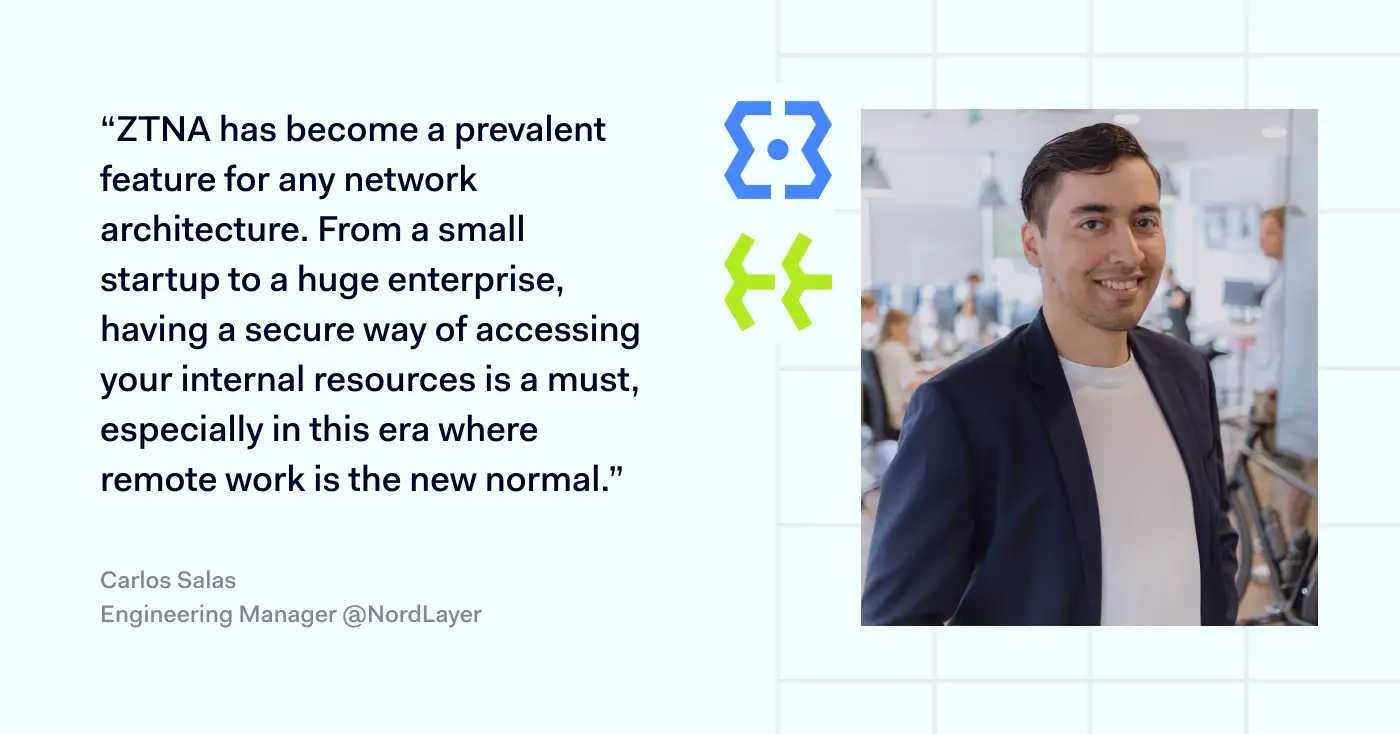
ztna quote from internal expert at NordLayer

Zero Trust Network Access is a predominant framework of any setup that deals with hybrid work as an alternative to VPN. NordLayer solution makes implementation of ZTNA easy and integrable despite the existing infrastructure in your company. Reach out to learn more about securing your business network with ZTNA within minutes.

About Version 2 Limited
Version 2 Digital is one of the most dynamic IT companies in Asia. The company distributes a wide range of IT products across various areas including cyber security, cloud, data protection, end points, infrastructures, system monitoring, storage, networking, business productivity and communication products.

Through an extensive network of channels, point of sales, resellers, and partnership companies, Version 2 offers quality products and services which are highly acclaimed in the market. Its customers cover a wide spectrum which include Global 1000 enterprises, regional listed companies, different vertical industries, public utilities, Government, a vast number of successful SMEs, and consumers in various Asian cities.

About NordLayer
NordLayer is an adaptive network access security solution for modern businesses – from the world’s most trusted cybersecurity brand, Nord Security.

The web has become a chaotic space where safety and trust have been compromised by cybercrime and data protection issues. Therefore, our team has a global mission to shape a more trusted and peaceful online future for people everywhere.

VPN vs. proxy: which should your business choose?

Are you worried about employees leaking private information as they browse the web? If so, you’re probably considering setting up a Virtual Private Network (VPN) or proxy server.

Both technologies mask traffic and conceal your location. But there are significant differences between proxies and VPNs that users need to know. Let’s explore the VPN vs proxy contest in more detail and help you find the ideal privacy solution.

What is a VPN and how does it work?

VPNs are networks that route traffic through private servers before sending it to its destination. When users log onto their VPN client, the service uses special protocols to create a “tunnel” connecting data sources and destinations.

VPNs offer a couple of important security and privacy services:

  • Anonymization. Traffic routed through Virtual Private Network servers is assigned a new IP address. This anonymizes the data source, making it hard for outsiders to track online activity. Outside observers may know you’re using a VPN connection, but your original IP address will be inaccessible.

  • Encryption. VPNs encrypt data from the user device to the virtual private gateway. Any web traffic passing through a remote access VPN server is basically unreadable to outside observers while it is encrypted. Users can still browse the web or access streaming content. But their information and activity will remain private. This is very useful when dealing with financial data.

VPNs are usually paid services. A third-party VPN provider will maintain servers around the world and manage encryption. Users log on via clients, which can be integrated into web browsers if desired.

VPNs also work at the operating system level. This means they cover all traffic leaving or entering a network. They are not restricted to single apps.

What is a proxy and how does it work?

Proxies also use external servers. These proxy servers route traffic from user devices and give each data packet a new IP address. As far as outsiders are concerned, user traffic comes from the proxy’s remote server. This is a major benefit when accessing geo-restricted web content.

On the downside, proxies do not feature data encryption. They can anonymize the identity of a user but not the data they send. Sensitive data remains exposed to attackers, making proxies unsuitable for a business internet connection.

Proxies also tend to be associated with individual applications. They process traffic from web browsers or streaming games. But proxies do not provide all-around privacy at an operating system level.

Understanding the main proxy types

There are various different types of proxy servers, and each has its own use cases:

  • HTTP proxies. Designed to work with web pages and browsers. You can configure Chrome or Edge to route all HTTP traffic through a proxy, or just assign proxy routing to specific websites.

  • SOCKS5 proxies. SOCKS proxies work on the application level and route traffic from specific apps. For example, a SOCKS5 proxy could be assigned to route Skype conversations securely. SOCKS5 proxies are flexible but tend to be slower than HTTP versions.

  • Transparent proxies. Generally invisible to network users. A transparent proxy can filter web traffic and monitor activity. This makes them useful in settings like schools and libraries. Parents could also use them to filter the content available to children.

  • Private proxies. Private proxies provide a dedicated IP address for each user. This does not provide as much privacy as VPNs. However, it can help unblock geo-restricted websites and improve proxy speeds.

Key differences between proxy and VPN

We now know the main features of proxies and VPNs. But here’s the all-important question. How do VPNs and proxies differ, and which one should you choose?

1. VPNs provide encryption

Encryption is the most important difference between VPNs and proxies and probably the key consideration for business users. When you use a VPN, all of your internet traffic is encrypted.

The best paid providers use AES-256 encryption that has no known weaknesses. Encrypted data will be off-limits to thieves, limiting the risk of leaking commercial data. A remote work VPN will also lock down connections between home workers and central offices. So you can establish a secure connection between workloads and user devices.

Proxies never encrypt traffic. All they do is re-route packets and provide IP address anonymization. That can be useful when accessing blocked web pages. But data security will be relatively weak.

2. VPNs handle all traffic, proxies work with individual apps

VPNs function at the operating system layer. They apply encryption and anonymization to all data passing across network boundaries. Businesses do not have to install software on individual apps or configure settings for each service. Privacy controls apply over-the-top – a more convenient solution.

Because they work on the application level, proxies are used with specific software or services. They won’t cover all network connections, potentially leaving security gaps.

3. Proxies may be faster

Proxies don’t need to encrypt data as they route it worldwide. VPNs do. This imposes extra bandwidth overheads. VPNs may be slower, as a result, sometimes making them unworkable for streaming tasks.

However, the best VPNs match proxies in terms of speed. Free proxies generally use cheaper, less extensive infrastructure. So while they use more basic technology, they may be slower than VPN alternatives.

4. You’ll usually pay for VPNs

Proxies have low maintenance costs for providers and are usually free for users. At least, they are free at the point of use. As with most free services, proxy customers are the product. Expect your data to be stored and sold to third parties for marketing purposes.

There are free VPNs as well. However, paid services are recommended for business customers. Paid VPNs charge small fees and provide higher-quality encryption, speed, reliability, and anonymization. They also have stricter anti-logging policies. Your data should remain private and won’t be resold.

Unlike most proxies, good VPNs combine these services with customer support. All-in-all, they deliver much better online privacy for high-end users.

5. VPNs are more reliable

As a general rule, VPNs are more reliable. Your connection will drop less frequently. Speeds will be more regular. A host server around the world should be available at all times.

Proxies can be very reliable but do not have such a strong reputation. Expect connections to drop every now and then, especially when using free proxy services.

VPNs also offer more reliable DNS leak protection. Poor-quality proxies will likely leak DNS information to your internet service provider or the websites you visit. This completely compromises the privacy service.

Similarities between proxies and VPNs

As you can see, there are plenty of divergences between VPNs and proxies. But it’s important to remember the similarities as well.

  • Both proxies and VPNs allow anonymous web browsing. Customers use them to change their IP address. This enables access to previously blocked online services.

  • VPNs and proxies use third-party routers. While you can set up an in-house VPN server or proxy, both services are generally sourced from external partners.

  • Both can be used to control network access. Proxies are often used to block access for employees to certain websites. VPNs can also blacklist websites.

  • Neither represents a complete privacy solution. VPNs are more effective when anonymizing network traffic but are not completely watertight. Both proxies and VPNs can have technical flaws that expose your location. They may collect data to share with commercial partners or governments.

When should you use VPN and when proxy?

A basic rule is that VPNs should be used wherever users need security and privacy. VPNs combine reliable IP anonymization with encryption. This means company data will be protected twice as it passes over the internet. Proxies provide very little protection at all.

VPN connections can be used to enable secure remote work. Employees can install VPN clients on work devices at home and use an encrypted tunnel to join the central company network. Without VPN protection, any data sent from workers to the network will be exposed to attackers.

Site-to-Site VPNs can connect different work locations securely. They extend the main network to other sites, allowing every department or branch to access data safely.

VPNs are also used to transfer sensitive financial data. Companies can use them to make transactions or discuss commercial arrangements. Without encryption, using proxies for these tasks is extremely risky.

Proxies can play a role in some situations. Transparent proxies are often used to prevent access to undesirable websites. Companies could use HTTP proxies to wall off social media during working hours.

A proxy server may also be handy for researching content worldwide, assuming security concerns are secondary. You can use a proxy server to pose as a buyer from different countries and see how prices vary. Or you might access videos and bypass content restrictions.

VPN vs proxy: which is better for your business?

By now, you probably have an idea of which privacy solution to choose. Most businesses should opt for virtual private networks over proxies. A proxy server offers minimal security features. The service may be free of charge and fast, but data sent via a proxy server is always vulnerable.

By contrast, VPNs encrypt data – usually at levels that protect information from attackers. The best VPNs use military-grade encryption. Some offer add-ons like Double VPN protection that makes it hard to tell whether users are even employing a VPN.

VPNs come in business-friendly forms. You can set them up for remote workers, link departments, and integrate VPNs with cloud computing. If you choose a reliable provider, you can talk to support staff and optimize security and privacy. This just isn’t available with any proxies.

How can NordLayer help?

NordLayer can help you implement a secure, fast, and business-friendly VPN solution. Our software-based products include VPN services powered by the NordLynx protocol. This combines speed and cutting-edge encryption.

Create site-to-site setups to cover every workstation. Cater for remote workers, and implement Single Sign On that extends protection to all network assets. To find out more, get in touch with the NordLayer team today.
FAQ

Is a proxy server the same as a VPN?

No. Proxy and VPN servers both route internet traffic and assign anonymous IP addresses. VPNs add encryption to data transfers. They act at OSI layers 3 or 4, while proxies operate at layers 5 to 7.

Do you need a proxy server if you have a VPN?

Probably not. VPNs deliver the same services as proxy servers, with better security, performance, and support. In some cases, you could use a VPN to work around a transparent proxy if you use one to regulate internet activity. But this is relatively rare.

Are proxy servers safe?

Maybe, but how can you be sure? Free proxy services are notorious for leaking and selling data. Users should assume that someone is tracking their activity. A proxy server should never be used to send sensitive data.

Which is faster, VPN or proxy?

Proxies are often faster than VPNs as they do not require encryption. However, speeds also depend on the number of proxy server users, available servers, and the quality of those servers. In many cases, a well-managed VPN will be faster than a cheap, poorly run proxy.

Is Tor a VPN or a proxy server?

Neither. Tor is a network of nodes located around the world. These nodes are free to access. They act as a relay, bouncing traffic between nodes until it reaches its destination. It has some VPN features, such as encryption. However, Tor traffic can often be seen by volunteers, and its exit nodes are often blacklisted. Tor speeds also tend to be slower than proxies and VPNs.

About Version 2 Limited
Version 2 Digital is one of the most dynamic IT companies in Asia. The company distributes a wide range of IT products across various areas including cyber security, cloud, data protection, end points, infrastructures, system monitoring, storage, networking, business productivity and communication products.

Through an extensive network of channels, point of sales, resellers, and partnership companies, Version 2 offers quality products and services which are highly acclaimed in the market. Its customers cover a wide spectrum which include Global 1000 enterprises, regional listed companies, different vertical industries, public utilities, Government, a vast number of successful SMEs, and consumers in various Asian cities.

About NordLayer
NordLayer is an adaptive network access security solution for modern businesses – from the world’s most trusted cybersecurity brand, Nord Security.

The web has become a chaotic space where safety and trust have been compromised by cybercrime and data protection issues. Therefore, our team has a global mission to shape a more trusted and peaceful online future for people everywhere.

Learning Password Security Jargon: Dictionary Attack

We, as users, trust companies and service providers to keep our data safe. We hope that they don’t leave any backdoors in their software, properly train their employees, and don’t store usernames and passwords in plaintext.

But everything is not as simple as it might seem. Cybersecurity attacks can affect anyone, and sometimes it may be difficult to protect yourself or your business. But some of them, like dictionary attacks, can be easily prevented.

Learn what a dictionary attack is and what can you do to stop it from happening.

What is a dictionary attack?

A dictionary attack is a systematic method of guessing a password by trying many common words and their simple variations. Attackers use extensive lists of the most commonly used passwords, popular pet names, fictional characters, or literally just words from a dictionary – hence the name of the attack. They also change some letters to numbers or special characters, like “p@ssw0rd”.

Hackers use this attack to gain access to online accounts, but also for file decryption – and that’s an even bigger problem. Most people put at least some effort into securing their email or social media accounts. However, they choose simple, easy-to-remember everyday words to protect the files they share with other people. If sent over an unsafe connection, those files would be very easy to intercept, and guessing the password by using a dictionary attack wouldn’t be a challenge either.

How does a dictionary attack work?

During a dictionary attack, a program systematically enters words from a list as passwords to gain access to a system, account, or encrypted file. A dictionary attack can be performed both online and offline.

In an online attack, the attacker repeatedly tries to log in or gain access like any other user. This type of attack works better if the hacker has a list of likely passwords. If the attack takes too long, it might get noticed by a system administrator or the original user.

During an offline attack, however, there are no network limitations to how many times you can guess the password. To do it, hackers need to get their hands on the password storage file from the system they want to access, so it’s more complicated than an online attack. But once they have the correct password, they will be able to log in without anyone noticing.

What is the difference between a brute force attack and a dictionary attack?

Brute force attacks are also used to guess passwords. They mostly rely on the computing power of the attacker’s computer. During a brute force attack, a program also automatically enters combinations of letters, symbols, and numbers, but in this case, they are entirely random. Brute force attacks can also be performed online and offline.

However, there are 1,022,000 words in the English language. By using the alphabet and numbers 0-9, you can make 218,340,105,584,896 eight-character passwords. In this case, a dictionary attack is much more likely to succeed, given that the password will be a simple English word. And it will most likely be a simple English word. A basic brute force attack would take much more time and is less likely to be successful.

Dictionary attacks are brute force attacks in nature. The only difference is that dictionary attacks are more efficient – they usually don’t need to try as many combinations to succeed. However, if the password is a truly unique one, a dictionary attack won’t work. In that case, using brute force is the only option.

How to avoid a password dictionary attack?

The IT department in any organization should take some precautions to protect their systems from dictionary attacks. Online attacks are rather easy to stop. You can use captchas, implement mandatory two-factor authentication, and limit how many times one user can attempt to log in before their account is locked.

It’s a bit more complicated when it comes to offline attacks, though. But you can also use two-factor authentication and set up strict rules concerning passwords: no popular passwords, no common words or phrases, 12 character minimum, etc. And most importantly, make sure that you don’t store passwords in plaintext.

But what can you do as a user to prevent your accounts from getting hacked? First and foremost – don’t be predictable. The best passwords are words that have no meaning to the general public. Keep in mind that the length of the password is not what makes it strong. It doesn’t matter whether you choose “pachycephalosaurus” or “cat” as your password; a computer takes the same amount of time to try either of them.

So create new words, use special characters originally, or, best of all, use random strings of upper- and lower-case letters, symbols, and numbers.

Having trouble coming up with new passwords? Try our password generator. You can pick what symbols you want to use and create unique, strong passwords for all your accounts. Yes, they are impossible to remember, but they are also impossible to guess. And lucky for you, you no longer need to remember all your passwords.

Just use a password manager, like NordPass, to store all your passwords safely. Only you will have access to them, so you can rest assured that your online accounts are safe.

About Version 2 Limited
Version 2 Digital is one of the most dynamic IT companies in Asia. The company distributes a wide range of IT products across various areas including cyber security, cloud, data protection, end points, infrastructures, system monitoring, storage, networking, business productivity and communication products.

Through an extensive network of channels, point of sales, resellers, and partnership companies, Version 2 offers quality products and services which are highly acclaimed in the market. Its customers cover a wide spectrum which include Global 1000 enterprises, regional listed companies, different vertical industries, public utilities, Government, a vast number of successful SMEs, and consumers in various Asian cities.

About Nord Security
The web has become a chaotic space where safety and trust have been compromised by cybercrime and data protection issues. Therefore, our team has a global mission to shape a more trusted and peaceful online future for people everywhere.

Leading SaaS Data Protection Provider Keepit Launches Advanced Protection for Microsoft Azure AD

New Cloud Data Protection and Recovery Solution Offers Unrivaled Protection for Azure AD Users

COPENHAGEN, DENMARK  – November 29, 2022 – Keepit, the market leader in cloud data protection and management, today announced the launch of its Azure AD Advanced connector, its full data protection solution for Microsoft Azure Active Directory. Keepit is the world’s only independent, vendor-neutral cloud dedicated to Software-as-a-Service (SaaS) data protection with a blockchain-verified solution.  


Azure AD Advanced is an extension of the Azure Active Directory (AD) connector that Keepit added to its multi-cloud backup and recovery solution in a software update earlier this year. Other offerings from the company include coverage for Microsoft Power BI and Azure DevOps, which allows Keepit to offer top-of-the-line data protection for the key Microsoft cloud services. 


“Although Microsoft has invested quite a bit of money in providing user-oriented recovery such as versioning, recycle bin, and preservation features, native protection tools for the directory are weak and have time restrictions,” said Paul Robichaux, Keepit’s Senior Director of Product and a Microsoft Most Valuable Professional (MVP).   

With our leading protection for Azure AD, Keepit helps companies close any Azure AD gaps in their security strategy as well as recover business-critical identity and application objects that Microsoft doesn’t protect.

With more than 550 million users, Azure AD is considered the heart of the Microsoft cloud ecosystem – making it imperative to protect it from compromises. Azure AD is used by organizations to help control, through secure authentication, who has access to data and user information.

Failing to properly backup Azure AD can leave companies at risk of experiencing security gaps that can lead to significant downtime, data loss, and lack of access to critical resources. Protecting Azure AD allows for quicker disaster recovery, enhances overall security, safeguards against day-to-day data loss, and improves information technology (IT) efficiency.  

To bolster coverage and recovery, Keepit’s new Azure AD Advanced release includes the following features: 


  • Conditional Access policies: Keepit enables IT admins to preserve, restore, inspect, and track differences in Azure AD Conditional Access policies
  • Application registrations: Keepit backs up application objects that have been registered in Azure AD. 
  • Service principals/Enterprise applications: Keepit backs up service principals registered in the Azure AD tenant along with their assigned permissions. 
  • Intune device configuration policies and device compliance profiles: Keepit helps organizations backup and recover their security-critical Intune device compliance and configuration policies in Azure AD to protect against unwanted or accidental changes that might affect device access. 
  • BitLocker key protectors: in an industry first, Keepit allows customers to protect and restore BitLocker key protectors to ensure continued access to BitLocker-encrypted devices.

Keepit’s new Azure AD Advanced release allows customers to enable data protection instantly, helping to avoid scenarios that require rebuilding the Azure AD environment from scratch. In addition to protecting data in Microsoft Azure AD, Keepit also provides fully automated coverage for other key business applications, including Microsoft 365, Microsoft Dynamics 365, Google Workspace, Salesforce and Zendesk.

With its unmatched ease-of-use, fast restore features that minimize downtime, and cost-effectiveness, Keepit continues to be the solution that organizations rely on to protect their cloud-based data.

About Version 2 Limited
Version 2 Digital is one of the most dynamic IT companies in Asia. The company distributes a wide range of IT products across various areas including cyber security, cloud, data protection, end points, infrastructures, system monitoring, storage, networking, business productivity and communication products.

Through an extensive network of channels, point of sales, resellers, and partnership companies, Version 2 offers quality products and services which are highly acclaimed in the market. Its customers cover a wide spectrum which include Global 1000 enterprises, regional listed companies, different vertical industries, public utilities, Government, a vast number of successful SMEs, and consumers in various Asian cities.

About Keepit
At Keepit, we believe in a digital future where all software is delivered as a service. Keepit’s mission is to protect data in the cloud Keepit is a software company specializing in Cloud-to-Cloud data backup and recovery. Deriving from +20 year experience in building best-in-class data protection and hosting services, Keepit is pioneering the way to secure and protect cloud data at scale.