Skip to content

Cost-benefit analysis of cybersecurity spending

As new data breaches are making the headlines, cybersecurity is becoming one of the most critical elements of a long-term business strategy. To protect their sensitive data and mitigate potential risks, businesses are actively looking for ways to move into the 21st century in terms of their infrastructure. However, as many soon discover, cybersecurity integration within an existing business is rarely a one-click solution.

Even putting all the technical questions aside, cybersecurity raises many questions regarding return on investment. This article will provide a broad overview of how to approach cybersecurity spending. We’ll briefly cover what makes up cybersecurity costs, what factors could affect them, the financial impacts of cyberattacks, potential benefits, and some guidelines on approaching cybersecurity estimates in your company.

Costs of cybersecurity

Cybersecurity spending can mean several things. The exact route will depend on the actual business case and the risks that the company is trying to mitigate. Still, no matter which options your company is considering, this is something where budget constraints will have to become a consideration.

Let’s look at the costs from different cybersecurity ecosystem components: solutions, services, personnel, and training.

Solutions

One of the go-to routes for organizations looking to shield themselves against cyberattacks is purchasing cybersecurity hardware or software solutions. This allows companies to flexibly integrate them into the infrastructure, strengthening the areas needing attention.

As such, businesses have numerous options available. Cybersecurity hardware and software provide easy access to firewalls, antivirus, access control mechanisms, intrusion detection and prevention systems. When used collectively, these technologies work together to halt cyberattacks or mitigate their impact if they do occur.

While it’s also true that their costs depend on various factors (which we will address later on), let’s look at the average industry costs associated with various cybersecurity solutions. Please note that the distinction between solutions and services isn’t as set in stone as it used to be due to modern service delivery models (like SaaS) and the popularity of cloud computing.

Firewalls

If an organization relies on a network, a firewall is a must as it monitors and controls network traffic. Acting as a barrier between the internet and/or other untrusted networks and your private network, it’s the first defense against malicious connections based on predefined rules.

The tricky part for the comparison is that they can be implemented at different levels of the network stack, i.e., from the network layer (filtering packets) to the application layer (proxy servers). Finally, they can be hardware or software-based, or a combination of both, affecting the final price tag.

Therefore, an average firewall configuration can range between $450 and $2,500 (as a one-off investment not factoring in its maintenance which costs extra). That doesn’t take into account setup or maintenance costs, so the final cost can be higher.

Antivirus software

Antiviruses are still staples to protect computer systems from malware, viruses, and other security threats. As an essential component of comprehensive cybersecurity strategy, they can be used as the last line of defense. Usually, in business settings, they’re deployed across an organization’s network to protect all connected devices.

It’s often the case that antiviruses also include additional features like firewalls, intrusion prevention systems, and email filtering to provide further protection against cyber threats. This also makes our comparison more difficult.

Still, if we’re looking for rough estimates, which is what we’re doing here: basic antivirus usually costs between $3 and $5 per user and $5 to $8 per server monthly. While the final price tag will entirely depend on your organization’s size, the estimate could be at least $30 a month if you have around five users.

Spam filters

Business communication primarily still takes place over emails. This is something that hackers are exploiting in phishing attacks. For this reason, having spam filters is essential to identify and block harmful emails before they end up in employees’ inboxes. Spam filters rely on various technologies to analyze the content and metadata of incoming messages to determine whether they are legitimate.

Some email providers offer spam filters already integrated into their suite. Meanwhile, for other cases, it’s required to set up a spam filter on top of it. It’s estimated that the price for this ranges between $3 – $6 per user per month.

Services

What makes cybersecurity services different from cybersecurity solutions is that they’re typically provided by a third-party provider, who may offer the service on a subscription basis. While a cybersecurity service may include various cybersecurity solutions, the two concepts are not interchangeable. Cybersecurity service by definition encompasses ongoing protection against cybersecurity threats.

Frequently this also means that cybersecurity services can help against threats of greater sophistication. This makes them a good pick for organizations looking into securing their digital assets and preventing unauthorized access, theft, and exploitation of sensitive information.

VPN

With plenty of employees working remotely, businesses need a secure way for their employees to access company resources. VPN encryption seals the sensitive data in a secure tunnel, enabling secure exchanges to the company’s network. This additional protection layer also helps mitigate cyber threats by masking the user’s IP address.

Yet, as with most cybersecurity components, there are multiple routes to consider here. A VPN could be set up as a hardware stack with ongoing third-party maintenance fees or a software-only solution. This is something that can skew the price.

While the software-only is cheaper and can be up to $10 per user, the hardware setup can range up to $3,500 per device. That’s a significant gap between them, while both options provide similar functionality. The particular business case will be a deciding factor.

Consulting and testing

Cybersecurity consulting and testing service providers have a high level of expertise in identifying and mitigating security risks. This is something that few companies can manage to achieve out of their own resources. Specialized cybersecurity professionals perform various checks to properly evaluate the used cybersecurity measures’ effectiveness and outline the most critical areas.

Due to the nature of their services, this can be a pretty expensive endeavor. A vulnerability assessment for a network with up to three servers would cost $1,500 to $6,000. It goes without saying that if the scope of investigations needs to be broader, this will only add up to the final price tag.

Endpoint detection and response

Businesses turn to endpoint detection and response (EDR) services because they provide high protection against cyber threats by monitoring and detecting potential security breaches. This allows businesses to detect and respond to cyber threats quickly and before they cause significant damage to the organization’s assets, reputation, and financial standing. EDR solutions typically operate through a combination of software agents and cloud-based systems.

Endpoint detection and response solutions cost around $5 to $10 per month per device. Yet, as with most subscription-based services, there are discounts: with more devices, EDR usually becomes cheaper per single device. Still, EDR solutions come in different depths and feature sets, so the final cost can be higher.

Personnel

Personnel is one of the most important cybersecurity assets at any company’s disposal. These specialists will protect your data from various forms of cyberattacks and ensure the risks are minimal. Whatever cybersecurity solutions or services you’ve purchased, the IT personnel will set up and maintain those tools.

Cybersecurity doesn’t become an integral part of an organization’s DNA just by purchasing some subscriptions. It needs to be cultivated. One way to ensure this is sustainable is to develop security policies and protocols — exactly what cybersecurity personnel will do.

Network administrators

Network administrators are responsible for setting up and maintaining the organization’s network infrastructure. They must ensure the network is secure from unauthorized access and that all transmitted data is protected from interception and other potential threats. The administrators will be configuring and managing firewalls, blocking specific ports, managing user permissions, monitoring the network, and patching system components.

As for their cost, you can look at conflicting data sources: depending on the region, experience, market saturation, and other factors. Still, if we’re looking for a broad view based on data from Payscale, this should be within $63,244 per year.

Compliance officers

Compliance officers are specialists who ensure an organization’s cybersecurity by implementing policies and procedures to align compliance with regulations and industry standards. They identify risks, monitor security measures, and ensure employees follow security protocols. These key people outline how an organization should handle sensitive data, access controls, and incident response.

A compliance officer’s salary is $73,255 a year based on publicly available data. Mind you, compliance is one of the trickiest landscapes to navigate, so these specialists must periodically refresh their knowledge to stay updated with the latest policy changes.

Security analysts

Security analysts identify potential threats to an organization’s network, systems, and data. They’re using various tools and techniques to detect and prevent cyberattacks before they can cause damage. Security analysts identify vulnerabilities in an organization’s systems and infrastructure by conducting risk assessments.

Security analysts are crucial in protecting an organization’s assets and cyber threats. Based on Glassdoor data, their salaries, on average, are around $90,283 a year. Due to the increased frequency and complexity, professional cyber security analysts are in high demand, which can further increase their salaries.

Trainings

The cybersecurity landscape is constantly changing. Therefore employees’ skills and knowledge need to be periodically refreshed. This is where cybersecurity training and certifications ensure that employees know the best practices for protecting this information and can identify potential threats. These trainings can be expensive, and organizations must ensure they are effective.

Courses

Cybersecurity courses can be an invaluable resource in helping to understand the importance of protecting company data from cyberattacks. By teaching employees how to identify potential security threats and how to take preventative measures, companies can reduce the risk of data breaches and protect their sensitive information. Nowadays, there are plenty of resources, ranging from in-person training to online lectures.

For this reason, cybersecurity training costs vary significantly and can range from freely available online resources to $5,000 or more. Mind you that the price is affected by factors like depth and competencies. Courses intended for niche specializations will always cost more than a basic introduction.

Certifications

Cybersecurity certifications provide credibility to professionals working in the field, demonstrating that they have met rigorous standards and have the necessary knowledge and skills to protect against cyber threats. Using certification as a standardized measure allows aligning the team and ensuring that best practices are applied when making organization-level cybersecurity improvements.

There are several popular cybersecurity certifications widely recognized in the industry. For example, the Certified Information Systems Security Professional (CISSP) exam costs around $699. Certified Ethical Hacker (CEH), another important pick for cybersecurity professionals, costs around $1199. Along with GIAC Security Essentials (GSEC) certification and exam, it’s priced around $1699, which makes it one of the more expensive courses.

Factors that affect cybersecurity costs

It’s important to note that the cybersecurity costs provided in the previous section are only rough estimates. The final price will depend on numerous factors, which will be the key differentials from business to business when calculating cybersecurity costs. Let’s look at some of them to see how they factor into the final price tag.

Size

The size of an organization is one of the most important factors which can drastically alter cybersecurity costs. As larger companies have more complex IT infrastructures, more employees to train, and a higher risk of cyber attacks due to their visibility and financial resources — their security naturally costs more. When compared to smaller organizations, the difference might be night and day.

Keep in mind that, in some cases, some cybersecurity tools will need to be adjusted. They cannot operate that well when used in corporate settings, which are within a completely different pricing category. However, numerous reports confirm that small businesses are three times more likely to be targeted by cybercriminals than larger companies. So while the risks remain high, not all companies are as well equipped to tackle the potential risks.

Industry

The industry in which an organization operates and any regulatory requirements it must comply with can impact its cybersecurity costs. Organizations working in highly regulated industries like healthcare and finance will have higher cybersecurity costs because more regulations apply to the data they’re holding.

As a side note, the industry determines an organization’s risk tolerance. Different industries can have very different thresholds for acceptable risk levels. This means that security’s scope will have to be aligned, which will also, in turn, affect cybersecurity costs. In addition, businesses in certain industries seem to fall victim to more cyberattacks than others, which is also a factor.

Financial impact of cyber attacks

While up until this point, you got the impression that cybersecurity is expensive, let’s move on to an overview of the financial impact of cyber attacks. Depending on what business operations are targeted, the attack scope, and the kinds of data leaking to the public, all constitute significant financial losses. Let’s look at revenue losses, legal fees, and reputational damage.

Revenue

Cyberattacks can disrupt normal organizations’ day-to-day operations and compromise sensitive data. This can easily make an organization’s systems and networks inaccessible or unusable. The downtime when the IT team is trying to patch together a solution and get the operations back up and running costs time, which also translates into lost revenue.

2 financial impact of cyberattacks

The recovery costs can also be factored in as damaged equipment needs to be replaced, and systems need to be restored from the backups. It’s not a coincidence that a quarter of companies that have experienced a cyber attack have lost between $50,000 and $99,999 in revenue. These are steep numbers, and they don’t factor in the costs of getting the operations back up and running.

Legal fees

After data breach remediation and operations restoration, the trouble isn’t over. Especially in cases of a large data breach, companies need to hire legal counsel, forensic experts, and other professionals to help manage the aftermath. So there’s the precedent of estimation and cleaning up.

3 post-breach legal fees breakdown

Additionally, depending on the data breach’s severity, the company may also be held responsible for the damage suffered by affected customers or clients. If there are lawsuits, this can quickly mount legal fees, including settlement costs. For smaller companies, that’s an instant endgame as they often just aren’t equipped to handle such expenses. For instance, it’s estimated that legal costs range from $50,000-$148 million, with a median of $1.6 million and a mean of $13 million.

Reputational damage

A data breach leaves a permanent black mark on a company’s reputation. Companies will need to spend a lot of resources to repair their image and reassure the customers that they have learned from their mistakes and won’t happen again. This long process involves public statements and social media management and should be an aspect of long-term customer trust remediation.

4 cybersecurity reputational costs

According to various reports, the proportion of the total costs that can be attributed to reputational costs like abnormal customer turnover and loss of goodwill was around $1.57 million. Mind you that this is something that affects companies for a long time, provided that a company even makes a recovery from a data breach.

Benefits of cybersecurity spending

Cybersecurity spending can minimize various risks associated with revenue, reputation, or legal fees. While this is a solid argument advocating for cybersecurity solutions, this is far from the only benefit. Having a functioning infrastructure with a cybersecurity-focused mindset also generates a positive outcome for organizations. Let’s look at some of the indirect benefits of cybersecurity spending.

Better compliance alignment

Many compliance regulations, like General Data Protection Regulation (GDPR) and the Health Insurance Portability and Accountability Act (HIPAA), require organizations to implement specific security measures to protect sensitive data. Therefore, investments in cybersecurity help to achieve two goals simultaneously:

  • The risk profile is contained, and the organization is more resistant to cyberattacks.

  • The organization ensures that it has all the necessary technologies and policies in place to meet compliance requirements.

Reports confirm that achieving substantial compliance goals require holistic and integrated security solutions, ensuring that every aspect of an organization is covered. For this alone, cybersecurity investments should be at the top of the business manager’s list.

Increased productivity

Cybersecurity matters can often be a catalyst for workplace modernization. While this may not always be a seamless transition, the change often allows the work to be performed more efficiently and securely. A good example of this is the remote and hybrid work trend, which became very popular after the global pandemic.

In fact, securing identities and endpoint devices enables users to do their work quickly and securely from anywhere. Nowadays, there are many ways of working, and cybersecurity can be a good contributor to breaking the cycle of outdated tech and enabling all ways of working.

How to apply cost-benefit analysis for your organization

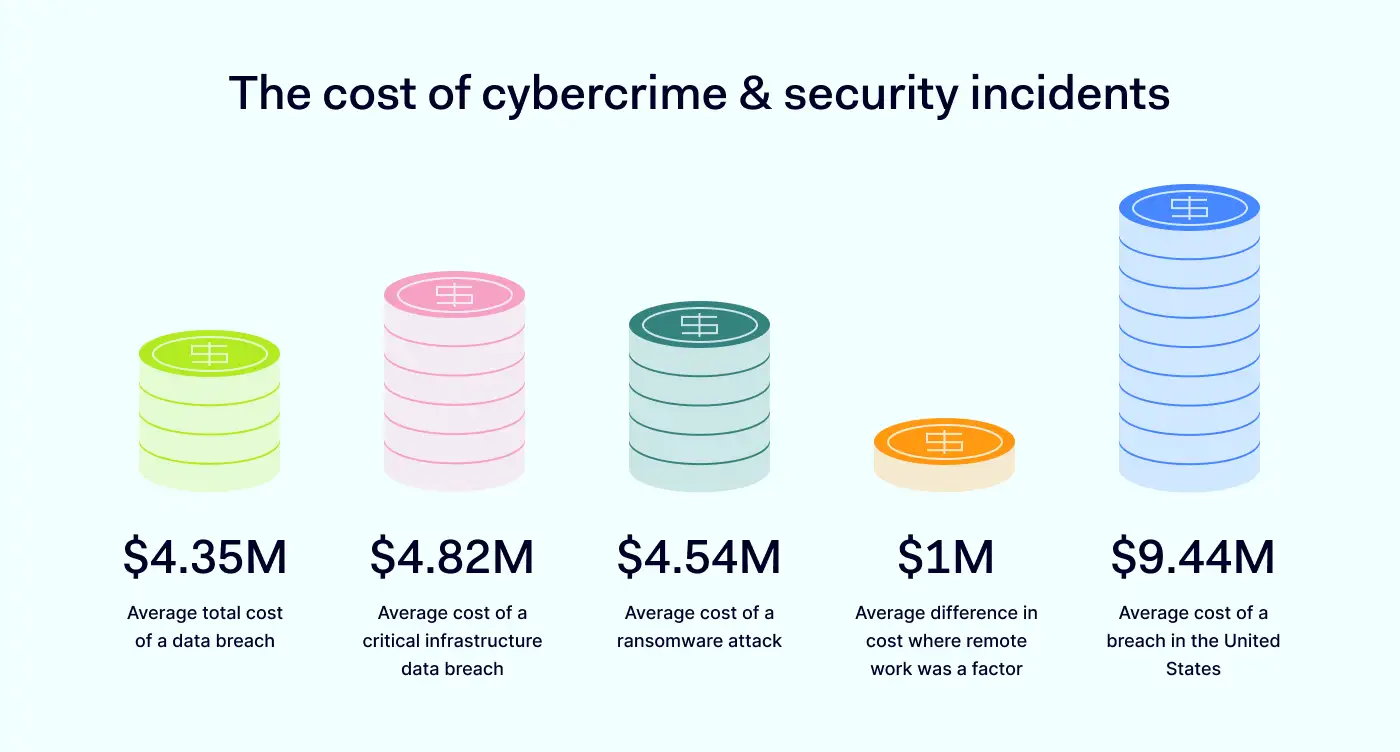
Our rough estimates demonstrate that data breach costs outweigh cybersecurity expenses. While this is a valid statement, this doesn’t provide clear guidelines on what actionable steps should be taken when considering cybersecurity spending. Businesses have finite resources, and cybersecurity is just one area that needs to be addressed. Thankfully, there are some models that we can use as a basis to evaluate cybersecurity costs and benefits.

Let’s start by looking at one of the most widely used schemes: the National Institute of Standards and Technology (NIST) Cybersecurity Framework. This is a helpful document consisting of standards, guidelines, and best practices to manage cybersecurity risks. It’s especially useful because it’s applicable to companies from all industries.

The problem with it is that while it recognizes that management of cybersecurity risks is always organization-specific, which will also shape how the final cost-benefit evaluation will look, it doesn’t outline how the cost-benefit analysis should be provided. For this reason, some researchers suggest integrating mathematical models Lawrence A. Gordon and Martin P. Loeb developed into the NIST Cybersecurity Framework. The model calculates an optimal investment in cybersecurity based on the cost of an attack, the expected probability, and the effectiveness of the security measures put in place.

The basic premise of the Gordon-Loeb model is that there is a tradeoff between the cost of an attack and the cost of investing in cybersecurity. Organizations want to minimize the total cost, including the cost of an attack and the security investment. The model assumes that the cost of an attack is proportional to the value of the information assets that could be compromised.

The model also considers the probability of an attack occurring, which is a function of the number of potential attackers, the likelihood that they will attempt an attack, and the effectiveness of the security measures. The effectiveness of security measures is assumed to be proportional to the level of investment in cybersecurity.

To calculate the optimal investment in cybersecurity, a balance needs to be found between the level of investment and the expected total cost. This relies on the relation between the expected cost of an attack and the cost of the security investment. This leaves us with a four-step approach:

  1. The value of protected information should be estimated as it represents the potential loss (L)

  2. The probability of the information being breached should be estimated (v)

  3. These first two values should be combined to derive the expected loss (vL)

  4. Cybersecurity investments should be allocated to the information based on the productivity and cost of the investments, so an optimal investment level (z)

Putting this data in the graph gives us some perspective on the diminishing returns. If the values of v and L are small, for instance, when v equals 0.1, and L equals $1M, extensive investments in cybersecurity aren’t optimal, as the expenses are higher than the benefits.

However, as the values of v and L increase, the optimal investment amount (z) and the expected loss resulting from a cybersecurity breach (vL) increase in this scenario.

5 graph showing optimal cybersecurity spending

In other words, the more valuable data an organization has, the more it has to lose. Once that threshold is met, not investing in cybersecurity is sitting on a powder keg. It’s a simple exercise to go through to better evaluate your organization’s standing in terms of cybersecurity. As a rule of thumb, the authors of the study suggest that organizations should generally invest less than 37% of the expected loss from a cybersecurity breach. The actual number will then need to be individually calculated based on your organization’s specifics.

How to improve your cybersecurity with NordLayer?

Cybersecurity is unavoidable in the current business environment because cyber threats aren’t going anywhere. This also has associated costs: solutions, services, personnel, and trainings. Organizations aren’t left alone without help, so for those willing to team up with cybersecurity providers — the market offers numerous opportunities that could make your company more resistant to cyber threats.

When it comes to the price, though, there are numerous factors that can also affect cybersecurity costs, like industry and size. As most cyberattacks are financially motivated, the companies with the most sensitive data are the prime targets. Although, it’s always fair to assume that no matter the industry or size, no one is immune to them.

That is why organizations need modern cybersecurity solutions that adapt to changing complexities of today’s working environments. All organizations have information that needs protecting, so all communication channels are interesting to hackers.

With NordLayer’s solutions, organizations can secure access to sensitive information and prevent reputational, legal, and financial damage. No matter what industry, NordLayer can be a reliable ally to help you stay secure. Contact us, and let’s discuss your cybersecurity journey together.

About Version 2 Limited
Version 2 Digital is one of the most dynamic IT companies in Asia. The company distributes a wide range of IT products across various areas including cyber security, cloud, data protection, end points, infrastructures, system monitoring, storage, networking, business productivity and communication products.

Through an extensive network of channels, point of sales, resellers, and partnership companies, Version 2 offers quality products and services which are highly acclaimed in the market. Its customers cover a wide spectrum which include Global 1000 enterprises, regional listed companies, different vertical industries, public utilities, Government, a vast number of successful SMEs, and consumers in various Asian cities.

About Nord Security
The web has become a chaotic space where safety and trust have been compromised by cybercrime and data protection issues. Therefore, our team has a global mission to shape a more trusted and peaceful online future for people everywhere.

About NordLayer
NordLayer is an adaptive network access security solution for modern businesses – from the world’s most trusted cybersecurity brand, Nord Security.

The web has become a chaotic space where safety and trust have been compromised by cybercrime and data protection issues. Therefore, our team has a global mission to shape a more trusted and peaceful online future for people everywhere.

Using artificial intelligence (AI) in cybersecurity

Artificial intelligence (AI) has made remarkable progress in recent years and has proved its value in various fields, including cybersecurity. With the rise of cyber threats and the increasing complexity of cyberattacks, AI has become a central tool for protecting against cybercrime.

Integrated artificial intelligence systems have the potential to be trained for the automatic identification of cyber threats, alerting users, and safeguarding sensitive information of businesses. Therefore, this article explores AI in cybersecurity, its benefits, use cases, and solutions, and addresses some frequently asked questions.

How is AI used in cybersecurity?

Artificial intelligence combines large data sets and uses them with intuitive processing algorithms. As the scope of networks and systems expands, AI in cybersecurity helps to automate operations by processing large amounts of data much faster than a human ever could. For this reason, most cybersecurity tools integrate deep learning and other capabilities intended to work with big data. Here are the main ways in which AI is used in cybersecurity:
  • Threat detection. AI can act as a filter for analyzing files and software code to identify potential malware threats while avoiding false positives. Machine learning algorithms can be trained for threat detection to recognize patterns and characteristics of known malware and flag any new code that matches these patterns.

  • Network security. AI algorithms can analyze network traffic data to detect patterns and anomalies indicating an attempted intrusion or attack. AI can flag any deviations from this baseline as potential threats by learning what normal network traffic patterns look like.

  • Behavioral analysis. AI can be used to analyze user behavior and detect anomalies that may indicate unauthorized access or malicious activity using machine learning. This allows for more effective user activity monitoring and detection of potential threats while limiting false positives.

  • Automated incident response. AI-based systems can be used to automatically respond to detected threats, like shutting down connections, quarantining infected machines, and disabling user accounts. Advanced machine learning models help to contain hacking attempts and minimize potential damage.

  • Vulnerability assessment. AI can identify potential vulnerabilities in systems and networks. This allows for proactive measures to be taken to mitigate potential threats before they can be exploited.

AI can be a powerful tool that can contribute in real-time, which can be essential in today’s rapidly evolving cyber threat landscape and lowers the odds that an organization will be affected by a data breach.

Benefits of AI in cybersecurity

AI solutions are versatile and can be applied in various scenarios. However, it requires preparation and feeding the deep learning models with plenty of data that could be used as a reference when identifying patterns. AI for cybersecurity does bring benefits, creating a more secure environment. Here are some of them that are noteworthy in a business setting.

1. Better vulnerability management

Considering the scope of threats that organizations face daily, network administrators need all the help they can get for endpoint protection. AI can analyze existing security measures to identify potential gaps, enabling businesses to focus on the most critical areas. This makes troubleshooting more efficient and provides in-depth oversight of the security level faster than any human ever could.

2. Self-correcting models

AI models can use deep and machine learning techniques to analyze network behavior and identify deviations from the norm. This allows further adjustments, enabling them to trigger various response actions when something odd is detected. This system adjusts its model over time, making it more accurate.

3. Limits process duplication

Some cybersecurity tasks are repetitive and monotonous, adding to personnel frustration and increasing the chances that some threats will slip by. AI-driven tools can perform all those recurring tasks automatically and only require confirmation before making the final changes. This allows security against potential gaps by consistently implementing the best network security practices.

4. Secure authentication

The industry is moving away from passwords and looking for ways to make security smarter. AI can be a helpful addition to implementing multiple authentication layers to verify a user’s identity. Using tools like fingerprint scanners, facial recognition, and other AI solutions helps identify fraudulent login attempts. This creates a much tighter security mechanism when allowing users in.

5. Helps to cover more ground

AI tools can perform multiple tasks simultaneously. At the same time, AI can scan and identify disguised threats while prioritizing prevention, even when dealing with multiple threats simultaneously. This versatility positively translates in terms of cybersecurity. Human attention can be limited to a single task at once, while AI can cover them in all other areas, which helps to expand network visibility and ensure appropriate security.

6. Helps to balance out workloads

Cybersecurity personnel isn’t cheap to hire or maintain, so it’s in a business’s best interest to ensure their experience is spent on tasks with the highest complexity. While AI can take care of manual tasks, human personnel can think of other ways to improve the cybersecurity posture in the organization. In the long run, this creates a greater value.

The limitations of traditional methods

The main difference between traditional cybersecurity tools and AI is their flexibility. Conventional cybersecurity tools like antiviruses or firewalls function based on strictly predetermined rule sets. A tool comes equipped with a list of malware types or blacklisted websites, which must be manually updated over time — it’s a very static system.

Meanwhile, AI can detect and respond to threats in real-time. Its ability to process large amounts of data when making decisions is unparalleled and extremely valuable. Cybersecurity threats are becoming more complex, so cybersecurity tools must react quickly if they want to stop them, which is why static models are too slow in today’s cyber landscape.

Hackers are also following developments of AI, which puts a lot of pressure on traditional cybersecurity solutions, as well. That’s another reason why AI in cybersecurity can level the playing field and provide a more well-rounded security solution.

AI cybersecurity solutions

The current cybersecurity market is saturated with solutions that integrate AI capabilities. Their advanced models allow them to process large amounts of data in real-time. Here’s a broad overview of cybersecurity technologies that integrate AI for cybersecurity.

Endpoint security

Endpoint security uses AI integrating network and device security to provide holistic protection against various threats. Tracking and analyzing processes on laptops, desktops, and mobile devices before the execution of malicious code allows the solution to shut down threats before they cause damage. Additionally, the models are expanded with additional input from past threats as they’re actively updated as they’re used.

Intrusion detection systems (IDS)

AI-powered IDS systems are capable of autonomously identifying threats using machine learning models. With enough data to work with and thorough training (and enough computational power), the model can be very accurate when discerning potential threats. This can help identify signs of intrusion moments from when it started. When combined with the remaining cybersecurity suite, the solutions can also help automate certain tasks, i.e., alert security teams or shut down network parts.

Data Loss Prevention (DLP)

DLP tools automatically encrypt data before it’s transmitted or restrict unauthorized users from accessing sensitive information. It’s no wonder that modern DLP tools are using AI and machine learning to improve their functionality and performance. AI can monitor and analyze organizational data flows to prevent unauthorized or accidental data leaks. Identifying sensitive information, enforcing data handling policies, and detecting potential data exfiltration attempts in a blink of an eye.

Security Information and Event Management (SIEM)

AI-powered SIEM tools use machine learning, user behavior analytics, and cybersecurity threat feeds to detect abnormal activities. This contribution to threat hunting can help automate many time-consuming manual tasks that network administrators must perform by using AI. This allows for balancing automation with cost-effectiveness and efficiency, improving the organization’s overall security posture. Automatic events correlation, suspicious activity detection, and real-time insights into potential threats enable faster incident response and threat hunting.

FAQ

What is the future of AI in cyber security?

Recent developments have shown that AI will continue to be closely integrated into cybersecurity solutions as attacks become more sophisticated. Many experts believe that using AI will be one of the main directions in which cybersecurity solutions will evolve. This will allow them to identify threats and potential vulnerabilities before they cause damage.

What are AI-enhanced cyber threats?

AI is used not only by cybersecurity specialists but by hackers, as well. This allows them to evade detection and cause more damage. The whole process can be automated — hackers are already writing convincing phishing attack emails using AI and natural language processing. Malware development can also be enhanced using AI, allowing hackers to write sophisticated malware that effectively bypass security measures. Various freely available chatbots are already contributing to the already saturated malware development.

About Version 2 Limited
Version 2 Digital is one of the most dynamic IT companies in Asia. The company distributes a wide range of IT products across various areas including cyber security, cloud, data protection, end points, infrastructures, system monitoring, storage, networking, business productivity and communication products.

Through an extensive network of channels, point of sales, resellers, and partnership companies, Version 2 offers quality products and services which are highly acclaimed in the market. Its customers cover a wide spectrum which include Global 1000 enterprises, regional listed companies, different vertical industries, public utilities, Government, a vast number of successful SMEs, and consumers in various Asian cities.

About Nord Security
The web has become a chaotic space where safety and trust have been compromised by cybercrime and data protection issues. Therefore, our team has a global mission to shape a more trusted and peaceful online future for people everywhere.

About NordLayer
NordLayer is an adaptive network access security solution for modern businesses – from the world’s most trusted cybersecurity brand, Nord Security.

The web has become a chaotic space where safety and trust have been compromised by cybercrime and data protection issues. Therefore, our team has a global mission to shape a more trusted and peaceful online future for people everywhere.

What is static IP? How it differs from dynamic IP?

IP (Internet Protocol) addresses work like digital street addresses that let devices find each other on the internet. Every internet device has a unique IP address. All of these addresses can be converted into text formats via the Domain Name System (DNS) format. This forms the basis of the World Wide Web.

There exist two types of IP addresses: static and dynamic. Both versions have specific roles. Both have strengths and weaknesses, and it’s important to choose the right type for your networking needs. This article will explain how they work and help you choose the right one for your needs.

What is a static IP address?

The word “static” means unchanging, and this is a good description of how a static IP address works. The static IP meaning refers to an IP address that is assigned to a device and remains constant, as opposed to a dynamic IP address that changes each time the device connects to the internet. Users assign them to individual devices or resources. The address then applies for as long as users desire.

Static IP address types are typically found in devices like web servers. This form of IP address is usually utilized by businesses that need to communicate globally and want a fixed identity.

Because they are finite and must be assigned individually, static addresses come with monthly fees. This is not the case with a dynamic IP address.

Benefits of static IP addresses

  • DNS functionality. Website managers need to couple IP addresses with DNS information. A static IP address provides a better fit for DNS servers because it never changes. The DNS server can connect consistently with the same static IP address, resulting in smoother operations.

  • Website hosting. A static IP address comes into its own when used with web servers. With a static address, site visitors will find it easier to locate a website on the internet. Connection speeds may also be slightly quicker. This can be an advantage in areas like finance where rapid transactions make a major difference.

  • Voice communication. Voice-over-IP (VoIP) works much better with static IP addresses. This benefits companies that rely on teleconferencing or any type of video transmission.

  • Remote access benefits. Static IPs make it possible to establish consistent connections between remote workers and central networks. Wherever employees need to work, they can use the same IP address. This identifies their devices to network servers – a simple remote work solution.

  • Reliable geolocation. Static addresses make it easier to identify where you are. This is a big advantage to any services that depend on geolocation, such as weather or traffic updates.

  • IP allowlisting. If remote workers have a static IP address, security teams can use that address to filter legitimate traffic. Allowlisting supplements firewalls and VPNs. It effectively hides network resources from outsiders whose IP is not allowlisted. As a result, it also promotes better data security.

How to set up static IP addresses

Users can easily set up a static IP address in Local Area Network by changing their network settings. However, you will need to request a static address from your ISP if you want to have fixed external IP.

After the request, external fixed IP will be assigned and the setup will automatically be applied on your router. If you manually configure the settings on your devices, you will need to enter the assigned IP address, subnet mask, default gateway, and DNS server information into the network settings for each device that will use the static IP address.

Alternatively, if you use a Dynamic Host Configuration Protocol reservation, you can set up your router to assign the static IP address automatically to a specific device on your network. This method ensures that the device always receives the same IP address, even if it is restarted or disconnected from the network temporarily.

Note that this isn’t the same as configuring a private IP address that is reserved for use within a private network, such as a home or office network.

What is a dynamic IP address?

Dynamic IP addresses constantly change. The IP address is not connected to an individual user or company.

There is usually no financial charge for using a dynamic IP address. ISP servers assign them as needed. Using a dynamic IP address is generally cost-effective for service providers compared to assigning static addresses.

Dynamic IPs are the standard identifier for consumer devices. They are routinely used in home networks to identify tablets, laptops, and digital boxes. But a dynamic IP address is not always the best option for businesses, who may prefer an IP address that does not change.

Benefits of dynamic IP addresses

  • Cost. A dynamic IP address is usually cheaper to use than static alternatives. There is no regular fee. Addresses are assigned in the background as part of ISP packages.

  • Simple configuration. Users do not need to manually configure a dynamic IP address. The address changes without users knowing. DHCP will automatically switch addresses, leaving users with no additional admin tasks.

  • Fewer device conflicts. Static IPs can conflict if used for one or more devices. For example, you may add extra workstations to a corporate network. Dynamic addresses are unlimited and reusable. So any new devices will immediately gain unique identifiers.

  • Security benefits. Hackers may obtain static IPs and use them to breach network resources. Because a dynamic IP address changes regularly, it presents a moving target. This makes life harder for potential attackers, especially when combined with VPN protection.

  • Privacy. Static IPs provide constant evidence of your physical location. This can be useful for external snoopers and thieves. With a dynamic IP address, it’s harder to pin down your device location. This results in enhanced physical security.

How does it work?

When you receive a dynamic IP address, it is assigned by a system called Dynamic Host Configuration Protocol (DHCP).

ISP companies maintain reserves of unused IP addresses and assign users the next available IP address when they connect to the internet. The dynamic IP address is re-assigned to someone else when their session ends.

It’s important to remember that DHCP assigns dynamic addresses temporarily. Users “lease” the dynamic IP address on a short-term basis. The same IP address could be reused hundreds of times in a single day.

Dynamic addresses also present a different identity to the services you use. This can cause problems when websites expect a single IP address to identify users. Features like autofill passwords may not function correctly.

Comparison of static and dynamic IP addresses

Static IP address:

  • Doesn’t change

  • Has a higher maintenance cost

  • Used for handling lots of connections simultaneously

  • Helps to maintain uninterrupted access

  • Ensures availability for outside devices and networks

Dynamic IP address:

  • Is continuously rotated

  • Doesn’t additionally increase the cost

  • Used for user devices like smartphones and laptops

  • Helps to maintain online access when changing networks

  • Ensures that all devices are always assigned an IP address

When comparing Static IP vs Dynamic IP addresses, it helps to keep their different features in mind. Here are some handy pros and cons of both IP address varieties:

Static IP pros

  • Geolocation – Static addresses work well with IP-based geolocation services. They are a good fit for users who need to be precisely located.

  • Voice-over-IP – Static IP is preferable for VoIP teleconferencing.

  • DNS hosting – Static addresses are a much better option for hosting DNS-based web assets. Website data will be available to users across the world, with minimal IP address conflict.

  • Security – Static addresses make allowlisting easier, boosting security. Users can route static VPN traffic through a single IP address, protecting traffic and enabling safe remote working.

Static IP cons

  • Hacking risks – Because they never change, static IPs can be prone to hijacks. And static addresses can give away geographical details to snoopers.

  • Ease of Use – Users must configure a static IP address manually after an initial request to their ISP.

  • Costs – Static IP addresses come with an extra charge, so tend to cost more.

Dynamic IP pros

  • Security – Constantly changing IP data makes hacking more difficult. IP address holders are also harder to track down via geolocation tools.

  • Costs – Dynamic IPs are generally free of charge for the duration of contracts from Internet Service Providers.

  • Ease of Use – Dynamic addresses require virtually no configuration, so are generally easier to use.

Dynamic IP cons

  • Reliability – Dynamic addresses can sometimes be unavailable. They do not function well with DNS servers, and they deliver less precise geolocation information.

  • VPN functionality – Virtual Private Networks work much better with static IPs, especially when applied to business settings.

  • Website issues – Using the web may be less convenient. For example, sites may fail to auto-fill fields if IP addresses constantly change.

When to use a static or dynamic IP address?

Comparing static IP vs dynamic IP addresses shows that the two IP address types have very different use cases.

When to use a static IP address

Static IP is generally preferred by businesses. Unchanging IP addresses are ideal for hosting websites because they suit DNS server architecture.

With a static IP, your web or email server will be easier to find. External partners can use a single point of contact to interact with servers or databases. And that address does not change unless you want it to.

If you are planning to connect an email server or are designing a remote work system, static IP addresses will probably work best.

It is also easier to apply IP allowlisting with a static IP address. Allowlisting adds an extra layer of network protection. Security teams can add static addresses to firewall rules, and block everything else. Remote workers can identify themselves easily. Wherever they are, the network will recognize them as authentic users.

Additionally, static addresses benefit users of critical SaaS applications. Companies benefit from more reliable VPN and Voice-over-IP services.

When to use a dynamic IP address

Dynamic IP is generally found in home and consumer settings. The low cost and convenience are a good fit for everyday device usage. Dynamic addresses also have a slight security edge for private settings and organizations that cannot invest in enterprise security solutions.

Some device types also tend to use dynamic IP for reasons of convenience. For instance, routers may not need a static address. Dynamic DHCP-assigned addresses can be cheaper and simpler to configure.

As IPv6 becomes mainstream, the cost of static IPs may come down. The stock of IP addresses has been limited by the Ipv4 format. In the future personal and business use of static IP addresses may well be routine.

How can Nordlayer help?

Choosing the right IP address format is an important part of network architecture. Businesses can optimize their web presence, improve app performance, and realize security benefits by applying static IPs.

However, these benefits require careful implementation. Nordlayer is ready to help companies as they secure their network assets.

Our dedicated IP services make it possible to conceal traffic and filter access requests. Assign a static IP to your VPN coverage, and block unauthorized traffic without denting network performance. Users can combine static IPs with network segmentation, access controls, DNS filtering, and many other security features.

With Nordlayer, you can build a user-friendly security architecture that makes life easy for authenticated users and blocks malicious traffic when connected to internet gateway. To find out more, contact the Nordlayer team today.

About Version 2 Limited
Version 2 Digital is one of the most dynamic IT companies in Asia. The company distributes a wide range of IT products across various areas including cyber security, cloud, data protection, end points, infrastructures, system monitoring, storage, networking, business productivity and communication products.

Through an extensive network of channels, point of sales, resellers, and partnership companies, Version 2 offers quality products and services which are highly acclaimed in the market. Its customers cover a wide spectrum which include Global 1000 enterprises, regional listed companies, different vertical industries, public utilities, Government, a vast number of successful SMEs, and consumers in various Asian cities.

About Nord Security
The web has become a chaotic space where safety and trust have been compromised by cybercrime and data protection issues. Therefore, our team has a global mission to shape a more trusted and peaceful online future for people everywhere.

About NordLayer
NordLayer is an adaptive network access security solution for modern businesses – from the world’s most trusted cybersecurity brand, Nord Security.

The web has become a chaotic space where safety and trust have been compromised by cybercrime and data protection issues. Therefore, our team has a global mission to shape a more trusted and peaceful online future for people everywhere.

The evolution of cyber threats: looking back over the past 10 years

Over the past decade, the world has witnessed a dramatic increase in cyber threats. The digital age has brought about new opportunities for innovation and growth but has also created new avenues for cybercriminals to exploit. The rise of new technologies, such as artificial intelligence, has enabled attackers to become more sophisticated in their methods.

In this blog, we will look back at the evolution of cyber threats over the past decade and explore how businesses can adapt to these changes. We will also discuss how NordLayer protects your data and resources ahead of the curve.

Upsurge of cyber threats

The past decade has seen a rise in various types of cyber threats, from ransomware attacks to social engineering tactics. One of the most notable threats is ransomware, where attackers encrypt a victim’s files and demand a ransom payment to restore access.

In 2020, ransomware attacks rose by 150% compared to the previous year, according to The Harvard Business Review. Another common threat is phishing, where attackers use social engineering tactics to trick victims into revealing sensitive information. Phishing is an effective and dangerous cybercrime because it relies on people’s inherent trust in the internet. The idea that criminals would be able to fool you into giving up private information is hard for most people to believe, which makes it easy for even well-meaning people to fall victim to a phishing attack.

Impact on businesses

The impact of cyber threats on businesses cannot be overstated. Cyber attacks can result in significant financial losses, reputational damage, and legal consequences. According to a study by IBM, the average data breach cost in 2020 was $3.86 million.

According to Forbes, small and medium-sized businesses are especially vulnerable. The impact of cyber attacks on businesses extends beyond financial losses, with reputational damage and loss of trust among customers also being significant concerns.

2009-2012: rise of advanced persistent threats (APTs)

The period between 2009 and 2012 saw a rise in advanced persistent threats (APTs). APTs are long-term attacks that focus on stealing data from a specific target and are highly sophisticated. The attackers would spend months or even years gathering information about their target before launching an attack. The goal was to steal sensitive information without being detected.

One of the biggest examples of this type of threat during this timeframe occurred in 2010, where Google and other companies were targeted in a series of APT attacks known as Operation Aurora. Attackers gained access to sensitive data and intellectual property by exploiting company software systems vulnerabilities.

Some ways to protect against APTs include:

  1. Secure VPN: A secure virtual private network (VPN) that encrypts all data transmitted between the user and the internet. This ensures that sensitive information is kept confidential and protected from cyber attackers.

  2. Next-generation firewall: A next-generation firewall can detect and block malicious traffic, including APTs. It also allows for granular control over network traffic, enabling administrators to restrict access to sensitive resources.

  3. Intrusion Prevention System (IPS): IPS uses advanced techniques to detect and prevent APTs from infiltrating the network. This includes detecting and blocking attempts to exploit network and software vulnerabilities.

  4. Threat intelligence: Ideally, a threat intelligence platform continuously monitors global threat activity and automatically updates security policies and rules to protect against new and emerging threats.

  5. User behavior analytics (UBA): A UBA solution can identify and flag abnormal user behavior that may indicate a security threat, such as an APT. This helps administrators quickly detect and respond to potential attacks.

2013-2016: ransomware and business email compromise (BEC)

Between 2013 and 2016, ransomware and Business Email Compromise (BEC) attacks rose. Ransomware is a type of malware that encrypts a victim’s files and demands payment in exchange for the decryption key. On the other hand, BEC attacks involve impersonating a senior executive and tricking employees into transferring money to a fraudulent account.

These attacks proved to be highly profitable for cybercriminals, with ransomware payments reaching billions of dollars annually. BEC attacks have also been on the rise, with the FBI reporting losses of over $1.7 billion in 2019 alone.

The WannaCry ransomware attack affected hundreds of thousands of computers in over 150 countries. The attackers demanded ransom payments in exchange for unlocking the affected systems. Another good example of these threats during this timeframe was the CEO Fraud in 2015, where tech company Ubiquiti Networks fell victim to a BEC attack that cost the company $46.7 million. The attackers posed as Ubiquiti executives and convinced employees to transfer funds to overseas accounts.

Some ways to protect against ransomware and BEC attacks include:

  1. Email filtering: This service can help protect against BEC attacks by blocking suspicious emails that may contain phishing or malware links. This helps prevent employees from falling for social engineering tactics and inadvertently giving hackers access to sensitive information.

  2. Anti-malware: A solution to detect and block ransomware before encrypting files on a company’s network. This helps prevent data loss and minimize the impact of a ransomware attack.

  3. Backup and recovery: Automated backup and recovery services can help restore data and systems during a ransomware attack. This helps minimize the damage caused by an attack and reduces the likelihood of paying a ransom to recover data.

  4. User awareness training: Employee training and awareness programs help educate staff on recognizing and reporting potential security threats such as BEC attacks. This helps employees understand how to protect themselves and the company from cyber threats.

  5. Access control: This feature allows administrators to restrict access to sensitive data and systems, helping prevent unauthorized access and reducing the risk of a successful ransomware attack.

2017-2020: Internet of Things (IoT) and artificial intelligence (AI) threats

The period between 2017 and 2020 saw the rise of Internet of Things (IoT) and Artificial Intelligence (AI) threats. This time frame saw the first cases of this type of attacks.

IoT devices are becoming increasingly popular for on-site and remote businesses, making them a prime target for cybercriminals. These devices often lack proper security measures, making them vulnerable to attacks.

Artificial intelligence plays an increasingly significant role in the evolution of cyber threats. On the one hand, AI is being used by businesses to improve security measures, such as detecting anomalous behavior and identifying potential threats. On the other hand, cybercriminals are also using AI to create more sophisticated attacks.

For example, cyber-criminals can use AI to generate realistic phishing emails that are more likely to trick victims into revealing sensitive information. AI is also being used to create deep fake videos and audio, which can be used for social engineering attacks.

The Mirai Botnet was a massive cyberattack in 2017 that compromised hundreds of thousands of IoT devices, turning them into a network of bots used to launch DDoS attacks on various websites. The botnet primarily targeted vulnerable IoT devices such as security cameras, routers, and DVRs that had weak or default login credentials.

According to a report from Wired, “Mirai was responsible for the largest DDoS attack in history, which peaked at 1.1 terabits per second and brought down the DNS provider Dyn, taking down popular websites including Twitter, Netflix, and Reddit in the process.”

Another example was the 2018 DeepLocker; a type of AI-powered malware that is designed to evade traditional cybersecurity measures by using AI algorithms to hide and remain undetected until it reaches its target.

The malware is designed only to activate when it detects a specific target, such as a particular person’s face or voice. The malware was created as a proof-of-concept by IBM’s X-Force Red team to demonstrate the potential risks of AI-powered attacks.

Some ways to protect against AI attacks include:

  1. Network segmentation: This feature can segment the company’s network, separating IoT devices from other devices and systems on the network. This can help prevent an attacker from using an IoT device as a backdoor to access the company’s sensitive data and systems.

  2. Device management: This service ensures IoT devices are configured with the proper security settings and updated with the latest firmware and security patches. This helps prevent IoT devices from becoming a vulnerability and potential targets for attackers.

  3. Behavioral analysis: Behavioral analysis detects abnormal activity in the network, which can help detect and prevent AI-based attacks. This includes monitoring the behavior of IoT devices and detecting anomalies that may indicate a potential attack.

  4. Machine learning: Machine learning utilizes algorithms to analyze network traffic and identify potential threats. This includes the ability to detect anomalies in the behavior of IoT devices, which can help identify potential AI-based attacks.

  5. Threat intelligence: Ideally, a threat intelligence platform continuously monitors global threat activity and automatically updates security policies and rules to protect against new and emerging threats, including those targeting IoT and AI systems.

2021-2022: supply chain attacks and Ransomware-as-a-Service

In 2021 and 2022, there has been a significant increase in supply chain attacks and Ransomware-as-a-Service (RaaS) attacks. Supply chain attacks involve targeting a third-party vendor to gain access to their customers’ networks. These attacks have been highly successful, with cybercriminals targeting software providers, IT companies, and cloud service providers.

RaaS attacks involve renting out ransomware to other cybercriminals for a percentage of the profits. This business model has made it easier for cybercriminals to launch attacks, resulting in a surge of ransomware attacks worldwide. According to a report by SonicWall, there were over 304.7 million ransomware attacks in the first half of 2021, a 151% increase from the same period in 2020.

One of the biggest related incidents took place In 2020. The SolarWinds supply chain attack affected multiple U.S. government agencies and corporations. The attackers compromised SolarWinds’ software updates and used them to distribute malware to their customers.

Another case worth studying is the Colonial Pipeline, a ransomware attack in 2021 that shut down a major fuel pipeline in the United States. The attackers demanded a ransom payment in exchange for restoring access to the company’s systems.

Some ways to protect against Supply Chain Attacks and Ransomware-as-a-Service attacks include:

  1. Vulnerability scanning: This service can detect vulnerabilities in software and systems that may be exploited in a supply chain attack. This includes identifying outdated software, unpatched systems, and other potential vulnerabilities.

  2. Access control: This feature allows administrators to restrict access to sensitive data and systems, helping prevent unauthorized access and reducing the risk of a supply chain attack.

  3. User awareness training: Employee training and awareness programs help educate staff on recognizing and reporting potential security threats, including supply chain attacks and ransomware-as-a-service. This helps employees understand how to protect themselves and the company from cyber threats.

  4. Anti-malware: This solution can detect and block ransomware before encrypting files on a company’s network. This helps prevent data loss and minimize the impact of a ransomware attack, including those delivered as a service.

  5. Backup and recovery: Automated backup and recovery services can help restore data and systems during a ransomware attack. This helps minimize the damage caused by an attack and reduces the likelihood of paying a ransom to recover data.

2022-present: deepfake and synthetic identity fraud

In 2022, deep fake and synthetic identity fraud attacks became increasingly prevalent. Deepfake technology involves creating realistic videos or audio recordings that can be used to spread misinformation or conduct social engineering attacks. On the other hand, synthetic identity fraud involves creating fake identities using real and fake information.

These attacks have proven to be highly effective, with cybercriminals using deep fake technology to impersonate high-level executives or political leaders to spread false information. Synthetic identity fraud has also been on the rise, with losses estimated to reach $1 billion in 2022, according to the 2022 Internet Crime Report of the Federal Bureau of Investigation.

In the article TOP 5 cyber attacks of 2022, the best examples of this type of threat can be further analyzed.

How can NordLayer help?

Cybercriminals constantly evolve their tactics, making it essential for businesses to stay up-to-date with the latest threats. Cybercriminals use fileless attacks, which do not leave a footprint on the system, and supply chain attacks, where attackers target third-party vendors to gain access to a network. By understanding these tactics, businesses can take steps to protect themselves.

The past decade has seen a rapid evolution in cyber threats, with attackers becoming more sophisticated and their tactics becoming more advanced. Businesses must adapt to these changes by implementing robust cybersecurity measures to protect their data and resources. NordLayer remains committed to providing top-notch security solutions that evolve with the changing cyber threat landscape.

Our Zero Trust Network Access solution provides secure access to resources and data, while our ML-powered (machine learning) threat detection system prevents end users from accessing potentially harmful websites that may affect business operations.

As the cybercrime landscape develops, NordLayer continues to evolve its products to protect access to data and resources. Our security solutions include access control features, network segmentation, and secure VPN.

We continuously monitor the latest threats and adapt our products to provide the most robust protection possible.

Contact NordLayer and learn how we can help you secure your business.

About Version 2 Limited
Version 2 Digital is one of the most dynamic IT companies in Asia. The company distributes a wide range of IT products across various areas including cyber security, cloud, data protection, end points, infrastructures, system monitoring, storage, networking, business productivity and communication products.

Through an extensive network of channels, point of sales, resellers, and partnership companies, Version 2 offers quality products and services which are highly acclaimed in the market. Its customers cover a wide spectrum which include Global 1000 enterprises, regional listed companies, different vertical industries, public utilities, Government, a vast number of successful SMEs, and consumers in various Asian cities.

About Nord Security
The web has become a chaotic space where safety and trust have been compromised by cybercrime and data protection issues. Therefore, our team has a global mission to shape a more trusted and peaceful online future for people everywhere.

About NordLayer
NordLayer is an adaptive network access security solution for modern businesses – from the world’s most trusted cybersecurity brand, Nord Security.

The web has become a chaotic space where safety and trust have been compromised by cybercrime and data protection issues. Therefore, our team has a global mission to shape a more trusted and peaceful online future for people everywhere.

Product agent release: NordLayer Browser Extension

The NordLayer team is happy to announce the launch of a new and one-of-the-kind NordLayer Browser Extension. A now-available extension introduces another layer to increase and reinforce connection and access security for web-based resources.

The extension, operating within browser limits, is a lightweight option for organizations to substitute the NordLayer desktop solution and maintain the security of virtual private gateways. Moreover, utilizing the extension on top of the NordLayer desktop solution allows connecting two gateways simultaneously.

Feature characteristics: what to expect

  • Simple deployment & configuration via browser

  • Available for Advanced plan with a virtual private gateway.

  • Compatible with Google Chrome, Mozilla Firefox, Microsoft Edge browsers

Problem to solve: Seamlessly elevate the user experience by eliminating operating system compatibility issues with a lightweight solution that doesn’t negatively impact internet speed and performance, whichever – remote or hybrid – working setup there is, also enabling more flexible geo-based capabilities.

How does it work?

Generally, a standard connection to the internet is not encrypted if additional security measures are not enforced. Therefore, the implementation of solutions like NordLayer address such security issue. The established encrypted and secure connection to the company network protects online activities on the device level.

However, in some cases, there’s a need for an alternative solution that can replace a full Cloud VPN solution to secure connections just while browsing. Therefore, browser extensions operate as a midway alternative for non-existent and fully deployed security solutions.

NordLayer Browser Extension enables the remote workforce to have Secure Web Gateway (SWG) capabilities to access protected internet and cloud resources. Deployed on a browser, the add-on can run without or on top of the NordLayer application.

Establishing ThreatBlock, DNS filtering, or Deep Packet Inspection (DPI) features for filtering malicious websites from user-generated internet traffic enables SWG capabilities via the browser extension. This way, it protects the user, company network, and sensitive data from exposure to threats.

What problem does it solve?

The browser add-on fills a security and usability gap for organizations’ daily challenges of various working setups. Issues like latency or solution incompatibility with some operating systems (OS) are now resolved when installing the NordLayer browser add-on.

Configured for a company virtual private gateway, NordLayer Browser Extension allows IT admins to rest assured that malicious online traffic is restricted from entering the company network only on a browser level.

From the user’s perspective, the extension is seamless and intuitive to deploy and use. Being 15 times smaller than the NordLayer application, the extension runs in the background without disrupting business workflow.

Browser Extension objectives include:

  1. Protection of the internet and cloud resources accessible by remote and/or hybrid workforces

  2. Replace the setup of a third-party (proxy) browser extension for the end user with a login of organization-defined single sign-on (SSO) and two-factor authentication (2FA) solutions

  3. Introduce a widely available add-on to increase online security

NordLayer Browser Extension is an SWG proxy for organizations to secure connections to web-level resources without encrypting all desktop network traffic.

Security by design

NordLayer Browser Extension defines a simple, intuitive, and effective security approach developed by NordLayer. The add-on is an alternative solution to enrich existing security features provided by the solution for online activities.

Easy to launch and quick to set up, the browser extension provides instant network security for web-based company resources when accessed via the browser.

The extension is effective as a solution alone — it sorts availability and compatibility issues of various OS. It downgrades the network’s connection traffic load – but not the security – when accessing the company’s virtual private gateways, resolving latency and performance problems for the organization.

Moreover, it is a solid addition to web-level security when combined with DNS filtering and routing traffic via custom DNS and implemented with Deep Packet Inspection (Lite). Altogether, browsing security–related features and the browser agent introduces a layered security grid to the organization’s network security strategy.

About Version 2 Limited
Version 2 Digital is one of the most dynamic IT companies in Asia. The company distributes a wide range of IT products across various areas including cyber security, cloud, data protection, end points, infrastructures, system monitoring, storage, networking, business productivity and communication products.

Through an extensive network of channels, point of sales, resellers, and partnership companies, Version 2 offers quality products and services which are highly acclaimed in the market. Its customers cover a wide spectrum which include Global 1000 enterprises, regional listed companies, different vertical industries, public utilities, Government, a vast number of successful SMEs, and consumers in various Asian cities.

About Nord Security
The web has become a chaotic space where safety and trust have been compromised by cybercrime and data protection issues. Therefore, our team has a global mission to shape a more trusted and peaceful online future for people everywhere.

About NordLayer
NordLayer is an adaptive network access security solution for modern businesses – from the world’s most trusted cybersecurity brand, Nord Security.

The web has become a chaotic space where safety and trust have been compromised by cybercrime and data protection issues. Therefore, our team has a global mission to shape a more trusted and peaceful online future for people everywhere.

B2B LinkedIn scams: trends & how to prevent them

The amplitude of online scams is outraging on the internet. Malicious actors always seek original and convincing ways to catch their victims off-guard. LinkedIn creates a perfect environment for social engineering and other types of fraud, and that’s why scams have populated the platform.

Let’s start from the beginning. The LinkedIn platform is incredibly popular, with over 930 million members globally, making its scams an intriguing topic not only from a consumer perspective but from businesses.

Do only small companies or large enterprises fall victim to LinkedIn threats? Does it depend on a country or organization’s maturity? And what are the most common approaches that get employees’ trust?

To answer these questions and dig deeper into the source of businesses-linked LinkedIn scams, NordLayer researched the fraudulent activity tendencies.

LinkedIn scam — is a fraudulent scheme on the LinkedIn platform that aims to trick people into giving money or personal information, often through a fake job or business opportunities, requests for payment, or impersonation.

Click to tweet

These scams usually target individuals. Yet, due to the peculiarity of LinkedIn, they are often connected to organizations the targeted people are employees of. A LinkedIn scam poses personal threats but also puts a company at risk, making it an interesting case from a B2B security point of view.

Research methodology

NordLayer surveyed 500 respondents in Canada, the United Kingdom, and the United States. An external agency conducted the surveys between the 15th–25th of March, 2023.

Respondents (adult population, 18+) of non-governmental organizations were asked what kind of scams they encountered on the LinkedIn social media platform and what aftermath effects it had on their business. Subindustries represented included business management and support services, e-commerce, education, finance and insurance, health care, information and communication, IT, professional and technical services, and consulting.

The survey covered questions about the organization’s cybersecurity maturity level (Beginner, Basic, and Advanced), their cybersecurity solutions, and whether they had an in-house specialist or responsible department.

Companies by size were segmented by:

  • Small companies: 1-10 employees

  • Medium companies: 11-200 employees

  • Large companies: 201+ employees

Typical LinkedIn scams

The professional nature of a LinkedIn platform opens unique opportunities to vary the approach to encounter platform users. With a focus on job and industry topics, LinkedIn is no less than a social networking platform for making connections, communicating, and finding think-alikes.

The primary function of LinkedIn – building a career – introduces one of the most common LinkedIn scams, fake job offers. With 117 job applications submitted per second on the platform, fraudsters have an ideal environment for creating a legitimate-looking job posting to collect personal information or money.

Another popular scam is LinkedIn phishing, where an actor impersonates a well-known company or professional using fake profiles to send unsolicited messages or emails that ask for sensitive information.

Also, receiving an invitation to connect is common on the platform. Fraud actors use this connection culture to start a conversation and share a link with malicious content expecting LinkedIn users will click on it.

The NordLayer research on LinkedIn scams affecting the business sector confirmed the dominating tendencies of fraud types among the respondents, as the leading ones match the general statistics:

It’s safe to assume that most fraud attempts impacting businesses are social engineering based on public or personal information. On the one hand, LinkedIn is an environment where everyone shows their or their organization’s best side.

Yet, politeness, eagerness to sell oneself, and prospect opportunities tend to create an unintentional smoke screen for LinkedIn members leading to the most bizarre scams that might even involve lotteries or romance fraud.

Research findings on LinkedIn scams

Many businesses acknowledge the significance of being present on LinkedIn. 77% of respondents confirmed that their organization has a profile on the platform. Yet, 82% of medium-large companies tend to register more often than 54% of small (up to 10 employees) businesses.

The scams fall under two main categories. One is targeting individuals or pretending to be LinkedIn users. Another one is on a company level — operating under false organization pretext or impersonating an existing company to build more credibility. The research data shows that over one-third of survey respondents were aware of multiple LinkedIn frauds using their organization name. 

Frequency and scope of LinkedIn scams

According to the research, over half of the respondents encountered a scam attempt or fake account on LinkedIn.

Interestingly, the least active scam outreach was noticed in small companies — 52% of respondents confirmed that no one in their organization had such an experience. Fewer organizations with LinkedIn company profiles can explain such deviation from general tendency.

The rest of the respondents (47%) indicated their organization employees are likely to be engaged in a scheme. The trend corresponds with companies with Advanced cybersecurity maturity (46%).

Advanced cyber-maturity and medium-large companies are the first to fall victim to phishing attempts (52%) and fake tech support (45%) scams. It implies that large and mature companies have higher cyber awareness levels and, at the same time, more often outsourced assets like technical help vendors or a vast yet difficult-to-unravel network of colleagues, which brings everyone to an eye of a storm.

It is also worth mentioning that companies of all sizes get a lot of fault-line messages inviting them to connect. The frequency of receiving such requests varies by around 40% of companies.

Offerings to purchase non-existent or fake products or services are more prominent for mid-sized businesses — 34% compared to an average of 26% of such encounters with small and large enterprises. Medium-sized companies also lead fake lotteries (30% compared to 24%) and dating/romance scams (28% compared to 18%).

Target geography of LinkedIn scams

The distribution of research data is almost even among different countries participating in the survey. Attention-grabbing information shows that most active LinkedIn users are in the United States, with 83% of respondents having a profile on a platform (72% in Canada and 76% in the United Kingdom). 

However, the engagement rate of scams is lower in the States than in the other two countries. Only 38% were contacted by a fake LinkedIn profile or attempted to be scammed more than once, compared to 43% in Canada and 44% in the UK.

Looking closer at the tendencies of each surveyed country, the United Kingdom is attacked mainly by fake job offer scams (63%) and fake get-rich-quick offers (43%).

The United States leads in receiving a request to connect with a suspicious link — even 47% of respondents confirmed getting one, and 29% received an invitation to take part in a fake survey.

LinkedIn scams in Canada are focused on offering to buy a non-existing/fake product or service (36%) and getting involved in dating/romance fraud schemes (30%).

Despite the country, results were distributed almost equally for cases of phishing attempts (47%) and fake tech support (38%). It’s also important to note that if one scam is more popular than the other in different countries, it doesn’t mean that companies and their employees are safe from getting attacked or should expect only trending attacks.

The aftermath of LinkedIn scams

The scam attempt effects on organizations vary from harming reputation to imposing physical infrastructure damage. Regardless of the size of the business, they may experience the following:

Small businesses are impacted the most by cyber attacks, compared to larger organizations. They are more likely to experience financial loss (67%), stolen IP, and operation disruption (each 58%). Additionally, half of the organizations surveyed had their reputation damaged. Due to attacks, small businesses lose more employees (42%), while medium and large enterprises lose fewer employees (16% and 22%, respectively).

Medium-sized enterprises have to deal with reputation damage the most (47%), stolen and/or damaged data, and customer contacts (each 43%). Compared to other size businesses, mid-sized organizations are more likely to experience infrastructure damage (25%).

On the other hand, large organizations tend to suffer from reputation damage the most (41%), as well as compromised data and financial loss (each 40%). Additionally, 37% of all organizations deal with business operations disruption. Based on the data from respondents, it’s clear that small businesses are affected the most with LinkedIn scams and large enterprises the least.

How to avoid falling for a LinkedIn scam?

To avoid falling for a LinkedIn scam, it’s important to be cautious and alert. Start with making sure any job posting or business opportunity you’re interested in is legitimate before you apply or accept an offer. You can do it by researching the company or person offering the opportunity and only providing personal or financial information if you are confident they are not fake.

It’s also essential to protect your privacy on LinkedIn by adjusting your account settings to limit who can see your LinkedIn profile and send you messages. Be careful of unsolicited messages or connection requests from people you don’t know, and always watch out for signs that the message may be a scam, such as poor grammar, spelling mistakes, and overly aggressive or pushy language.

Tips for recognizing fake LinkedIn profiles

  1. Check the links present in the profile. Real profiles link to the person’s company website or their professional social media profiles. Be careful of shortened links or links that redirect you to another website, as these may be used to disguise fraudulent websites.

  2. Look for inconsistencies or lack of detail in the profile. A legitimate profile usually has a lot of information about the person’s professional history, education, and skills. Fake profiles typically have very little information or no profile picture.

  3. Investigate the activity of the LinkedIn profile. If the profile has very little activity or engagement with other users, likely it’s one of the fake LinkedIn accounts. Additionally, suppose the allegedly fake profiles send connection requests to many people, particularly those without connection to the profile. In that case, it may be part of phishing attacks.

  4. Be cautious of suspicious or irrelevant job offers, promotions, or messages from the profile. Fake LinkedIn profiles often use these tactics to lure users into scams, identity theft, or other harmful activities.

How to recognize fake LinkedIn profile

What to do if you’ve been scammed on LinkedIn?

If you think you’ve been scammed on LinkedIn, don’t panic. The first thing to do is to report the fraud to LinkedIn or the Internet Crime Complaint Center (IC3). Follow the instructions on LinkedIn’s Help Center page to report the scam. You should also contact your bank or credit card company if you have been charged for a fraudulent transaction.

To avoid getting scammed in the future, consider enabling two-factor authentication for your LinkedIn account, checking your account settings regularly, and changing your login details from time to time to ensure your account is secure.

FAQ

Are you worried about scams on LinkedIn? Sadly, LinkedIn is not completely safe from scams like many other online platforms. However, there are things you can do to spot and report scams to protect yourself and others.

How to report a scam on LinkedIn?

If you come across a scam on LinkedIn, first, you should report it to LinkedIn. Here’s how:

  1. Go to the profile of the person or company involved in the scam

  2. Click the “More” button below their profile picture

  3. Select “Report this profile” or “Report this company”

  4. Follow the prompts to provide details about the scam and submit your report

LinkedIn’s Trust & Safety team will review the submitted report and take appropriate action, including removing the scammer’s account and preventing them from creating another one.

How to identify a scammer on LinkedIn?

Scammers on LinkedIn may use a variety of tactics to trick people into giving them money or personal information. Some common signs of a scammer include:

  • A profile that appears to be fake or incomplete

  • Unsolicited messages offering a job or business opportunity that seems too good to be true

  • Requests for money, personal information, or account credentials

  • Pressure to act quickly or keep the opportunity secret

If you encounter any of these signs, it’s a good idea to investigate further before engaging with the person. You can also report the profile to LinkedIn as described above.

How can I check if a job offer on LinkedIn is legitimate?

Before accepting a job offer on LinkedIn, it’s a good idea to make sure it’s real. Here are some ways to check:

  • Research the company offering the job. Look for their website and social media profiles to learn more about them.

  • Check the job description for any red flags, such as vague or unrealistic requirements.

  • Ask for more information from the person offering the job. Legitimate employers will likely provide more details about the position and the company.

  • Look for reviews or ratings of the company on LinkedIn or other online platforms.

LinkedIn scams are a reality, but knowing how to recognize and report them can protect yourself and others from harm. If you encounter a scam on LinkedIn, report it to LinkedIn’s Trust & Safety team, and remember to be cautious when engaging with people you don’t know online.

How can NordLayer help?

NordLayer remote network access solution, by its design, protects digital company assets and their employees. By deploying functionalities for secure online browsing, organization administrators can bring more peace of mind in limiting company exposure to external threats.

Organizations can enforce ThreatBlock functionality that lowers the chances of employees potentially landing on malicious websites. This NordLayer feature helps reduce the risk of accessing publicly enlisted phishing sites, making it forbidden to access them.

To make security even stronger, the DNS filtering by category feature allows administrators to block access to the social media category and restrict access to certain websites for the whole organization.

If the blocking is exclusively required only for the LinkedIn site, admins can select and customize Deep Packet Inspection (DPI) Lite functionality for the organization’s network security. DPI Lite blocks specific ports and protocols from accessing when connected to a company network.

If you believe securing a team’s online activity is important for protecting your company, reach out to our team to discuss your options for creating a secure way of working in your organization.

About Version 2 Limited
Version 2 Digital is one of the most dynamic IT companies in Asia. The company distributes a wide range of IT products across various areas including cyber security, cloud, data protection, end points, infrastructures, system monitoring, storage, networking, business productivity and communication products.

Through an extensive network of channels, point of sales, resellers, and partnership companies, Version 2 offers quality products and services which are highly acclaimed in the market. Its customers cover a wide spectrum which include Global 1000 enterprises, regional listed companies, different vertical industries, public utilities, Government, a vast number of successful SMEs, and consumers in various Asian cities.

About Nord Security
The web has become a chaotic space where safety and trust have been compromised by cybercrime and data protection issues. Therefore, our team has a global mission to shape a more trusted and peaceful online future for people everywhere.

About NordLayer
NordLayer is an adaptive network access security solution for modern businesses – from the world’s most trusted cybersecurity brand, Nord Security.

The web has become a chaotic space where safety and trust have been compromised by cybercrime and data protection issues. Therefore, our team has a global mission to shape a more trusted and peaceful online future for people everywhere.

5 key business apps for startup success in 2023

Starting a business is in itself a daunting task, but keeping it successful on top of that requires immense effort and skill. A tight budget and so many choices when it comes to managing said business can take a toll on any startup. Moreover, a huge part of maintaining that success is having the right tools. 

Woman sits on sofa and uses her smartphone with a smile on her face.Nowadays, enterprise applications and software play a vital role when it comes to having a flourishing business as they help keep organizational and scaling headaches to a minimum. From office management to cybersecurity solutions, we’ve compiled a list of apps that will take your startup to the next level!

Flanco – for your office and property management

Flanco introduces itself as “the future of workspace” – and for good reason! It’s an office app that helps manage desk space and workplace resources. Need to easily book a desk or meeting room? Flanco has got you covered. Need to know which meeting rooms are booked in real time? Flanco comes to the rescue once again. Not to mention that the app itself has an intuitive interface and is fairly simple to use. For startups, it’s an all-in-one property manager. Effortlessly manage assets, accounting, vendor contracts, parking – Flanco has it all.

Slack – for your organizational communications

Slack is definitely king when it comes to communicating with the team, and doing so quickly and efficiently. A rock-solid communication platform will always be a crucial cog in the successful startup, especially when so many things are discussed on the go. Message people directly, create project-focused channels, or break into smaller chats to share key information with relevant stakeholders. Slack has searchable history and numerous app integrations that just make the job easier. In addition, you can set up reminders, add team members in the middle of conversations to keep them in the loop, and that’s only the tip of the iceberg when it comes to this app.

NordLayer – for your business privacy and security

Business cybersecurity is a must, period. In this day and age, when it comes to protecting your assets, customers, and team, there can be no shortcuts. Having your business fortified is essential – and NordLayer does just that and more. A robust network access security tool, it has numerous useful features like shared gateways for employees, DNS filtering, and other tricks to keep you secure. NordLayer will ensure that your company’s resources are protected and employees can securely access their work from anywhere. Furthermore, it offers a centralized control panel for convenient payment, features, and user management. Already have an existing company infrastructure? No worries, NordLayer can be easily integrated into Azure, Google Workspace, AWS and more.

Notion – for your docs and project management

Project management is no easy task, especially when there are multiple projects, deadlines and stakeholders involved. Want to keep track of the status of your project? Need to know what’s already been done? Notion is the tool you need. It’s useful for keeping tasks in order, and having workflows, docs, and guidelines in one place. You can create your own Wiki, and Notion even helps with building roadmaps and planning sprints. It’s a great tool for a neat and uncomplicated visual workflow in general. Another excellent feature is the ability to integrate it with Jira, Slack, Google Drive, and other apps for a truly seamless workflow.

Hootsuite – for your social media management

Let’s face it, competition is everywhere. If you’re running a business, social media is a tried-and-trusted approach to being seen, heard, and having a place under the sun. Social media is important for numerous reasons – increasing brand awareness, receiving direct feedback, customer engagement, and posting relevant content. However, managing multiple social media accounts can be a bit of a hassle. This is where Hootsuite comes in. This tool helps to schedule and publish content, monitor trends, and understand your audience. Everything can be done from a single handy dashboard, saving you precious time and resources.

Just the tip of the iceberg

This apps list for startups only scratches the surface of the myriad of possibilities out there. Depending on the category and profile of your business, there are dozens if not hundreds of apps and tools that could help you raise and maintain a successful business. These are just a few of what we think would be a good base to start out with, as they cover the most fundamental of needs. As mentioned previously, having the right tools can immensely help to stay on track, meet your goals, and simply be better organized – this is what tools are made for!


5 business apps for startup success in 2023

About Version 2 Limited
Version 2 Digital is one of the most dynamic IT companies in Asia. The company distributes a wide range of IT products across various areas including cyber security, cloud, data protection, end points, infrastructures, system monitoring, storage, networking, business productivity and communication products.

Through an extensive network of channels, point of sales, resellers, and partnership companies, Version 2 offers quality products and services which are highly acclaimed in the market. Its customers cover a wide spectrum which include Global 1000 enterprises, regional listed companies, different vertical industries, public utilities, Government, a vast number of successful SMEs, and consumers in various Asian cities.

About Nord Security
The web has become a chaotic space where safety and trust have been compromised by cybercrime and data protection issues. Therefore, our team has a global mission to shape a more trusted and peaceful online future for people everywhere.

About NordLayer
NordLayer is an adaptive network access security solution for modern businesses – from the world’s most trusted cybersecurity brand, Nord Security.

The web has become a chaotic space where safety and trust have been compromised by cybercrime and data protection issues. Therefore, our team has a global mission to shape a more trusted and peaceful online future for people everywhere.

Dumpster diving application memory

Penetration testers hunt for weak spots in applications so vulnerabilities can be fixed before bad actors find them. One way to find those weak spots is to inspect application memory to see if sensitive data is being stored in a way that hackers can access. In this article, we’ll explain how pen testers use the memory inspection process to strengthen app security.

What is memory inspection? Applications have memories — data that is generated from application processes is then stored within the app’s files, either on a device or in the cloud. If an app hasn’t been set up securely, a hacker could dive into those files and retrieve sensitive data.

White hat hackers — the people who hunt for vulnerabilities so they can be patched — can also use these same methods for good. By searching through the memories of mobile and desktop apps, as well as inspecting the installer file contents, they can unearth potential risks and keep users safe.

Dumping the memory

The first step in the inspection process is extracting the memory from an application. This is easily done on a Windows OS — we just open the task manager and create a dump file. On a Unix operating system, the relevant information is kept in /proc/<PID>/mem and /proc/<PID>/maps.

MacOS, on the other hand, requires us to boot into recovery mode and disable System Integrity Protection. This feature protects processes from being modified or tampered with. Having done this, we can then make a process dump.

Memory dumping gets a bit trickier when we approach mobile applications. Mobile devices usually require root privileges in order to extract the contents from an app’s memory with the help of the Frida tool.

After this step, we should be left with a “.txt” or a “.dmp” file which contains the extracted memory. It is a good idea to run this file through the “strings” utility to filter human-readable strings of a particular length because the dump might contain non-ASCII characters.

Searching for secrets

Once we have dumped the memory, we can start working with what we have. Primarily, we are now searching for information that reveals the following:

  • Session identification values

  • Access tokens

  • Service account credentials

  • Personally identifiable information

  • Authentication passwords

  • Database connection strings

  • Encryption keys and other master secrets

  • Data of a higher security classification than the logging system is allowed to store

  • Commercially sensitive information

  • Information that is illegal to collect in the relevant jurisdictions

  • Information a user has opted out of collection, or not consented to

The sensitive information listed above could be used by malicious actors for their own benefit. If this information is available through memory inspection, that’s a problem that needs to be fixed.

It would also be a good idea to use automated scripts that are able to pick out various access tokens, API keys, and any other values. For example, the following regex rule can be used to find AWS keys:

((‘|\”)((?:ASIA|AKIA|AROA|AIDA)([A-Z0-7]{16}))(‘|\”).*?(\n^.*?){0,4}((‘|\”)[a-zA-Z0-9+/]{40}(‘|\”))+|(‘|\”)[a-zA-Z0-9+/]{40}(‘|\”).*?(\n^.*?){0,3}(‘|\”)((?:ASIA|AKIA|AROA|AIDA)([A-Z0-7]{16}))(‘|\”))+

Source: I scanned every package on PyPi and found 57 live AWS keys | Tom Forbes

Understanding the risks

With many applications now storing data and running processes in the cloud, the risks posed by hackers who dumpster dive app memory are even greater. If bad actors can find service account credentials, Google API keys, and Firebase URLs in the dump, they could use these to their advantage.

Usually, service account credentials are used to retrieve an application’s remote configuration. If an attacker gets hold of valid credentials to access cloud systems that are improperly configured, no amount of firewalls can keep them from accessing the computing, network, and storage assets in that cloud environment.

It should be noted, however, that leaving account keys in the memory is not a problem as long as the IAM is configured correctly and the principle of least privilege is applied.

A penetration tester should pay close attention to the scope of tokens left in app memory as well as privileges to service accounts, both of which can be as dangerous as the exposed service account credentials.

Even if we do not find any security vulnerabilities, memory inspection is still worthwhile. We might discover unused tokens or accounts that are no longer needed, and deleting these can cut costs in addition to reducing security risks.

Fixing the vulnerabilities

The purpose of memory inspection is to find possible vulnerabilities and sensitive data that might be exposed. Afterwards, such vulnerabilities have to be fixed.

The principle of least privilege should be applied when resolving memory issues. Keep only absolutely necessary data and throw out everything else. This is a simple concept that will limit the potential for you to disclose sensitive information.

Checking application memory may be considered low hanging fruit in the cybersecurity world. However, any information stored or processed in a client’s memory is available to administrators and should be regularly checked from the vendor’s side.

We all make mistakes, and it is useful to carry out an inspection periodically. Doing so not only helps us to find and fix the errors but also deepens our understanding of the application’s inner workings.

About Version 2 Limited
Version 2 Digital is one of the most dynamic IT companies in Asia. The company distributes a wide range of IT products across various areas including cyber security, cloud, data protection, end points, infrastructures, system monitoring, storage, networking, business productivity and communication products.

Through an extensive network of channels, point of sales, resellers, and partnership companies, Version 2 offers quality products and services which are highly acclaimed in the market. Its customers cover a wide spectrum which include Global 1000 enterprises, regional listed companies, different vertical industries, public utilities, Government, a vast number of successful SMEs, and consumers in various Asian cities.

About Nord Security
The web has become a chaotic space where safety and trust have been compromised by cybercrime and data protection issues. Therefore, our team has a global mission to shape a more trusted and peaceful online future for people everywhere.

About NordLayer
NordLayer is an adaptive network access security solution for modern businesses – from the world’s most trusted cybersecurity brand, Nord Security.

The web has become a chaotic space where safety and trust have been compromised by cybercrime and data protection issues. Therefore, our team has a global mission to shape a more trusted and peaceful online future for people everywhere.

Must-know cybersecurity statistics of 2022

Cybersecurity is a critical concern for organizations worldwide. In 2022, we saw an unprecedented increase in the number and severity of cyber attacks. With more people working remotely, organizations have become more vulnerable to attacks. Cybercriminals continue to target businesses across all industries, using various tactics to breach networks and access personal data.

This article will delve into the most significant cybersecurity statistics of 2022, including the key numbers, data breaches with the most substantial impact, vulnerable industries, types of attacks, prevention actions, and the cost of cybercrime. Understanding these statistics is mandatory for businesses to develop effective security strategies and protect their data from malicious actors.

Key numbers of 2022

  1. A staggering 82% of all breaches involved the “human element” using stolen credentials, phishing, human error, and misuse. (Verizon)

  2. Data compromises, such as data breaches, exposure, and leakage, impacted over 422 million people. (ITRC)

  3. Supply chain attacks accounted for 19% of all cyber security incidents. (IBM)

  4. In Q4 of 2022, the number of cyberattacks worldwide reached an unparalleled level, with each organization experiencing an average of 1168 attacks per week. (Checkpoint)

  5. Servers were involved in 84% of all cyber security incidents, with web application servers and mail servers accounting for 56% and 28% of these incidents, respectively. (Verizon)

  6. Nearly half of all cyber security incidents (47%) pertained to personally identifiable information (PII), while another 46% involved authentication credentials. Payment card data was affected in only 7% of the incidents. (Verizon)

  7. Cyberattacks surged in the USA, with a staggering 57% increase. Latin America experienced a 29% increase, while Europe and Singapore both saw a 26% increase. Meanwhile, the UK encountered a shocking 77% spike in cyberattacks. (Checkpoint)

  8. 83% of organizations experienced more than one data breach. (IBM)

  9. There was a 38% increase in global cyberattacks compared to the previous year. (Checkpoint)

  10. Almost 1 billion emails were exposed, affecting one in five internet users. (AAG)

The top 10 most significant data breaches of 2022

We present the most impactful data breaches of the last year.

10. The Axie Infinity’s crypto theft

Axie Infinity is an online video game that uses Ethereum-based cryptocurrencies and NFTs. As the games services heavily rely on blockchain service Ronin, cyber criminals managed to infiltrate the system. They were able to take control of the network and send 173,600 ethers worth about $600 million and withdraw $25.5 million worth of coin. This has now become one of the largest thefts in the history of cryptocurrencies and online gaming.

9. Cash App data breach

In April, a disgruntled former employee of Cash App, a payment company, took it upon himself to breach the company’s system. The hacker managed to access sensitive reports, including the names, portfolio values, and brokerage account numbers of more than 8 million clients, which they then stole.

8. Costa Rica’s government ransomware attack

The Costa Rican government suffered a major cyberattack when the Conti ransomware gang successfully breached their systems. The group gained access to highly valuable data, which they stole and then demanded a hefty ransom of $20 million.

This forced the Central American government to declare a state of emergency. Shockingly, weeks after the attack, 670 GB of data, representing 90% of the information that had been accessed, was posted to a leak site by the threat group.

7. Neopets data breach

Last July, a database with account details of 69 million Neopets game users was found for sale on an internet forum. The data included names, email addresses, zip codes, genders, and birth dates. An inquiry found that cyber attackers had infiltrated the Neopets IT systems and had unauthorized access to it for a prolonged period, from January 3, 2021, to July 19, 2022, spanning over 18 months.

6. Revolut data breach

In September 2022, a data breach occurred at fintech start-up Revolut, resulting in personal information of more than 50,000 users being accessed by a third-party. The breached data included names, addresses, and partial payment card information. However, Revolut assured that the card details were masked. The Lithuanian government commended Revolut for taking immediate action to eliminate the attacker’s access to the data once the breach was detected.

5. Shein data breach

In October, Shein and Romwe’s parent company Zoetop Business was fined $1.9 million by the state of New York for not disclosing a data breach that impacted 39 million customers. The breach occurred in July 2018 when a malicious third party accessed Shein’s payment systems. Shein was informed by their payment processor that their system had been infiltrated and customer card data had been stolen. The discovery was made after the credit card network found Shein customers’ payment details for sale on the dark web.

4. Hacker allegedly hits both Uber & Rockstar

Between September 15-19, a hacker allegedly targeted both Uber and Rockstar. In the Uber breach, the hacker accessed the company’s internal servers using malware installed on a contractor’s device. They then posted a message to a company-wide Slack channel and reconfigured Uber’s OpenDNS to display a graphic image to employees on some internal sites.

In the same timeframe, the Rockstar Games’ developer suffered a network intrusion, leading an unauthorized third party to illegally access and download confidential information, including gameplay footage of the unreleased Grand Theft Auto 6 game. The hacker claimed they obtained the footage by hacking into a Slack channel used for communication about the game.

3. Medibank data leak

Australian healthcare and insurance provider Medibank detected “unusual activity” on its internal systems on October 13. By November 7, Medibank announced that a hacker had stolen the confidential data of 9.7 million past and present customers, including personally identifying information and medical procedure codes. Despite the hacker’s demands for ransom, Medibank refused to pay.

On November 9, the hacker released files containing customer data labeled “good-list” and “naughty-list,” with the latter reportedly including sensitive information on those who sought medical treatment for HIV, drug addiction or alcohol abuse, and mental health issues like eating disorders. The hacker posted a file labeled “abortions” containing information on claimed procedures to a site backed by the Russian ransomware group REvil on November 10.

2. BidenCash data breach

On October 12, carding marketplace BidenCash made public the details of 1.2 million credit cards expiring between 2023 and 2026. The leaked information, which included other necessary details for making online transactions, was posted on the dark web site for free.

BidenCash had leaked the details of a few thousand credit cards in June, likely as a promotional stunt, and as the site had launched new URLs in September due to a series of DDoS attacks, some experts speculated that this new release could be another attempt at advertising.

1. Twitter data breach

Twitter faced accusations of attempting to cover up a major data breach that compromised the personal information of millions of users. In July, a hacker who went by the name ‘devil’ claimed to have the data of 5.4 million Twitter accounts for sale on BreachForums, including email addresses and phone numbers belonging to celebrities, companies, and regular users.

The stolen data also included information from “OGs,” which are highly desirable Twitter handles consisting of one or two letters or a word with no misspelling, numbers, or punctuation. The hacker demanded a minimum of $30,000 for the database. The data breach, resulting from a vulnerability in Twitter’s system that was discovered in January, caused significant concern among the public and further highlighted the ongoing need for strong cybersecurity measures.

Most targeted industries in 2022

As we embark on a new year, the cyber threat landscape is continuously evolving, making it more challenging for organizations to keep up with the pace of these attacks. From ransomware to phishing scams, no industry is immune to cyber threats.

This list highlights the top 10 most targeted industries in 2022, based on the IBM X-Force 2022 Threat Intelligence Index report. And hopefully, a better understanding of the threat landscape in different industries can help organizations adopt robust cybersecurity strategies to safeguard their systems, data, and customers against cybercriminals.

Media & telecommunications – 0.5%

Last year, media and telecommunications industries remained relatively unscathed, with a mere 0.5% of incidents reported. However, it is worth noting that external remote services such as VPNs and valid domain accounts were often exploited to gain unauthorized access, resulting in ransomware attacks.

The consequences of these attacks were severe, ranging from data theft, leaks, and destruction to extortion, and involved the deployment of data exfiltration tools and ransomware. Despite their low incidence rate, the potential impact of cyber threats on media and telecom companies cannot be underestimated.

Transportation – 3.9%

Transportation dropped from seventh to ninth place in the 2022 X-Force report, but the industry remained a frequent target, accounting for 3.9% of incidents. Phishing was the primary method of initial access, with links, attachments, and spear phishing equally represented. Valid local accounts were also exploited in 33% of cases, while valid cloud accounts were used in 17%.

The top objectives were server access and deployment of remote access tools, followed by spam campaigns, ransomware, backdoors, and defacement. Data theft was the most common outcome, occurring in half of all cases, with extortion and brand reputation damage also common. European transportation entities were the hardest hit, accounting for 62% of cases, with Asia-Pacific in second place at just over 37%.

Government – 4.8%

Government entities were one of the prime targets of cyberattacks in 2022, with backdoors and DDoS attacks accounting for 25% of cases each. Public sector networks contain a wealth of sensitive information, making them a popular objective for cyber espionage campaigns aimed at stealing PII and other data. Malicious Office documents were found in 17% of cases, while the remaining 83% involved cryptominers, credential acquisition tools, ransomware, and web shells.

X-Force attributed incidents in this sector to cybercriminals, insider threats, hacktivists, and state-sponsored groups conducting espionage, each accounting for an equal share. Infection vectors were primarily public-facing applications and spear phishing attachments, with valid default accounts exploited in 20% of cases. Asia-Pacific governments were hit the hardest, with 50% of cases, followed by Europe at 30% and North America at 20%.

Healthcare – 5.8%

Still being the top object of international cyberattacks, the healthcare industry experienced a decline from sixth place in 2021. X-Force responded to approximately 5%-6% of healthcare cases in the last three years. Backdoor attacks and web shells were prevalent, accounting for 27% and 18% of cases, respectively.

Adware, BEC, cryptominers, loaders, reconnaissance and scanning tools, and remote access tools made up 9% of cases each. Most of the observed impacts were from reconnaissance at 50%, while data theft and digital currency mining each accounted for 25% of cases. European-based healthcare entities were targeted the most, comprising 58% of incidents, with the remaining 42% in North America.

Education – 7.3%

Backdoor attacks in the education sector comprised 20% of incidents X-Force responded to. Ransomware, adware, and spam each accounted for 13% of incidents. Exploitation of public-facing applications was the most common initial access vector at 42%, followed by spear phishing attachments at 25%. Asia-Pacific was the region with the highest number of cases at 67%, followed by North America at 27%, and Latin America at 6%.

Retail and wholesale – 8.7%

The retail and wholesale industry maintained its position as the fifth-most targeted industry, as per the X-Force report for 2022. Spear phishing emails with malicious links were the most common initial access vector at 33%. Ransomware, backdoors and BEC were the most common attack types, each accounting for 19% of incidents.

Victims experienced extortion in half of the cases, while credential harvesting and financial loss were observed in 25% of cases each. North America and Latin America had the highest number of cases at 39% each, while Europe accounted for 22% of incidents.

Energy – 10.7%

The energy sector, encompassing electric utilities and oil and gas companies, was the fourth-most targeted industry with 10.7% of attacks. Attackers commonly gained initial access through the exploitation of public-facing applications (40%), spear phishing links (20%), or external remote services (20%). Botnets were the top method of attack in 19% of cases, followed by ransomware and BEC at 15% each.

North American organizations were the most targeted at 46%. Incidents involved data theft and extortion in 23% of cases, while credential harvesting and botnet infections were observed in 15% of cases each. The energy sector faces pressure from various global factors, particularly those exacerbated by Russia’s aggression in Ukraine and its impact on the already unstable global energy trade.

Professional, business & consumer services – 14.6%

The professional services industry, including consultancies and law firms, was the target of 52% of cyber attacks in this category. Business services, such as IT and advertising, accounted for 37% of attacks, while consumer services made up 11%.

Ransomware and backdoor attacks were the most frequent types of attacks, with public-facing applications and remote services being the top infection vectors. Extortion was the most common attack type.

Finance & insurance – 18.9%

Last year the finance and insurance organizations were the target of 18.9% of cyber attacks, earning it second place in this list. Despite a slight decrease in attacks over the past few years, finance and insurance organizations remain prime targets due to their advanced digital transformation and cloud adoption progress.

Backdoor attacks were the most common objective at 29%, followed by ransomware and maldocs at 11% each. Spear phishing attachments were the top infection vector, responsible for 53% of attacks. Europe experienced the highest volume of attacks at 33%, followed by Asia-Pacific at 31%. Latin America, North America, and the Middle East and Africa experienced approximately 15%, 10%, and 10% of incidents, respectively.

Manufacturing – 24.8%

The manufacturing industry was the most targeted in 2022, with backdoors being deployed in 28% of incidents and spear phishing and public-facing applications being the top infection vectors at 28% each. External remote services accounted for 14% of incidents, while spear phishing links and valid default accounts were tied for third place at 10%.

Extortion was the top impact on manufacturing organizations, followed by data theft and leaks. The Asia-Pacific region had the most incidents at approximately 61% of cases, while Europe and North America tied for second place at 14%. Latin America accounted for 8% of incidents, and the Middle East and Africa had 4%.

Most common cyber attacks in 2022

With the increasing use of technology in our daily lives, cybercriminals are finding new ways to exploit vulnerabilities in web applications, cloud services, Internet of Things (IoT) devices, and human behavior.

We present to you the top 10 list of cyber attacks with the hope that you can take steps to protect yourself and your data from potential cyber threats in the future.

10. SQL injection & Cross-site Scripting (XSS)

SQL injection and Cross-site Scripting (XSS) are common types of cyber attacks in 2022 that exploit vulnerabilities in web applications. SQL injection attacks can be used to insert malicious code into an SQL database, potentially giving attackers access to sensitive information or control over the entire system. Use parameterized queries to prevent SQL injection attacks and keep your software up-to-date.

XSS attacks use third-party online resources to insert malicious scripts into legitimate websites or applications to obtain user information. Attackers commonly use JavaScript, Microsoft VBScript, ActiveX, or Adobe Flash for XSS attacks. Web apps are often vulnerable to XSS attacks when they receive user input without validating or encoding it in their output.

9. Cloud jacking

Cloud jacking, also known as cloud hijacking, targets data stored in external cloud services such as Salesforce or Microsoft Azure. Hackers exploit poorly secured loopholes to steal data since modern enterprises increasingly use cloud-based services. Since most users do not store many files locally, cyber criminals find targeting the centers housing the data more worthwhile. Common methods include exploiting cloud provider management software vulnerabilities or cracking default security configurations.

8. Internet of Things (IoT) attacks

An IoT attack targets Internet of Things devices or networks, allowing hackers to take control of devices, steal data, or join a network of infected devices to execute DoS or DDoS attacks. The IoT encompasses a wide range of internet-connected devices, from smartphones to smart home appliances, making them vulnerable to cyberattacks.

Attackers can exploit IoT devices to launch attacks on other devices, causing significant damage that can be challenging to detect. There was a noticeable increase of IoT attacks last year.

7. Insider threats

Insider threats refer to the risks associated with an organization’s own staff. These threats can come from rogue employees with malicious intent or from employees who are simply negligent. In some cases, hackers can bribe insiders to help them gain access to sensitive information. However, the line between insider threat and whistleblower can sometimes be blurry.

Unlike social engineering, where attackers pretend to have legitimate access, insiders actually have legitimate access but use it for malicious purposes. Organizations must have policies and procedures to detect and prevent insider threats. It’s also reported that insider threats have risen 44% over the past two years.

6. Man-in-the-Middle attack

Man-in-the-middle attacks aim to steal sensitive information by intercepting and manipulating messages between two parties who believe they are communicating directly and securely. While most communication channels use some encryption to make such snooping attempts more difficult, expired SSL certificates on various websites and the use of freemium VPNs, proxies, or public wifi can create open gaps that attackers can exploit.

Attackers can read, modify, or even delete data during such attacks, which can be challenging to detect. To protect against man-in-the-middle attacks, it is essential to use encryption whenever possible, be mindful of which websites and emails you access, and avoid using public networks. Estimates show that 35% of exploits involve man-in-the-middle attacks.

5. Dictionary, brute-force & password spray attacks

Cyber attackers use various methods to break into password-protected systems, including dictionary attacks, brute-force attacks, and password spray attacks. A dictionary attack involves systematically entering every word in a dictionary as a password or key to decrypt an encrypted message. On the other hand, a brute-force attack involves automated trial and error by spraying all possible character combinations and lengths into a password field until a match is found. More than 80 percent of breaches involve brute-force or the use of lost or stolen credentials.

Meanwhile, password spray attacks, involve hackers trying many common passwords against many different accounts using automated software. To protect yourself, use strong and unique passwords, enable two-factor authentication if available, and avoid using common words or phrases that can be easily guessed.

4. Social engineering

Social engineering is a cyber attack that exploits human vulnerability rather than system weaknesses. It involves tricking individuals into revealing sensitive information through deception. Threat actors may even impersonate someone else to gain physical or remote access to a target system.

Unfortunately, these attacks are still prevalent in 2022, as approximately one-third of data breaches occur due to social engineering. It is important to remain vigilant and cautious of unsolicited communication, verify identities, and practice proper security protocols to avoid falling victim to these attacks.

3. Malware, ransomware & spyware

Malware is a type of malicious code designed to carry out specific tasks that hackers want, including taking over, using as a gateway, stealing data, or disabling the target’s machine. In 2021, the average organization faced 1,748 attempts to be infected with malware. The same trend held true last year, with malware attacks being one of the most popular cyberattack types.

Meanwhile, ransomware is a more specific form of malware that infects a machine’s storage and encrypts stored data, demanding payment for decryption. These attacks can be highly profitable for hackers, as organizations often pay the ransom with no guarantee of a successful outcome.

Keyloggers are a type of spyware that captures every keystroke made on a device, allowing malicious actors to access sensitive information such as passwords and credit card numbers. Keylogger spyware is typically installed on a user’s device by clicking on a malicious link or attachment. Protect yourself from keyloggers by using strong and unique passwords for all accounts, as well as enabling two-factor authentication where possible.

2. DoS and DDoS

DoS and DDoS attacks flood servers or routers with requests, making it impossible for legitimate users to access a website or service. Attackers may use botnets or darknet marketplaces to orchestrate large-scale attacks. Defend against these attacks by having a robust firewall and keeping software up-to-date. These attacks are difficult to defend against, so be vigilant and prepared. According to reports, DDoS attacks grew 150% compared to the year before.

1. Phishing & vishing

Phishing, the list’s leader, tricks users into revealing sensitive information by posing as a legitimate institution. Attackers often use genuine-looking emails that redirect victims to fake websites where they input their actual credentials. Once attackers have the user’s information, they can take over their account, blackmail them, or sell the data on dark web marketplaces.

Vishing, a combination of voice and phishing, tricks victims into revealing confidential information through social engineering tactics. Protect yourself by being suspicious of emails asking you to click on links or download attachments. If in doubt, contact the company directly to verify the email’s legitimacy. Phishing attacks amount to more than 255 million attacks, a 61% increase in the rate of phishing attacks compared to 2021.

The top 10 must-take actions to protect your organization from cyberattacks

With the increasing sophistication of cybercriminals, it’s crucial to take proactive steps to safeguard your organization’s sensitive data and protect it in all ways possible.

Here we’ll explore the top 10 must-take actions to secure your business from cyber incidents. Implementing these measures can significantly reduce the risk of potential financial and reputational damage.

10. Backup your data regularly

Regularly backing up your data is crucial for protecting your organization against cyber attacks. In the event of a ransomware attack, having backup servers allows you to restore your data without having to pay a ransom.

However, ensuring that your backups are secure and protected from cyber threats is essential. Negligently leaving data backups unprotected in public cloud services can leave them vulnerable to cyber criminals. Organizations can recover quickly from a cyber attack using data backups and maintain business continuity.

9. Have a response plan in place

Even with all the necessary precautions, it’s impossible to guarantee that a cyber attack won’t happen. That’s why having a well-designed response & risk management plan is crucial to minimize the damage caused by a cyber attack. A comprehensive response plan should include:

  • Clear steps for containing the attack.

  • Notifying stakeholders.

  • Restoring operations as quickly as possible.

It’s important to regularly review and update the plan to ensure it remains effective and relevant to your organization’s evolving risks and operational needs. The impact of a breach can be minimized by having a response plan in place. Quickly and effectively responding to a cyber attack can get your organization back to normal operations.

8. Conduct regular security audits

Regular security audits are a crucial step in protecting organizations from cyberattacks. These audits can help identify vulnerabilities in systems and processes, allowing organizations to address them before hackers can exploit them.

Hiring an external audit firm or cybersecurity consultant agency can provide valuable insights into potential weak points in a network. By actively seeking out and addressing these vulnerabilities, organizations can save themselves the cost and headache of dealing with a successful hacking attempt in the future.

7. Engage in active threat monitoring

Active threat monitoring is critical in protecting an organization from cyber attacks. Network monitoring tools can be used to detect unusual activity that could signal an ongoing attack.

By monitoring network activity, organizations can quickly detect and respond to security incidents, including suspicious activity, using intrusion detection systems to alert the security team to potential threats.

6. Control access to your network & resources

Controlling access to your network and resources is essential for protecting your organization from cyberattacks. With the rise of remote work and temporary employees, enforcing security policies for every worker or device is difficult, increasing the risk of malware infections and insider threats.

IP allowlisting can help mitigate these risks by limiting access to only the resources required to complete their work. Organizations should also limit access to sensitive data to only those employees who need it, reducing the risk of unauthorized access and data breaches. Organizations can better protect their network and data from potential security incidents by controlling access.

5. Encrypt your data

Encrypting your organization’s data, especially user passwords, is critical in preventing cyber attacks. Hashing and salting are effective methods of encryption that scramble passwords into unintelligible characters and add additional elements before hashing, making them impossible to reverse-engineer.

Unfortunately, many significant data breaches occur because encryption was not implemented. As a business manager, prioritize data encryption to enhance the security of your user data. By adopting encryption, you can significantly reduce the likelihood of a data breach and protect your organization’s sensitive data.

4. Keep software updated

It’s crucial for organizations to keep their software up-to-date. Outdated software is an easy target for hackers always looking for vulnerabilities to exploit. This is especially true for large organizations, as their large pool of users may postpone updates. Therefore, it’s recommended to have forced updates to ensure that all machines are updated with the latest patches.

Additionally, it’s important to have antivirus and anti-malware software installed, kept up-to-date, and run regular scans to detect and remove any malicious software that could harm the system.

3. Secure your network & hardware

Securing your network and hardware is crucial in protecting your organization from cyberattacks. Hackers often exploit unpatched loopholes and other vulnerabilities to gain access to your system. To minimize the attack surface, take all possible steps to secure every endpoint device.

One effective measure is enforcing the use of a virtual private network (VPN) when accessing sensitive company documents to secure the exchanged data and prevent unauthorized access. Additionally, services such as NordLayer can provide a safety net to further enhance your network and data security. By securing your network and hardware, you can significantly reduce the risk of a cyberattack and protect your organization’s sensitive information.

2. Enforce strong passwords and multi-factor authentication

Using weak passwords, such as ‘Tom1234,’ can make user accounts vulnerable to cyber attacks. To prevent this, organizations should implement password complexity requirements and provide guidance on using password phrases, which are secure and memorable.

Also, multi-factor authentication (MFA) systems should be used, which require multiple factors to verify a user’s identity. MFA provides reliable assurance of an authorized user’s identity, reducing the risk of unauthorized access and providing better data protection than passwords alone.

1. Regularly train your workforce on cybersecurity awareness

Regularly training your workforce on cybersecurity awareness is one of the most critical steps to protect your organization from cyberattacks. Employees, especially those working remotely, are often the weakest link and can unintentionally introduce security vulnerabilities.

Organizations can reduce their risk of a cyber attack by educating employees on best practices such as using strong passwords, identifying phishing emails, and reporting suspicious activity. A well-trained employee will be able to identify different types of cyber threats and distinguish them from genuine ones, as most cyber attacks follow common patterns. It’s essential to provide ongoing training that reflects your enterprise’s risks and proper responses to future attacks since cyberattacks are evolving daily.

The cost of cybercrime & security incidents

The cost of cybercrime in 2022 is at an all-time high. Companies are facing an average cost of $4.35 million due to data breaches alone, with 60% of these breaches resulting in increased prices passed on to customers. In the UK, businesses have had to bear an average cost of £4200, while nearly 1 in 10 US organizations remain uninsured against cyber attacks.

These numbers are just the tip of the iceberg, indicating that constant vigilance and strong security measures are necessary to protect sensitive data and minimize the financial risks that come with cybercrime.

In this part, we delve into the cost of cybercrime in 2022 and examine the key findings that underscore the importance of organizations taking proactive steps to guard against potential cyber threats.

5. $4.35 million – average total cost of a data breach

In 2022, the average data breach cost hit an unprecedented peak of $4.35 million, surging by 2.6% from the previous year’s average cost of $4.24 million. This year-on-year increase has been consistent, with the average cost rising by a staggering 12.7% from $3.86 million as reported in 2020. These statistics demonstrate the relentless nature of cyber attacks, highlighting the need for constant vigilance and robust security measures to counter these threats.

4. $4.82 million – average cost of a critical infrastructure data breach

When analyzing critical infrastructure organizations, such as those operating in financial services, industrial, technology, energy, transportation, communication, healthcare, education, and public sector industries, the average cost of a data breach was notably higher at $4.82 million. This cost was $1 million more than the average cost of data breaches in other industries.

Shockingly, 28% of critical infrastructure organizations studied had been subjected to destructive or ransomware attacks, whereas 17% had encountered a breach due to their business partners’ security compromise. These findings underscore the importance of strengthening cyber security strategies for critical infrastructure organizations and their third-party partners to safeguard against potential cyber threats.

3. $4.54 million – average cost of a ransomware attack

Ransomware attacks accounted for 11% of all breaches, marking a 41% increase from the previous year’s figures of 7.8%. Despite this surge, the average cost of a ransomware attack experienced a slight decrease, from $4.62 million in 2021 to $4.54 million in 2022. However, this cost was still marginally higher than the average total data breach cost, which stood at $4.35 million.

These findings highlight the continued threat of ransomware attacks and the necessity for organizations to implement robust preventive measures to mitigate the associated risks.

2. $1 million – average difference in cost where remote work was a factor

Security breaches caused by remote work resulted in significantly higher costs compared to those without remote work involvement. On average, the costs associated with remote work-related breaches were nearly $1 million higher, with a reported cost of $4.99 million, as opposed to $4.02 million for breaches unrelated to remote work.

This difference amounts to remote work-related breaches costing approximately $600,000 more than the global average cost. These figures underscore the financial risks and consequences associated with remote work and the importance of implementing strong security measures to safeguard sensitive data when remote work is necessary.

1. $9.44 million – average cost of a breach in the United States

The top five countries and regions that experienced the highest average cost of a data breach were the United States, with a staggering $9.44 million, followed by the Middle East at $7.46 million, Canada at $5.64 million, the United Kingdom at $5.05 million, and Germany at $4.85 million. Notably, the United States has held the top position for 12 consecutive years.

Additionally, the country with the highest growth rate from the previous year was Brazil, with a significant increase of 27.8% from $1.08 million to $1.38 million. These findings reveal the persistence and costly nature of cyber attacks, irrespective of location, emphasizing the importance of maintaining robust cyber security measures to prevent such incidents.

To sum up 2022

As we close out 2022, it’s clear that cyber security continues to be a top concern for businesses of all sizes and industries. The year saw unprecedented levels of attacks, with organizations worldwide experiencing an average of 1168 attacks per week in Q4 alone.

Unsurprisingly, the human element was involved in a staggering 82% of all breaches, with phishing and stolen credentials continuing to be a significant concern. Despite the increase in attacks, however, many businesses still don’t have adequate security measures, and the cost of cybercrime continues to rise.

To protect their data and assets in 2023, organizations must prioritize implementing effective security strategies, risk management plans and staying up-to-date on the latest threats and prevention techniques.

If your organization needs top-notch cybersecurity solutions, NordLayer provides flexible and easy-to-implement tools for all businesses. Get in touch with our specialists today for more information.

About Version 2 Limited
Version 2 Digital is one of the most dynamic IT companies in Asia. The company distributes a wide range of IT products across various areas including cyber security, cloud, data protection, end points, infrastructures, system monitoring, storage, networking, business productivity and communication products.

Through an extensive network of channels, point of sales, resellers, and partnership companies, Version 2 offers quality products and services which are highly acclaimed in the market. Its customers cover a wide spectrum which include Global 1000 enterprises, regional listed companies, different vertical industries, public utilities, Government, a vast number of successful SMEs, and consumers in various Asian cities.

About Nord Security
The web has become a chaotic space where safety and trust have been compromised by cybercrime and data protection issues. Therefore, our team has a global mission to shape a more trusted and peaceful online future for people everywhere.

About NordLayer
NordLayer is an adaptive network access security solution for modern businesses – from the world’s most trusted cybersecurity brand, Nord Security.

The web has become a chaotic space where safety and trust have been compromised by cybercrime and data protection issues. Therefore, our team has a global mission to shape a more trusted and peaceful online future for people everywhere.

Network segmentation’s role in PCI DSS

PCI-DSS is the set of security standards that seeks to extend consistent data protection practices across the credit processing industry. Any organization handling credit card data must comply with PCI-DSS regulations.

PCI-DSS compliance places a major burden on businesses, especially small and medium-sized enterprises. But companies can reduce the cost of compliance by intelligently scoping their credit processing environment.

Segmentation allows IT teams to apply network segmentation to protect credit card data while reducing the need to secure less critical system components.

This blog will introduce network segmentation in PCI-DSS. We will look at how segmentation works and how it contributes to robust financial sector cybersecurity strategies.

What is network segmentation?

Network segmentation separates network resources to control access and enhance security. In the context of PCI-DSS, network segmentation divides the cardholder data environment (CDE) from other system components.

Separating the cardholder data environment from other resources allows businesses to secure cardholder data. This is a major challenge of cybersecurity in finance. With proper segmentation, hackers will struggle to move from off-scope endpoints and apps to the CDE. Data breaches are much less likely.

Segmentation is not a PCI-DSS requirement. It complements other compliance tools such as encryption, access management, and firewall protection. If you have any doubts about core requirements, check out our PCI-DSS compliance checklist for more information.

However, the PCI Security Standards Council (SSC) has issued guidance advising companies to employ segmentation if possible.

As the SSC says, “Effective segmentation can greatly reduce the risk of CDE systems being impacted by security weaknesses or compromises originating from out-of-scope systems.” But it is not a magic bullet. Segmentation must work with other technologies and controls to achieve PCI-DSS compliance.

Understanding PCI DSS network segmentation scope

When discussing network segmentation for PCI-DSS, it’s important to assess the “scope” of controls required.

Scope refers to the extent of protection required to achieve compliance. Establishing PCI-DSS scope is a critical priority before applying segmentation.

Proper scoping provides security teams with the visibility and knowledge needed to locate and defend critical data. Scoping allows you to segment cardholder data from other parts of the network, boosting security and cutting costs.

There are three main categories to think about when carrying out a PCI-DSS assessment.

In-scope assets

Network resources that make direct contact with cardholder information. This includes payment systems, points of sale, credit card databases, communication tools, and even CRM systems. If an app or device holds credit card data, it is “in scope.”

Connected-to assets

These systems connect to in-scope assets but do not hold card data themselves. They may not require segmentation but must be tightly secured as part of the CDE.

Out-of-scope assets

Anything without access to the cardholder data environment is defined as “out of scope” and does not require the same level of protection.

The PCI-DSS regulations state that “even if the out-of-scope system component was compromised, it could not impact the security of the CDE.” This is a good way of approaching the scoping task.

If system components provide attackers with indirect access to cardholder data, it qualifies as in-scope. If not, you can relegate it to a lower priority level and concentrate resources where they matter most.

“Flat” networks where system components are connected to a single network switch are an important exception. In these cases, the entire network is categorized as in-scope.

In flat network settings, there is no such thing as an out-of-scope system. If an attacker gains access to any node on the network, they can potentially spread to systems handling credit data.

Why scoping matters to network segmentation

PCI-DSS scoping is a crucial first step in the segmentation process. You cannot create segments protecting cardholder data unless you know where that data resides.

Scoping maps data locations and flows. Compliance teams build a picture of how credit card data moves throughout the network, where it is stored, and who requires access. This provides a solid foundation for creating accurate and effective network segments.

Scoping also ensures that the segmentation process covers every asset. Security teams can start from the assumption that everything is in scope. They can then eliminate out-of-scope assets from the CDE and apply precise segmentation for cardholder data.

How to implement network segmentation for PCI DSS?

When carrying out a PCI-DSS assessment, it’s essential to keep one thing in mind: segmentation is not a substitute for comprehensive cybersecurity controls and policies. Network segmentation is part of a wider toolkit, not a solution to your compliance worries.

Having said that, PCI-DSS best practices advise that companies segment the cardholder data environment from other network systems. So how should you approach this task?

Network segmentation applies specific security controls to create sub-networks containing critical cardholder data. There are various ways of achieving this, including:

Firewall barriers between the rest of the network and cardholder data

Firewalls regulate network traffic across the CDE perimeter, preventing unauthorized access requests.

Data loss prevention (DLP) solutions

DLP tracks the movement of critical data, and works in tandem with firewall protection. Users cannot move or copy protected data without authorization. Security controls automatically block any unauthorized transfers.

Physical access controls for in-scope devices

Some workplaces may impose physical identity checks between CDE-connected devices and other offices or workstations.

Air gaps

Physical air gaps can also divide cardholder data from other network assets. Companies may choose to use two separate systems for payment processing and general operations.

Identity and access management (IAM) systems and multi-factor authentication (MFA)

Authentication systems require multiple credentials for any login. Secure network zones can require extra credentials before granting access.

Zero Trust controls on user privileges

Network managers should keep the number of users with administrative privileges as low as possible. Cardholder data environment access should only be available for users with appropriate permissions. All user access is seen as illegitimate until proven otherwise.

Continuous activity monitoring

Security teams can automate monitoring to track suspicious behavior. Tracking systems raise alerts when out-of-scope assets request access to a network segment within the CDE.

When you decide how to apply segmentation, the core challenge is determining which assets are in-scope and what lies out-of-scope.

Security teams must interview employees throughout the organization to understand how they use data. Employees can provide invaluable information about where cardholder data resides – knowledge that may not be immediately obvious.

The next step in PCI-DSS compliance is ensuring that network segmentation covers every part of the CDE. Elements to consider include:

  • Applications handling cardholder data. This could cover web apps and locally hosted databases.

  • Authentication servers and internal firewalls that connect with or defend the CDE. Protecting sensitive authentication data is a critical priority.

  • Security services that ensure data security and guard cardholder data. This includes intrusion detection systems, malware scanners, and anti-virus tools.

  • Log storage servers and backups. Any audit logs must be properly secured, including connections between active payment databases and historical logs.

  • Virtual machines, apps, hypervisors, or virtual routers that store or process cardholder data.

  • Network infrastructure such as routers, switches, hardware firewalls, and any other equipment that connects to the CDE.

  • Network servers handling cardholder data flows from sites of payment and within the corporate network. This may include web, mail, proxy, and DNS servers.

  • Third parties. Any third-party applications or users with access to payment or cardholder data storage systems lie within the CDE.

The critical task when applying PCI-DSS controls is mapping connections. Any endpoint or application that can access cardholder data needs to be secured.

It isn’t always easy to discover connections between system components. But a comprehensive planning process will generate enough information to keep your data breach risk low.

How can NordLayer solutions help?

Network segmentation is a critical part of PCI-DSS compliance. It allows organizations to separate the cardholder data environment from other system components. Attackers seeking access via remote devices or insecure endpoints will find it much harder to extract cardholder data.

NordLayer can help you build a security setup that meets PCI-DSS requirements. Our PCI-DSS compliance solutions make it easy to segment networks to protect cardholder environments. With Nordlayer, you can:

  • Create groups of network users and assign different network access privileges to each group.

  • Create Virtual Private Gateways for specific groups, resources, or websites.

  • Use IP allowlisting with Dedicated IP addresses to allow authorized users and block others.

In the near future, we will also offer Cloud firewall functionality. This will simplify segmenting cloud-based credit processing environments with granular and flexible access controls.

However, network segmentation is not a single solution. Companies must couple PCI-DSS network segmentation with other security tools to be compliant. Nordlayer can help here as well. In addition to segmentation, our tools can help you:

  • Install secure remote access solutions to transmit cardholder data safely.

  • Set user permissions to block unauthorized access to every network segment.

  • Employ quantum-safe cryptography in tunnel encryption to hide your traffic and online activity from users on the open internet.

  • Put in place multi-factor authentication for users accessing cardholder data. Ensure only trusted users can handle customer information and keep data breach risks low.

Make PCI-DSS compliance manageable by partnering with an experienced security provider. Get in touch with the NordLayer team to explore smart data security solutions that make damaging data breaches much less likely.

About Version 2 Limited
Version 2 Digital is one of the most dynamic IT companies in Asia. The company distributes a wide range of IT products across various areas including cyber security, cloud, data protection, end points, infrastructures, system monitoring, storage, networking, business productivity and communication products.

Through an extensive network of channels, point of sales, resellers, and partnership companies, Version 2 offers quality products and services which are highly acclaimed in the market. Its customers cover a wide spectrum which include Global 1000 enterprises, regional listed companies, different vertical industries, public utilities, Government, a vast number of successful SMEs, and consumers in various Asian cities.

About Nord Security
The web has become a chaotic space where safety and trust have been compromised by cybercrime and data protection issues. Therefore, our team has a global mission to shape a more trusted and peaceful online future for people everywhere.

About NordLayer
NordLayer is an adaptive network access security solution for modern businesses – from the world’s most trusted cybersecurity brand, Nord Security.

The web has become a chaotic space where safety and trust have been compromised by cybercrime and data protection issues. Therefore, our team has a global mission to shape a more trusted and peaceful online future for people everywhere.