

Skip to content

Adversary Tradecraft: Exploitation of the SharePoint RCE

Imagine you’re driving on a dark highway when your car hits an unseen object. There’s a sharp jolt, but everything seems fine, so you continue your journey. Miles later, a warning light flashes—your oil pressure is critical. That unseen object cracked your oil pan, creating a slow, silent leak that has now become an emergency.

In cybersecurity, these hidden dangers are **network vulnerabilities**—cracks in your digital infrastructure that, if left unaddressed, can lead to a devastating data breach. Understanding where these cracks form is the key to sealing them before it’s too late.

What is a Network Security Vulnerability?

A network security vulnerability is any flaw or weakness in your organization’s hardware, software, or processes that an attacker can exploit. Cybercriminals actively hunt for these weaknesses to gain unauthorized access, steal data, or deploy malware like ransomware. These vulnerabilities can be physical, such as a flaw in a router that allows an attacker to intercept data, or logical, like an application bug that lets an intruder pivot into critical parts of your network.

Where Do Vulnerabilities Hide? The Three Layers of Network Risk

Network vulnerabilities aren’t just one type of problem; they exist across your entire technology stack—from the physical hardware to the software it runs, and even in the actions of the people who use it.

1. The Physical Layer: Hardware and Device Risks

Every device connected to your network is a potential entry point. In today’s hyper-connected world, this perimeter is constantly expanding.

  • Internet of Things (IoT) Devices: Smart cameras, sensors, and other connected devices often prioritize convenience over security. With weak default passwords and a lack of timely patches from manufacturers, they are prime targets for botnets like Mirai.
  • Unauthorized and Personal Devices (BYOD): When employees connect personal phones or laptops to the corporate network, they can unknowingly introduce malware. Without control over the apps they install or their patching discipline, these devices pose a significant risk.
  • Removable Media: A USB drive left in a parking lot is a classic social engineering trick. An unsuspecting employee’s curiosity can lead them to plug it into a workstation, unleashing malware that spreads across the network.
  • Unsecured Wireless Access: A poorly configured Wi-Fi network is an open door for intruders. Weak encryption protocols and poor signal management can allow attackers to gain access to your internal network from the street.

2. The Logical Layer: Software and Configuration Flaws

The code and settings that govern your network are a common source of critical vulnerabilities.

  • Misconfigured Firewalls: Firewalls are your network’s border control, but a simple typo or an outdated rule can leave a security gap wide enough for an attacker to slip through.
  • Outdated or Unpatched Software: This is one of the most common and dangerous vulnerabilities. Attackers relentlessly exploit known flaws in operating systems and applications, making a disciplined patching program absolutely essential.
  • Malware and Ransomware: While malware is an attack, its ability to propagate through a network turns it into a vulnerability for other systems. Once inside, it can spread laterally, infecting critical assets and escalating the breach.

3. The Human Layer: The Unpredictable Element

Technology is only as secure as the people who use it. Unintentional mistakes are often the weakest link in an organization’s defense.

  • Phishing and Social Engineering: A convincing fake email can trick an employee into revealing their login credentials. With valid credentials, an attacker can bypass technical defenses and operate as a legitimate user, making them incredibly difficult to detect.
  • Weak Passwords and Authentication: Simple, reused, or easily guessable passwords are a persistent vulnerability. A lack of multi-factor authentication (MFA) compounds this risk, making it trivial for attackers to take over accounts using brute-force methods.
  • Insider Threats: Whether malicious or accidental, insiders with excessive access privileges can cause immense damage. An employee might intentionally steal data, or they could accidentally click a malicious link from a high-privilege account, giving an attacker the keys to the kingdom.

Building a Resilient Defense: A Framework for Mitigation

A strong defense isn’t about a single tool; it’s a continuous strategy built on visibility, control, and intelligence.

1. Gain Total Visibility: Know Your Weaknesses

You can’t protect what you can’t see.

  • Vulnerability Scanning: Regularly scan all network assets to identify and map your weaknesses across operating systems, firmware, and applications.
  • Centralized Monitoring: Use a Security Information and Event Management (SIEM) solution to aggregate logs and security data from across your entire environment. This gives you a single pane of glass to correlate events and detect threats.

2. Establish Proactive Control: Strengthen Your Defenses

Once you can see your risks, you must act to close the gaps.

  • Network Segmentation: Isolate your critical assets on separate, tightly controlled network segments. This contains a potential breach, preventing an attacker from moving laterally from a less secure area to your crown jewels.
  • Disciplined Patch Management: Apply security updates in a timely manner. Prioritize patching based on the severity of the vulnerability and its exposure to threats.

3. Act with Intelligence: Anticipate the Attacker

Look beyond your own walls to understand the threat landscape.

  • Incorporate Threat Intelligence: Use real-time intelligence feeds to understand which vulnerabilities are being actively exploited by attackers in the wild. This allows you to prioritize your remediation efforts on the threats that pose the most immediate danger.

Conclusion: From Reactive Repairs to Confident Navigation

Ultimately, securing a network is like maintaining a complex vehicle. It requires regular inspection (visibility), diligent repairs (control), and an understanding of the road ahead (intelligence). By adopting this comprehensive, multi-layered approach, organizations can move from nervously reacting to threats to confidently navigating the digital highway, prepared for whatever bumps may lie ahead.

 

About Graylog
At Graylog, our vision is a secure digital world where organizations of all sizes can effectively guard against cyber threats. We’re committed to turning this vision into reality by providing Threat Detection & Response that sets the standard for excellence. Our cloud-native architecture delivers SIEM, API Security, and Enterprise Log Management solutions that are not just efficient and effective—whether hosted by us, on-premises, or in your cloud—but also deliver a fantastic Analyst Experience at the lowest total cost of ownership. We aim to equip security analysts with the best tools for the job, empowering every organization to stand resilient in the ever-evolving cybersecurity landscape.

About Version 2 Limited
Version 2 Digital is one of the most dynamic IT companies in Asia. The company distributes a wide range of IT products across various areas including cyber security, cloud, data protection, end points, infrastructures, system monitoring, storage, networking, business productivity and communication products.

Through an extensive network of channels, point of sales, resellers, and partnership companies, Version 2 offers quality products and services which are highly acclaimed in the market. Its customers cover a wide spectrum which include Global 1000 enterprises, regional listed companies, different vertical industries, public utilities, Government, a vast number of successful SMEs, and consumers in various Asian cities.

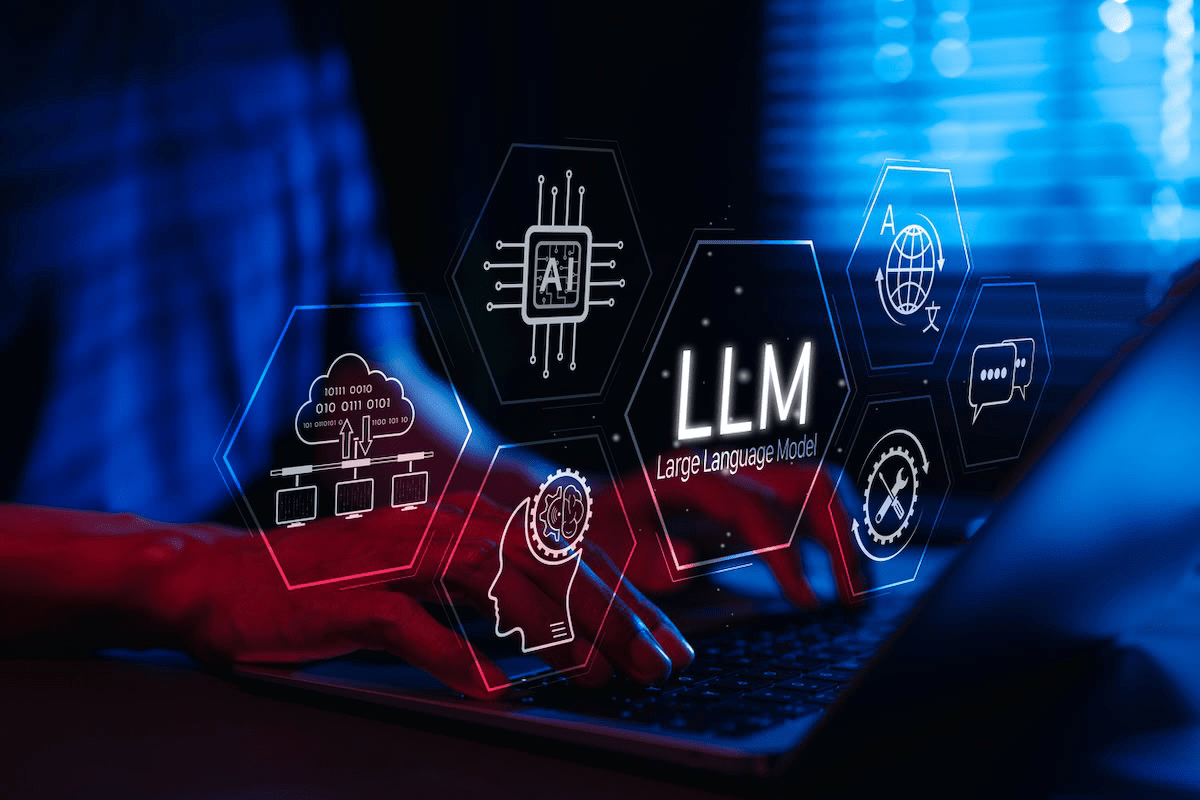
Large Language Models (LLMs) and Machine Learning: Background and Use in Customer Service

Large Language Models (LLMs) and Machine Learning: A Guide for Modern Customer Service

Artificial intelligence (AI) is revolutionizing customer service, but many organizations struggle to translate its potential into practical business value. To effectively leverage AI, leaders need a clear understanding of the core technologies driving it. This article demystifies Large Language Models (LLMs) and Machine Learning (ML), exploring how they work and what they can achieve in customer service.


Building the Foundation: From Machine Learning to LLMs

To understand LLMs, you must first understand the engine that powers them: Machine Learning.

What Is Machine Learning (ML)?

Machine Learning is a field of AI where systems learn from data rather than being explicitly programmed for every task. ML models are trained on vast datasets to recognize patterns, make predictions, and improve their performance over time without new instructions.

Think of it this way: instead of coding a program with rigid rules to identify a cat, you show an ML model thousands of cat pictures. The model learns the patterns—whiskers, pointy ears, tails—and can then identify a cat in a new image on its own.

This learning process is refined through techniques like reinforcement learning, where the model is taught which of its outputs is the best choice, allowing it to make progressively better decisions.

What Are Large Language Models (LLMs)?

Large Language Models are a specialized and powerful application of machine learning. They are neural networks, designed to mimic the human brain, that have been trained on immense volumes of text and data. This training enables them to understand, interpret, summarize, and generate human-like language—a field known as Natural Language Processing (NLP).

A major breakthrough came in 2017 with the introduction of “transformer models,” which allow LLMs to weigh the importance of different words in a sentence. This architecture dramatically increased their speed and contextual understanding, making them far more powerful.

Today, companies can either build their own LLMs or license pre-trained models. These models can be further fine-tuned with company-specific data, adapting them to a particular industry, task, or communication style for more precise and relevant outputs.


The Impact of LLMs on Customer Service

LLMs are uniquely suited to optimize customer service by empowering agents, automating tasks, and delivering a faster, more consistent customer experience.

Key Capabilities in a Service Environment:

  • Intelligent Automation: LLMs power chatbots that can handle entire support conversations, answer frequently asked questions 24/7, classify incoming tickets, and route them to the right department.
  • Agent Empowerment: Instead of replacing agents, LLMs act as powerful assistants. They can instantly summarize long ticket histories, analyze customer sentiment to flag frustration, and draft accurate, context-aware responses that agents can simply review and send.
  • Enhanced Quality and Consistency: LLMs can rephrase complex technical information into simple terms, translate conversations in real-time, and ensure all communications adhere to a consistent brand voice.

A Practical Use Case

Imagine a customer contacts support about a complex issue with a recent software implementation. The assigned agent can use an LLM to:

  • Instantly summarize all previous interactions with the customer.
  • Use sentiment analysis to detect the customer’s frustration level.
  • Receive a suggested response that addresses the issue, which the agent can quickly edit and approve.

The time saved is enormous, and the combination of AI-powered context and human oversight leads to a faster, more empathetic, and more effective resolution.


A Practical Guide: Using LLMs and ML Effectively

The question is no longer if you should use these technologies, but how. Here are practical tips for maximizing their benefits while navigating potential challenges.

1. Make the Most of the Benefits

  • Aim for Strategic Automation: Don’t just use LLMs to assist with manual tasks. Identify processes that can be fully automated, such as generating first-response emails, creating knowledge base articles from resolved tickets, or handling routine information requests from start to finish.
  • Enhance Precision and Quality: Leverage advanced ML to produce high-quality content. LLMs excel at generating well-crafted reports, clear summaries, and accurate translations, raising the standard of your communications.
  • Find Creative Solutions: Because LLMs are trained on vast and diverse datasets, they can connect disparate information to propose creative or unconventional solutions that a human agent might not have considered.

2. Overcome the Challenges

While the advantages are significant, a responsible AI implementation requires awareness of the challenges.

  • Dealing with “Hallucinations”: Occasionally, an LLM will generate information that sounds plausible but is factually incorrect. This happens because the model predicts the next most likely word, not the most truthful one. Mitigation: Reduce hallucinations by providing the LLM with specific context—like a relevant knowledge base article or technical document—to ground its responses in fact.
  • Identifying Bias: LLMs can inadvertently reproduce biases present in their training data (e.g., social stereotypes, US-centric examples, or overly formal language). Mitigation: Use mature, well-tested applications. Fine-tuning models with your own curated and diverse datasets can significantly minimize bias.
  • Protecting Sensitive Data: Customer data is confidential. Never input personal or sensitive information into a public LLM. Mitigation: Use enterprise-grade AI solutions that comply with data protection regulations like GDPR and offer robust data privacy controls.

Conclusion: The Future is a Strategic Choice

Large Language Models and Machine Learning are no longer futuristic concepts; they are essential tools for modern customer service. They deliver clear gains in efficiency, enhance the customer experience, and improve satisfaction by providing fast, accurate, and personalized support.

Ultimately, the key differentiator will be how businesses choose to integrate these technologies. They can be used in one of two ways:

  • As a Supportive Tool: Used occasionally to speed up or enhance existing manual processes.
  • As a Disruptive Technology: Used strategically to automate and replace manual processes entirely.

While the first approach offers incremental gains, the second unlocks the full transformative potential of AI. Businesses that only use LLMs for minor assistance are just scratching the surface of what’s possible. The future of exceptional customer service belongs to those who fully embrace a technology-driven, automated, and intelligent strategy.

About OTRS

OTRS (originally Open-Source Ticket Request System) is a service management suite. The suite contains an agent portal, admin dashboard and customer portal. In the agent portal, teams process tickets and requests from customers (internal or external). There are various ways in which this information, as well as customer and related data can be viewed. As the name implies, the admin dashboard allows system administrators to manage the system: Options are many, but include roles and groups, process automation, channel integration, and CMDB/database options. The third component, the customer portal, is much like a customizable webpage where information can be shared with customers and requests can be tracked on the customer side.

About Version 2 Limited
Version 2 Digital is one of the most dynamic IT companies in Asia. The company distributes a wide range of IT products across various areas including cyber security, cloud, data protection, end points, infrastructures, system monitoring, storage, networking, business productivity and communication products.

Through an extensive network of channels, point of sales, resellers, and partnership companies, Version 2 offers quality products and services which are highly acclaimed in the market. Its customers cover a wide spectrum which include Global 1000 enterprises, regional listed companies, different vertical industries, public utilities, Government, a vast number of successful SMEs, and consumers in various Asian cities.